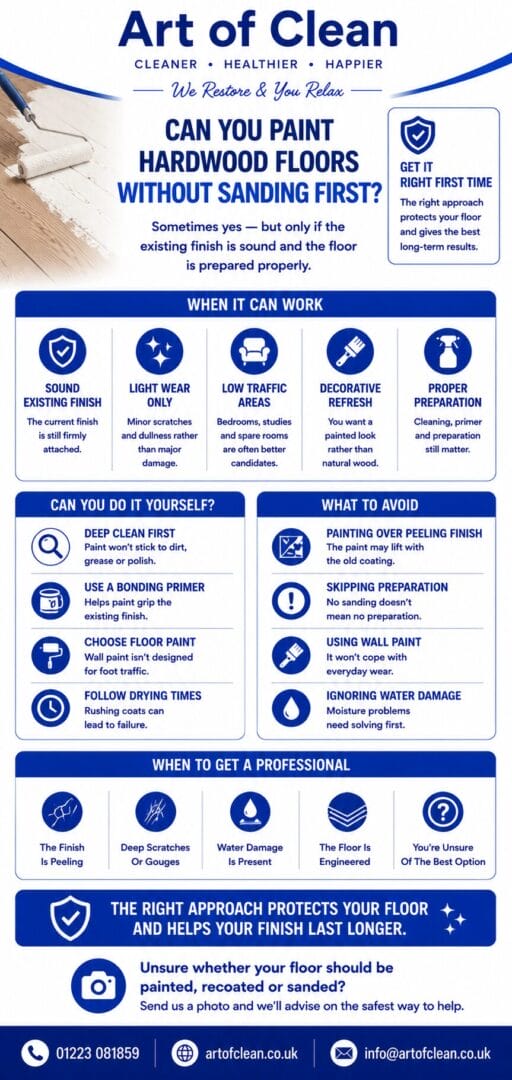

Yes, you can paint hardwood floors without sanding first, but only if the existing finish is sound and the floor is prepared properly. A clean surface, small repairs, deglossing where needed and a good bonding primer all matter. Skipping sanding can save time and mess, but it usually means the painted floor may need more care and touch-ups later.
The important point is this: paint needs something to grip. Sanding creates that grip by roughening the surface and removing tired finish. If you do not sand, your preparation has to do as much of that job as possible in another way.
For some floors, painting without sanding can work well enough. For others, it is the wrong shortcut.
Painting hardwood floors without sanding is possible, but it depends on the condition of the floor. It works best when the existing finish is intact, the floor is not peeling, and the damage is only surface-level.
A bonding primer can help floor paint stick to a glossy or previously finished wood floor, but it cannot rescue a floor with loose finish, damp patches, deep gouges or heavy wear.
This method can be useful for a DIY home project, a temporary refresh, a low-traffic room or a floor where you specifically want a painted look. It is less suitable for busy hallways, kitchens, pet areas or floors that really need sanding and refinishing.
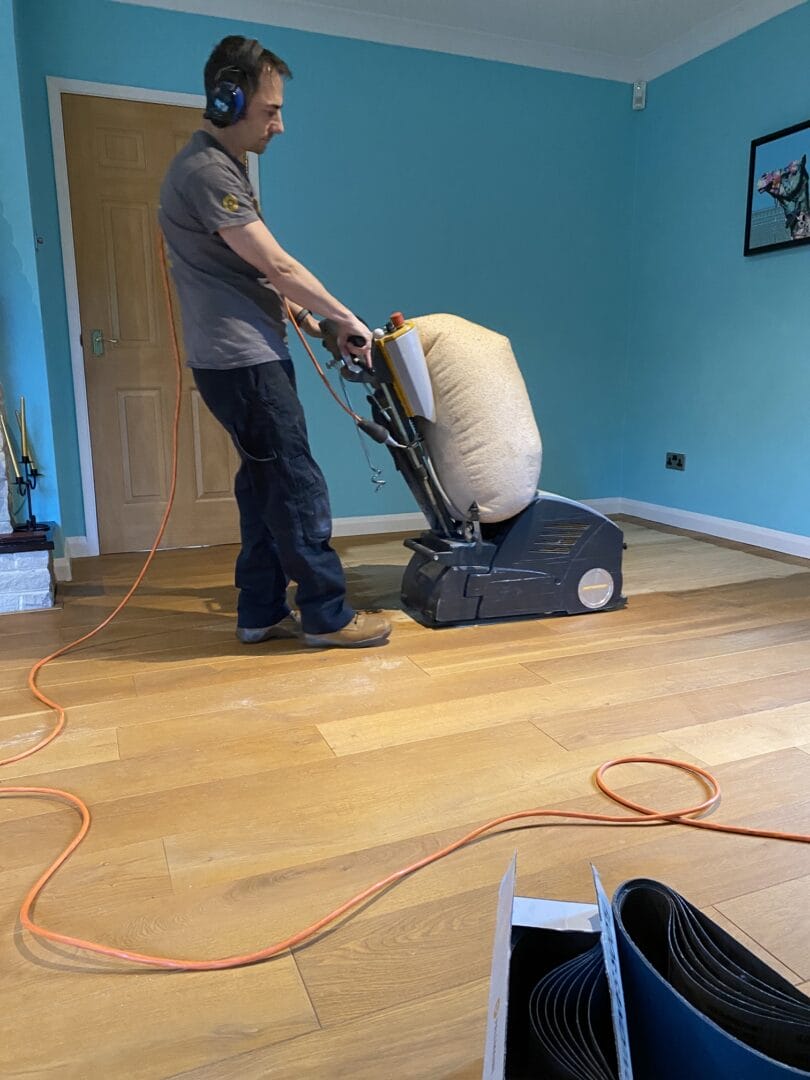
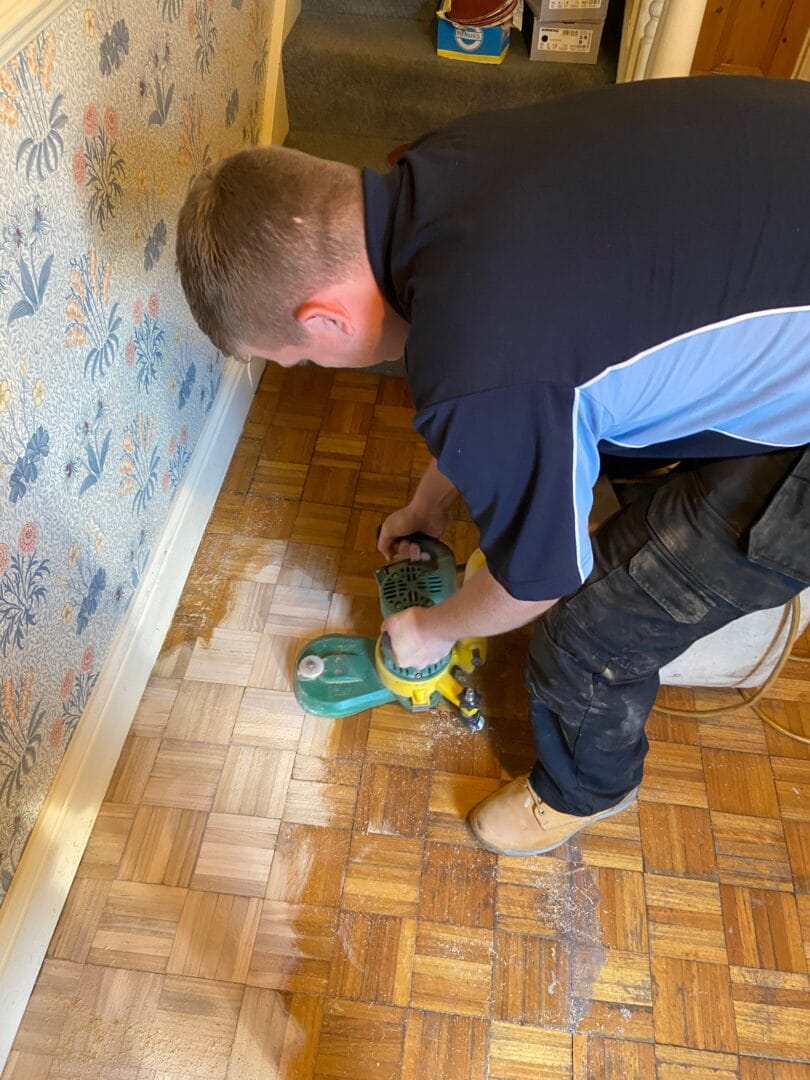
Sanding a wood floor can feel like a big step. It means clearing the room, dealing with disruption, choosing a new finish and accepting that the floor may be out of use while the work is completed. Even with good equipment and dust-control systems, homeowners naturally worry about dust, cost and drying time.
That is why painted floors have become appealing. A painted hardwood floor can change the feel of a room without replacing the floor. White painted boards can brighten a bedroom. A darker colour can make a hallway feel more deliberate. A soft neutral can suit a cottage, terrace or older home where the timber is full of character but not perfect.
The question is whether you can get there without sanding the floors first.
The honest answer is yes, sometimes. But a painted finish is only as reliable as the surface beneath it.
It is okay to paint wood floors without sanding, but the floor must still be prepared. Paint doesn’t stick well to dirt, grease, polish, old wax, loose lacquer, peeling varnish or a glossy surface that has not been dealt with.
On a sanded floor, the sander removes the old finish and creates a fresh surface. On a floor without sanding, you are relying on cleaning, deglossing and primer to give the new finish enough adhesion.
This is why skipping sanding does not mean skipping preparation. In many cases, the preparation is the most important part of the whole job.
A no-sanding method usually works best when the hardwood floor has an existing finish that is still attached, even if it looks tired. If the floor’s finish is peeling, flaking or missing in places, paint may stick to the loose finish rather than the wood. When that loose finish lifts, the paint can come away with it.
From a floor restoration point of view, many tired wooden floors are not actually ruined. Often, the protective finish has worn away. Once that happens, dirt, moisture and unsuitable cleaning products can reach the wood more easily. That is when a proper assessment matters, because cleaning, recoating, painting, sanding or replacement may all lead to very different results.
Painting hardwood floors without sanding is most likely to work in rooms where the floor is lightly worn rather than badly damaged. Bedrooms, spare rooms, studies and low-traffic spaces are better candidates than entrances, kitchens or busy family routes.
It can work when the existing finish is sound, the boards are stable, and the floor has only minor scratches, dullness or cosmetic wear. If you are painting their hardwood floors because you want a particular style, rather than because you are trying to hide serious damage, you are starting from a better place.
A no-sanding painted floor may also suit a room where you accept that future touch-ups will be part of the look. Some painted floors are meant to age gently. That is different from expecting a perfect factory finish that never chips.
Before you start, look closely at the whole floor. Check corners, doorways, chair areas and anywhere that gets regular foot traffic. These small sections often tell you more than the middle of the room.
Do not skip sanding if the old finish is peeling, flaking or lifting. Paint needs a firm base. If the existing finish on the floor is failing, primer and floor paint will not make it stable.
You should also be careful if there are deep scratches, dents, gouges, water stains, black marks, loose boards or areas where the wood feels rough and open. A scratch in the top finish is very different from damage that has gone into the timber.
A simple water drop test will help you understand what is happening. Place a small drop of water on an inconspicuous area. If it sits on top, the finish may still be offering some protection. If it absorbs quickly or darkens the wood, the floor’s finish may have failed. That does not automatically mean the floor is beyond help, but it does mean painting over it without proper assessment is more risky.
Engineered wood flooring needs extra caution. Some engineered floors have only a thin wear layer, so sanding may be limited or impossible. That does not mean paint is automatically the answer. It means the construction of the floor needs checking before anyone recommends sanding, painting, recoating or replacing.
The main advantage is reduced disruption. You avoid using a floor sander, and you may be able to complete a small room over a weekend if drying time, ventilation and access all work in your favour.
It can also reduce dust and cost. You do not need sanding equipment, and you are not removing as much material from the floor. For a suitable floor, it can be a practical way to refresh a room where the aim is a painted finish rather than a natural wood finish.
The downside is durability. A painted floor without sanding may not hold as strongly as one where the old finish has been properly abraded or removed. It may chip, scratch or peel sooner, especially in high-use areas.
It also demands careful preparation. If you rush the cleaning, skip the primer, use wall paint instead of floor paint or start adding coats before the previous coat has dried, the result may fail quickly.
Some systems may then call for a coat of polyurethane or another protective floor finish. This can help protect the painted surface, but it must be compatible with the paint. Oil-based and water-based products behave differently, and mixing systems without checking can cause problems.
The best finish depends on the room, the floor and how the space is used. A low-traffic bedroom may not need the same level of protection as a busy hallway. A home with children, pets or grit coming in from outside will need a more durable approach than a room used occasionally.
Look for floor paint that is designed for wood floors. A paint store should be able to advise on primer, paint and protective topcoat as a compatible system. Ask about adhesion, drying time, fumes, sheen, cleaning and whether the product suits hardwood floor use.
A satin or low-sheen finish often looks more forgiving than a very glossy floor. High sheen can show dust, scratches and imperfections more clearly. A white painted floor can look beautiful, but it may show marks quickly in a busy home.
The biggest mistake is painting over a dirty floor. Even a small amount of grease, polish or grime can affect adhesion.
Another common mistake is assuming primer can fix everything. Primer helps paint grip, but it cannot make loose varnish, peeling lacquer or damp timber stable.
Do not use normal wall paint on a floor. It may look fine for a short time, but it is not made for wear and tear.
Avoid painting over deep scratches, gouges or water-damaged boards without understanding the cause. If the problem underneath remains, the new finish may simply hide it for a while.
It is also worth avoiding steam cleaners on wooden floors. Heat and moisture might damage the finish and may affect the wood beneath. For everyday care, use the right cleaner for the finish, avoid soaking the floor and wipe spills promptly.
A painted floor without sanding will usually need more maintenance than a properly sanded and refinished hardwood floor. How long it lasts depends on the room, the preparation, the products, the number of coats, drying time, cleaning habits and daily use.
In a quiet room, it may stay presentable for a good while. In a hallway with shoes, grit, pets and furniture movement, scratches and chips may appear much sooner.
Use entrance mats, fit felt pads under furniture, clean with suitable products and avoid dragging chairs or heavy items across the floor. Keep a small amount of leftover paint for touch-ups.
Painting and refinishing are not the same decision.
Painting changes the look of the floor and covers the wood grain. It can be a design choice, a practical refresh or a way to live with boards that are not attractive enough to leave natural.
Refinishing your hardwood floors without painting usually means sanding or recoating so the wood itself remains visible. This is better when the timber is worth showing, when the floor can safely be sanded, and when the client wants the beauty of the wood rather than a painted finish.
Sometimes restoring without sanding may be possible through cleaning and recoating, but only if the existing finish is still in good enough condition. Recoating will not hide deeper scratches, failed finish or water damage.
If you are unsure, ask for an assessment before committing. A professional should look at the floor construction, the remaining wear layer, the existing finish, moisture concerns, scratches, gaps, repairs and how the household uses the space.
You can paint hardwood floors without sanding, but the result depends on preparation and judgment. If the floor is sound, lightly worn and you use the right primer, floor paint and drying time, a painted finish can be a useful way to refresh a room.
If the finish has failed, the boards are damaged, moisture is present or the floor is heavily used, skipping sanding may only delay the real decision.
A good painted floor starts with a good question: is this floor suitable for paint, or does it need cleaning, recoating, sanding or replacing first?
If you are not sure, send us a few photos or ask for advice before you begin. A short conversation can often help you avoid wasted time, wasted paint and a finish that does not last.