
A sticky, shiny wooden worktop wasn’t quite what this Ely homeowner had in mind. Here’s how Robby fixed it.
Imagine paying to have your beautiful oak kitchen worktops professionally restored, only to discover they’ve been left feeling sticky and looking far shinier than you ever wanted.
Not exactly the dream kitchen finish, is it?
That’s the situation Jennifer Hills found herself in at her home in Ely, Cambridgeshire.
Someone else had already restored her wooden worktops, but the results weren’t what she’d expected.
Fortunately, our worktop restoration technician, Robby, could help.
And this story has a lovely ending. Not only did Jennifer get the natural-looking oak worktops she’d hoped for, but she’s also arranged for us to return every two years to help keep them looking their best.
Here’s what happened, what Robby discovered and what other homeowners can learn from Jennifer’s experience.
When Robby arrived at Jennifer's home in Ely, he immediately noticed something wasn't quite right.
The oak worktops had previously been finished using yacht varnish.
Now, yacht varnish has its uses, but it wasn't giving Jennifer the finish she wanted for her kitchen.
The worktops felt sticky to the touch and looked very shiny.
Jennifer had expected something quite different: a beautiful, natural-looking oak surface that felt smooth and complemented her kitchen.
Instead, she was left disappointed.
And we can understand why.
When you pay someone to restore your wooden worktops, you should clearly understand how they'll look and feel afterwards.
This is why discussing the finish before restoration begins is so important.
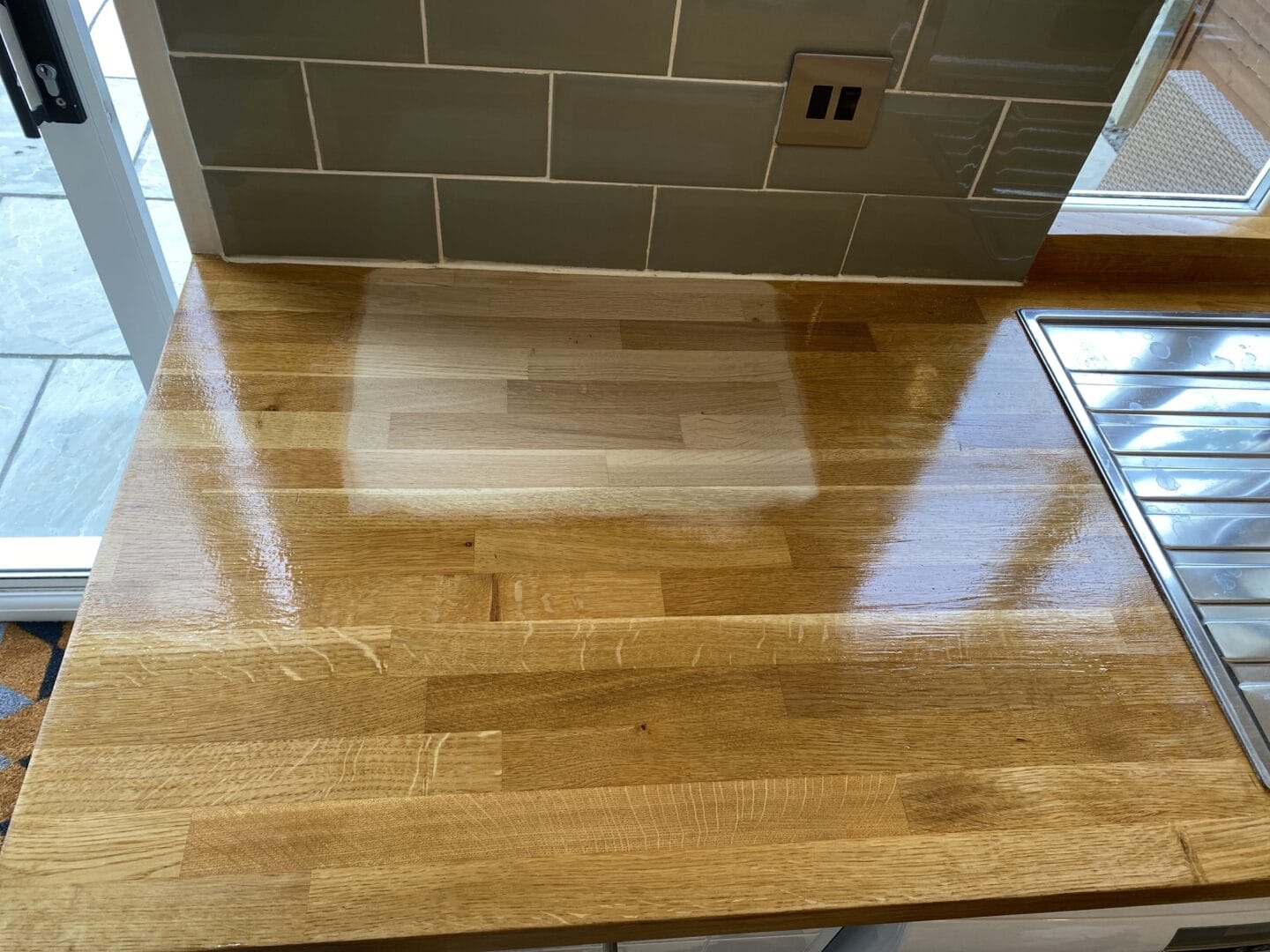
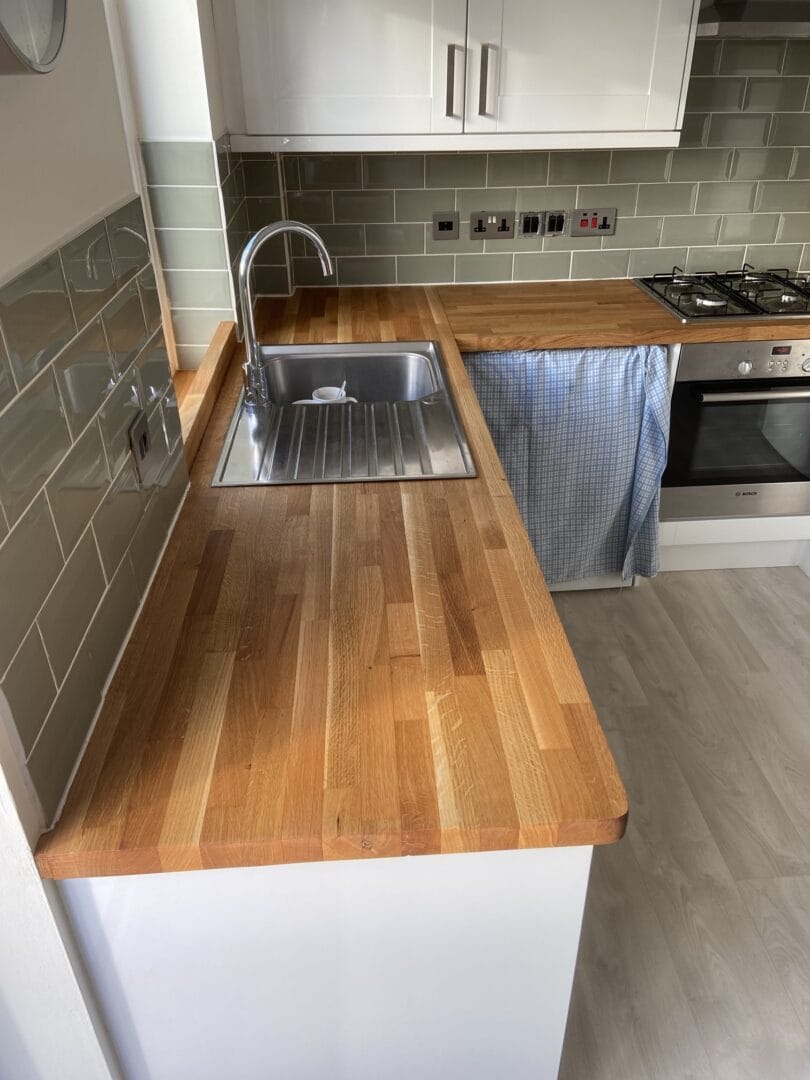
After inspecting the worktops, Robby recommended removing the existing finish and using Magic Oil.
Unlike the shiny finish Jennifer had been left with, the proposed oil finish would allow the natural character of the oak to shine through.
The aim was to achieve a smooth surface with a natural, eggshell matt appearance.
Not every homeowner wants a glossy worktop. Sometimes, it's the natural beauty of the timber that makes a kitchen feel special.
Robby also explained how to maintain the new finish in the future.
Rather than waiting until the worktops needed another complete restoration, Jennifer could have them professionally maintained as required.
But first, there was a rather messy job to tackle!
One of the biggest challenges Robby faced was removing the existing yacht varnish.
As he explained, the finish was particularly difficult to sand because it kept clogging the abrasive pads.
Even using a coarse grit wasn't straightforward.
This is something homeowners don't always realise: removing an unsuitable existing finish can take considerably more work than sanding a normally worn surface.
Robby needed to remove the old coating completely, taking the worktop back to bare timber.
Once he removed the varnish, he worked progressively through different sanding grits.
Each stage helped refine the surface until the oak was smooth to the touch and ready for its new finish.
It takes patience, but rushing could affect the final result.
And after all that hard work, the oak was finally ready for its transformation.
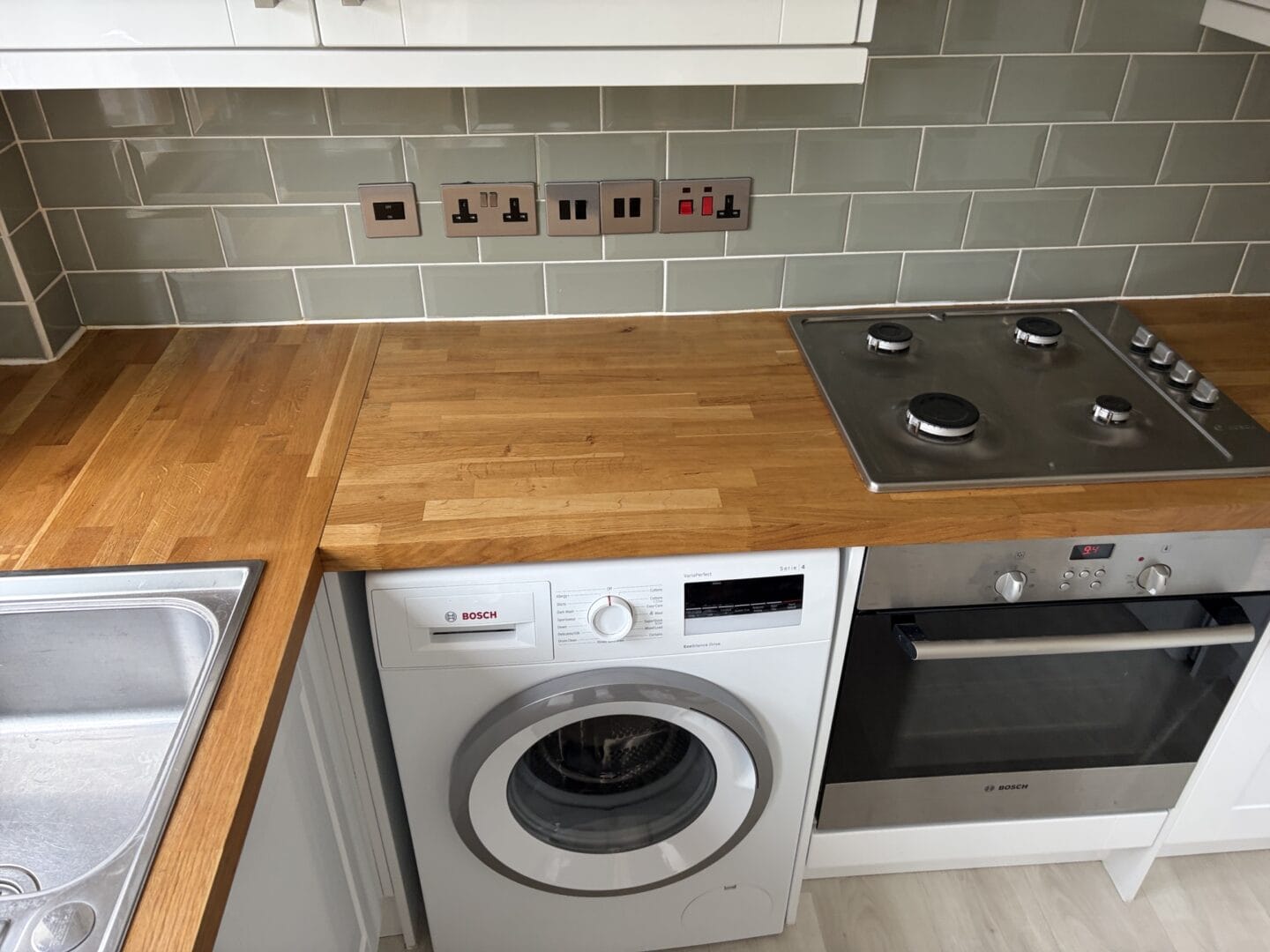
This is where Jennifer's worktops really came back to life.
Once Robby applied the Magic Oil finish, the individual pieces of oak that made up the worktops became beautifully defined.
The natural grain and character of the timber stood out, creating the softer, eggshell matt appearance Jennifer had originally wanted.
Gone was the unwanted sticky, shiny finish. In its place was a smooth, natural-looking oak worktop.
And Jennifer's reaction?
She was over the moon!
In Robby's words, Jennifer felt this was exactly what she'd expected when she originally paid a professional to restore her worktops.
That's the result we love hearing about.
Not simply because the worktops looked lovely, but because Jennifer finally had the finish she'd wanted from the beginning.
One of the most interesting parts of this particular job happened before Robby even started the restoration.
While preparing Jennifer's quotation, he explained how to maintain the worktops once the new finish was applied.
Rather than treating the restoration as a one-off job, he explained the benefits of properly caring for the timber.
The advice was simple.
Use suitable cleaning products, protect the surface during everyday activities, and keep an eye on high-wear areas.
He also explained how a professional maintenance visit could help refresh the oil finish without necessarily needing to sand everything back to bare wood again.
Jennifer has since arranged for our team to return every two years to maintain her oak worktops.
That doesn't mean every wooden worktop needs professional attention every two years.
The frequency depends on how the worktop is used, its condition and the type of finish.
But for Jennifer, having a regular maintenance arrangement means she can stay on top of wear rather than waiting until another major restoration becomes necessary.
Now, this is where we can all learn something from Jennifer's experience.
Wooden worktops are beautiful, but they're also working surfaces.
They handle everything from morning coffee to evening cooking, plus the occasional spill when life gets a little hectic!
The good news? A few simple habits can make a real difference.
Please don't chop directly onto your wooden worktop!
Knives can damage the surface and protective finish, leaving marks that may require further restoration.
Robby's advice is clear: chopping boards are a must.
Whether it's a morning cup of tea or a cold drink on a warm afternoon, use a coaster.
This helps reduce direct contact with moisture and protects the finish from everyday wear.
Water and other liquids shouldn't be left sitting on wooden worktops.
Pay particular attention to areas around sinks, where moisture exposure is more frequent.
The quicker you deal with spills, the better.
We know it's tempting when you're busy cooking, but please don't place hot pots and pans directly onto the timber.
Use a suitable heat-resistant mat or trivet instead.
Robby recommends using a wood-safe, pH-neutral cleaner, suitable for the worktop's finish.
For Jennifer's worktops, he suggested cleaning with an appropriate product once a week as part of her routine.
Avoid assuming that every household cleaner is suitable for oiled timber.
Some products may affect the finish, so always follow the manufacturer's care guidance.
This is another useful thing to understand.
Maintaining an existing oil finish is generally a much smaller job than carrying out a full restoration, provided the timber and finish are still in suitable condition.
For Jennifer's future maintenance appointments, Robby explained that the process would involve:
This helps refresh the appearance and protection of the worktop.
Robby also pointed out that some areas naturally receive more use than others.
You might notice the section where you prepare meals beginning to look dull, while a less-used area still looks lovely.
These changes can be an early sign that it's time to consider maintenance.
By refreshing the finish at the appropriate time, it may be possible to avoid another full sanding process.
Of course, if a worktop has significant damage, deep staining, or an unsuitable existing coating, it may still need more extensive restoration.
There are three important lessons from this job.
A glossy finish and a natural matt finish can look completely different. Make sure you understand what you're getting and whether it's suitable for your worktop.
Jennifer's oak worktops already had a coating she wasn't happy with, but Robby removed it and restored the timber's natural appearance.
Looking after a wooden worktop doesn't have to be complicated. The right cleaning routine, everyday protection and occasional professional maintenance can all help extend the life of the finish.
If your wooden kitchen worktops are looking tired, have an unsuitable finish or simply aren't looking the way you'd hoped, professional restoration may be worth exploring.
At Art of Clean, we believe in explaining what's achievable, what the work involves and how you can look after the results afterwards.
Because a beautiful worktop shouldn't just look good on the day it's restored. You should know how to care for it in the years ahead, too.
If you're based in Ely or the surrounding Cambridgeshire area and would like advice about restoring your wooden worktops, get in touch with our friendly team.
Let's see whether we can bring the natural beauty back to your worktops.
In some cases, yes, you can. You may be able to remove the coating by sanding, but the process can be challenging if the varnish clogs the abrasives. Assess the timber and existing finish before work begins.
Oil and varnish will create a different look and require different maintenance. Some oils offer a more natural-looking finish, while varnishes typically form a surface coating. The right choice depends on the product, the timber, and how you'll use the worktop.
There's no single timetable for every worktop. Jennifer has arranged maintenance every two years, but the appropriate interval depends on use, wear and the manufacturer's guidance for the finish.
Normally, yes. If the existing finish is compatible and in suitable condition, a very light abrasion and reapplication of oil may be enough. Heavily damaged or unsuitable coatings may require more extensive preparation.
Yes. Art of Clean provides wooden worktop restoration services in Ely and surrounding areas. We can assess the condition of your worktop and advise on suitable restoration and maintenance options.