How Do You Clean a Sisal Rug Safely?

Sisal rugs are popular because they look natural, calm and practical. They suit hallways, sitting rooms, studies and design-led homes where people want texture without a loud pattern.

But when a spill happens, many people quickly discover that sisal is not as easy to clean as it looks.

So, how do you clean a sisal rug without damage?

The safest answer is to keep cleaning as dry as possible. Vacuum regularly, blot spills immediately, avoid scrubbing, use very little moisture, and dry the area quickly if any liquid is used.

Sisal fibres absorb moisture easily, so water, steam cleaning, carpet shampoo machines and wet stain treatment can leave marks, shrinkage, distortion or permanent staining.

This does not mean you can never do anything at home. It means sisal needs careful handling, and the first aim is often to avoid making the problem worse.


What is a sisal rug?

Sisal is a natural fibre made from the leaves of the agave plant. It is woven into rugs, carpets and other floor coverings because it has a strong, textured, earthy look.

A sisal rug can be a good choice in the right room.

It can feel smart without looking too formal, and it often works well with wood floors, neutral interiors and natural materials. Similar natural fibre floor coverings include jute and seagrass, although each behaves differently.

The important thing to understand is this: sisal may look tough, but it does not like moisture.

The coarse weave can make the rug look practical and hard-wearing, yet the fibre itself can absorb liquid quickly. Once moisture gets into a natural fibre rug, staining and shape change can be difficult to control.
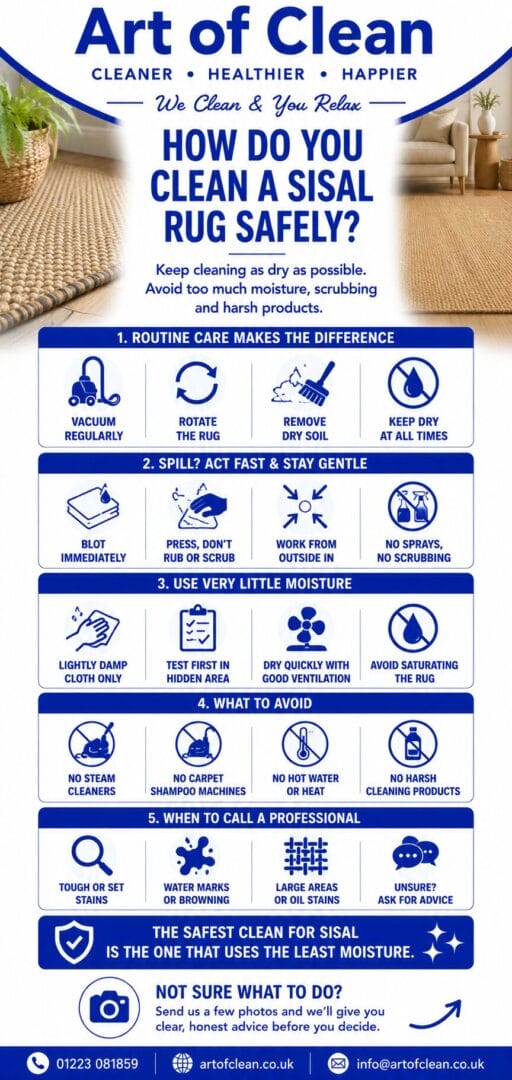
How Do You Clean a Sisal Rug Safely info graphic

Why sisal rugs need careful cleaning

A wool rug, synthetic rug, sisal carpet and sisal rug should not all be treated the same way. The right cleaning method depends on the fibre, construction, backing, staining and condition.

With sisal, the main risk is moisture. Too much water can cause:

  • water marks
  • browning
  • shrinkage
  • distortion
  • mould risk if the rug stays damp
  • stains that become harder to improve
  • texture change in the weave

This is why a standard carpet cleaner, steam cleaner or wet carpet cleaning kit is usually the wrong starting point. A method that works on synthetic carpet may cause problems on sisal or jute.

It is also why stain removal from sisal needs realistic expectations. Some marks may improve. Some may remain. If a spill has already soaked into the fibre, the safest route may be advice before more cleaning is attempted.

Copy of How Do You Clean a Sisal Rug Safely art of clean cambridge
Rug Care and cleaning cambridgeshire Ely Royston

The safest way to clean a sisal rug at home

For day-to-day rug care, dry cleaning habits matter most.

Start with regular vacuuming. Use a vacuum cleaner with strong suction, but avoid an aggressive beater bar if it pulls at the weave or causes fuzzing.

A brush attachment may help on some rugs, but the aim is to lift dry soil without damaging the surface.

Dry soil is not harmless… Fine grit and dirt particles can act as a magnet to more soil and can wear the fibre as people walk over the rug. Keeping your sisal rug looking better starts with removing as much dry soil as possible before it works deeper into the weave.

For routine care… Vacuum slowly and regularly.

Turn the rug if it is safe to do so and check whether soil is collecting underneath.

Rotate the rug every few months so wear and tear is more even. Keep sisal away from damp rooms, wet entrances and places where spills are likely to occur.

If the rug has a light odour, a dry method may be safer than a wet one.

Some people use a small amount of baking soda, leave it to sit, then vacuum thoroughly. This should be tested cautiously first, especially on darker or textured rugs, because powders can lodge in the weave.

What to do after a spill on a sisal rug

Speed matters, but so does restraint.

If something is spilled, immediately blot the area with clean white cloths or paper towels. Press gently. Do not rub. Do not scrub. Do not pour water onto the spot.

Work from the outside edge of the spot towards the centre to avoid spreading the stain. Keep replacing the cloth as it absorbs liquid. The goal is to remove as much moisture as possible before it moves deeper into the fibre.

If there is solid material on the rug, lift it carefully.

A dull knife or nail file may help with dried material, but do not scrape aggressively. Once the loose material is removed, vacuum dry particles before doing anything else.

Avoid the common panic response of reaching for a spray bottle, white vinegar, washing-up liquid or a general carpet cleaner. Many cleaners you buy for use on carpets are not designed for natural fibre carpets or sisal rugs. Even if a product sounds gentle, the moisture involved can still create a watermark.

If you are unsure, take a photo and ask for advice before adding products.

Rug Cleaning Cambridge Cambridgeshire Ely

Can you use water on a sisal rug?

This is where care should be taken.

You can still use a lightly damp cloth for very small marks, but water saturation is risky. Sisal is not a washable rug. The more moisture used, the more chance there is of staining, shrinking, or a ring forming around the spot.

If you decide to spot clean a tiny mark, use the smallest amount of moisture possible. Test first in an inconspicuous area.  Blot rather than rub. Dry the area quickly with a clean dry cloth and good ventilation.

Do not wet a large section of the rug. Do not use a carpet shampoo machine. Do not soak the backing. Do not assume that because a rug is natural, it can be washed like cotton.

Think of it like this: the safest cleaning system for sisal is usually the one that uses the least moisture needed to deal with the problem.


Can you steam clean a sisal rug?

No, steam cleaning is not a safe general method for a sisal rug.

Steam cleaning adds heat and moisture. For sisal, those are two of the main things to avoid. The rug may shrink, distort, brown or develop damp odour if it does not dry quickly enough.

This is especially important with a large area rug, because once it is wet it becomes harder to move, dry and control. Drying is not a small detail. It is part of whether the cleaning succeeds.

If a sisal rug needs more than routine maintenance, a professional should assess whether dry clean, dry extraction, low moisture cleaning or another careful method is suitable. The right answer depends on the rug, not just the stain.

How to handle common sisal rug stains

Different stains behave differently, but the first response is usually the same: blot, keep moisture low, avoid scrubbing and ask early if the rug matters to you.

Coffee and tea stains can be difficult because the liquid can travel into the fibre quickly. Blot immediately and avoid flooding the area.

Wine stains can leave strong colour behind. Do not scrub. Do not use heat. Blot and seek advice if the mark is visible.

Mud should usually be allowed to dry before vacuuming. Wet scrubbing can push soil deeper into the weave.

Grease may respond better to a dry absorbent powder than water, but care is still needed because residue can remain in the fibre.

Pet accidents are a bigger concern. Urine can soak in, create odour and leave lasting marks. It may also affect the backing or floor underneath. Blot as much as possible, keep the rug ventilated and ask for advice quickly. With some pet stains, improvement may be possible, but complete removal should not be promised.

Mould or mildew spots suggest a moisture problem. Do not ignore them. Sisal should not stay damp, and a rug that has been wet for too long may need professional assessment.


Common sisal rug cleaning mistakes to avoid

The biggest mistake is using too much water. A sisal rug that has been soaked is much harder to manage than a small fresh spill.

The second mistake is scrubbing. Scrubbing can distort the weave, spread the stain and damage the fibre.

The third mistake is layering products. A client may try vinegar, then a carpet cleaner, then an odour spray, then more water. Each step is well meant, but it can make professional cleaning harder later.

The fourth mistake is waiting too long when the rug is wet. If a rug has been soaked by a leak, flood, pet accident or heavy spill, early advice matters.

The fifth mistake is treating sisal the same as wool rug cleaning or synthetic carpet cleaning. Natural sisal, jute carpets and seagrass carpet all need more caution than many people expect.

Are sisal rugs difficult to maintain?

Sisal rugs are relatively easy to maintain when they are kept dry and vacuumed regularly. They become difficult when they are placed somewhere damp, used under a dining table where spills are common, or treated with wet cleaning methods.

They are often better in dry rooms where people want texture and natural style, rather than in kitchens, bathrooms, utility rooms or busy eating areas.

If you are choosing a new rug for a family room, dining room or pet household, it may be worth comparing sisal with wool, synthetic fibres or other natural fibre options before buying. Sisal can look beautiful, but it is not the most forgiving choice for spills.


When should a sisal rug be professionally cleaned?

Professional advice is worth asking for when:

  • the rug has a large stain
  • the rug has been soaked
  • there is pet urine or odour
  • the rug is shrinking, browning or changing shape
  • previous cleaning products have already been used
  • the rug is valuable, sentimental or difficult to replace
  • you are unsure whether it is sisal, jute, seagrass or a blend

At Art of Clean, rug cleaning starts with understanding the rug before choosing the method.

Some rugs need dry soil removal before anything else.

Some need low-moisture treatment.

Some need careful expectation setting.

Some may not be worth cleaning if the risk is too high or the likely result would not justify the cost.

That judgement matters… A rug does not need a method before it needs a decision.

For clients in Cambridge and the surrounding area, Art of Clean can advise on rug cleaning and, where suitable, collect rug cleaning through our specialist rug cleaning service.

Keeping your sisal rug clean without damage

The safest way to clean a sisal rug is to prevent problems where possible.

Vacuum regularly.

Keep the rug dry.

Blot spills straight away.

Avoid soaking, steam cleaning and harsh products.

Use dry methods where suitable and ask for advice before adding more moisture.

If the rug has only light dust and dry soil, regular vacuuming may be enough.

If the rug is stained, wet, smelly or important to you, pause before trying several home treatments.

You may still decide not to use a professional cleaner, but good advice early can stop the rug becoming harder to save.