How to Clean a Shag Rug Without Damaging the Fibres

A shag rug can make a room feel warmer, softer and more relaxed, but the same long fibres that make it comfortable can also make it harder to clean. Dust and dirt can settle deep down into the pile, spills can disappear into the fibres before you notice them, and aggressive cleaning can flatten the rug or damage the backing.

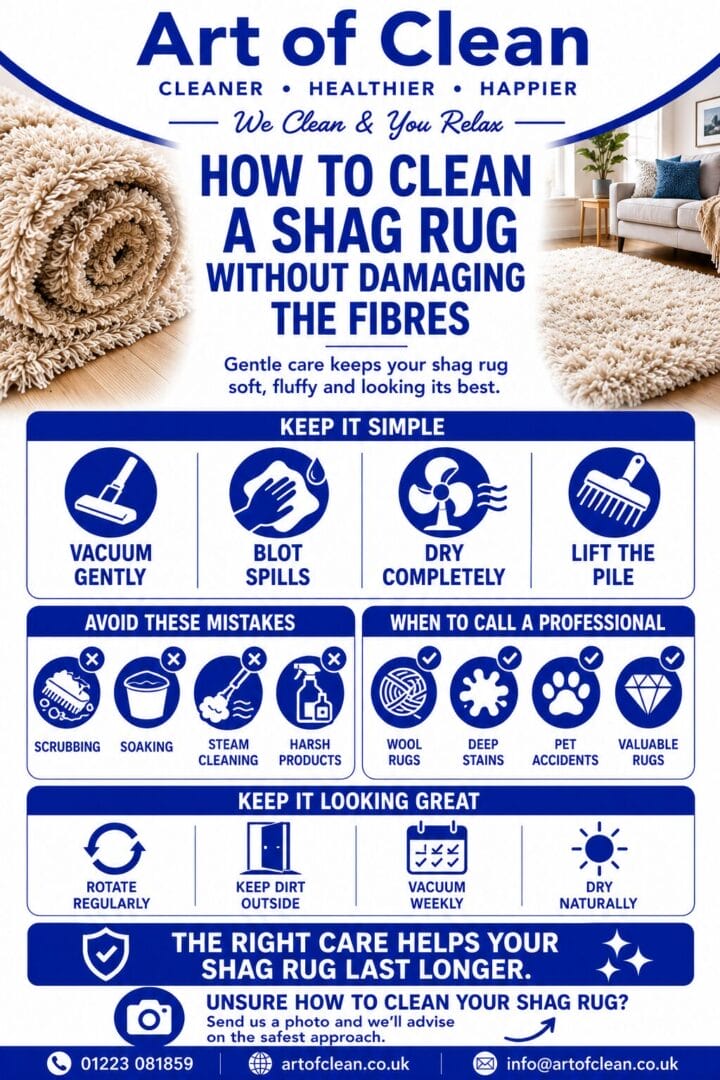
The safest way to clean your shag rug is to remove loose soil regularly, treat spills gently, avoid soaking the rug, and let it dry completely before walking on it again. For a deeper clean, especially on wool, delicate, sentimental or large shaggy rugs, professional rug cleaning is often the safer route.


Quick answer… To clean a shag rug safely, shake out loose dirt where possible, vacuum carefully using a suction-only setting or upholstery attachment, blot spills with a clean cloth, use only a mild cleaner suitable for the fibre, avoid harsh scrubbing, and allow the rug to air dry fully. If the rug is wool, viscose, silk, heavily soiled, pet-affected or difficult to dry at home, ask for professional advice before attempting a deep clean.

Key points before you start

A shaggy rug needs gentler care than a low-pile carpet. The long fibres can trap dry soil, hold moisture and lose their fluffy appearance if they are scrubbed or over-wet.

Keep these points in mind:

  • Vacuum carefully rather than aggressively.
  • Blot spills… do not scrub them.
  • Avoid soaking the rug with water or shampoo.
  • Be cautious with household products, including white vinegar, unless the care label confirms they are suitable.
  • Let your rug dry completely before putting it back into use.
  • Arrange professional shag rug cleaning when the rug requires a proper deep clean.
rug-bleeding-colour-run-art-of-clean-cambridge
rug-cleaning-service-and-repair-art-of-clean-cambridge-bury-st-edmunds

What makes shag rugs different from other rugs?

A shag rug has a long, high pile. That means the fibres stand deeper and looser than on many standard rugs or carpets. This gives the rug its soft, fluffy feel, but it also means soil can sit below the surface where normal vacuuming may not reach.

A rug can look clean on top while dust and grit are trapped deep in the pile. Over time, that dry soil can make the rug look dull, flatten the fibres and create a gritty feel underfoot. This is one reason regular light care matters, even if the rug does not look heavily soiled.

Shag rugs can be made from different materials, including wool, polyester, polypropylene, acrylic and natural fibre blends. Each fibre behaves differently. Wool can hold soil and needs careful moisture control. Synthetic fibres may be more forgiving, but they can still flatten, distort or hold residue if the wrong cleaner or shampoo is used. Some natural blends can be more sensitive than they first appear.

The most common causes of damage are over-wetting, harsh scrubbing, unsuitable carpet shampoo, strong stain products, aggressive vacuum settings and slow drying.


Before cleaning your shaggy rug, check the care label.

Before you clean a shag rug, look for the care label. This may be on the underside of the rug, sewn into a corner or attached to the backing. It may tell you the fibre type, whether the rug can be wet cleaned, whether it can be cleaned professionally, and whether it should be kept away from heat or certain products.

If the label says dry clean only, do not wash or steam clean the rug at home. If the label warns against water, shampoo or machine washing, follow that advice. A rug without a label should be treated with caution, especially if it is wool, silk, viscose, hand-tufted, inherited or valuable to you.

As a simple guide, wool usually needs gentle cleaning and controlled drying. Synthetic shag rugs may tolerate more cleaning methods, but they should still not be soaked. Viscose, silk and delicate blends should not be treated as ordinary carpet or rug material.

If you are unsure what the rug is made from, the best way to clean it is often to start with dry soil removal and then ask for advice before adding moisture.

Tools and supplies for safe shag rug cleaning

For routine cleaning, you do not need a cupboard full of products. A few careful tools are more useful than a strong cleaner.

Use a vacuum with adjustable suction or an upholstery attachment. An upright vacuum with a beater bar can pull, twist or damage long fibres, so avoid using an aggressive brush roll on a shag rug. If your vacuum has a pile setting, set the head to the highest pile setting or use suction only.

You may also need microfibre cloths, a soft-bristle brush, a clean sponge, a mild detergent approved for the rug fibre, and a carpet rake designed for high-pile rugs. A carpet rake can help lift the pile after cleaning, but it should be used gently. The aim is to restore the fluffy appearance, not drag or tear the fibres.

Avoid strong stain removers, bleach-based products and general carpet cleaner products unless you know they are suitable for your rug. Many problems start with a well-meant product applied too quickly.

Careclean Rug Cleaning 3

Step one: remove loose dust and dirt

The first step in cleaning your shaggy rug is to remove dry soil. If the rug is small enough and safe to move, take the rug outside and shake it well. You can also hang the rug over something and gently beat it with a broom handle or similar tool to loosen trapped dust and dirt.

Do this carefully. The aim is not to punish the rug. It is to release loose dry soil before any moisture is added.

For larger rugs, vacuum slowly and gently. Work in one direction first, then turn the rug and vacuum again. Don’t forget to vacuum the back of the rug if the construction allows it. Soil can sit in the foundation and work its way back into the fibres.

This step matters because adding water or shampoo to a rug full of dry soil can create muddy residue deep in the pile.

Step two: vacuum without damaging the high pile

Vacuuming a shag rug needs patience. Use the hose or upholstery attachment of your vacuum where possible. This gives better control and reduces the risk of the fibres being pulled into the machine.

If you are using an upright vacuum, raise the head to the highest pile setting and turn off the beater bar if you can. An upright vacuum, preferably with a beater bar, is often too aggressive for long shag pile, especially on loose, delicate or older rugs.

Move slowly. Quick vacuuming tends to skim the top rather than lifting soil from deeper in the pile. If the rug is looking flat afterwards, gently lift the fibres with your hands or use a carpet rake with light pressure.

A regular rug clean like this can keep your shag rug looking fresher for longer and reduce the need for frequent deep cleaning.

Step three: deal with spills quickly

When a spill happens, act quickly, but do not panic. The safest first step is usually to blot. Use a clean cloth or absorbent towel and press gently onto the spill. Keep moving to a dry part of the cloth, so you lift moisture rather than spread it.

Do not scrub. Scrubbing will push your stain deeper into the carpet or rug fibres, distort the pile and make the area look fuzzy or worn.

If a mild cleaning solution is suitable for the rug, apply a small amount to a cloth rather than putting it straight onto the rug. Work from the outside of the stain towards the centre. Use as little moisture as possible, then blot again with a dry cloth.

Be careful with internet stain advice. A mixture of white vinegar and water is often suggested online, but that does not mean it is right for every shaggy rug. Some fibres, dyes and backings can react badly to household acids or repeated wetting. If the rug is wool, viscose, silk, antique, sentimental or unknown, pause and ask before adding products.

Step four: spot-clean stains on a shaggy rug

For small marks, spot cleaning may be enough. Test any cleaner in a hidden area first and wait to see whether the colour, texture or backing changes. If there is any colour movement, distortion or residue, stop.

To spot clean a fluffy rug, dampen a clean sponge or cloth with a mild detergent solution suitable for the rug fibre. Blot the stained area gently. Do not soak the pile or backing. Rinse by blotting with a cloth lightly dampened with clean water, then blot again with a dry cloth.

Allow the rug to air dry thoroughly. Lift the pile gently once dry to help the area blend back in. If the rug is still marked, do not keep repeating products. Several cleaning attempts can leave residue and may make a professional cleaner's job harder later.

Can you deep clean a shag rug at home?

You can lightly freshen some synthetic shag rugs at home, but deep cleaning is where problems often begin. A true deep clean involves more than making the top look damp and foamy. It means removing soil from the deep pile, rinsing properly and drying the rug safely.

Using a carpet cleaner or carpet shampoo machine at home can over-wet the rug, especially if the pile is thick. The rug may feel dry on the surface while the backing or foundation remains damp. That can lead to odours, browning, mould risk or damage to the backing.

A hired machine, including a Rug Doctor-style machine, may be suitable for some carpets, but that does not mean it is the best way to clean every shag rug. Rugs are constructed differently from fitted carpet. They can move, hold moisture differently and have dyes or backings that need testing.

Steam clean advice also needs caution. Steam and heat can affect some fibres, dyes and adhesives. Unless the care label confirms that steam cleaning is safe, do not assume it is suitable.

If the rug requires a deep clean, professional offsite rug cleaning gives more control. The rug can be inspected, dusted, tested, cleaned, rinsed and dried in a more controlled way than is usually possible in a home.


Can you put your shag rug in the washing machine?

Some very small synthetic rugs may say they are machine washable, but many shag rugs should not go into a washing machine. The weight of the wet rug, the movement of the drum and the amount of water involved can damage the fibres, backing or shape.

Never put a rug in the washing machine unless the care label clearly says it is safe. Even then, check the size and weight. A rug that becomes too heavy when wet can strain the machine and may not rinse or spin properly.

If the label is missing or unclear, do not guess. It is usually safer to vacuum, shake, spot clean carefully and ask for professional advice.

How to dry a shag rug safely

Drying is just as important as cleaning. After any spot cleaning or light wash, allow the rug to dry fully before walking on it or putting furniture back on top.

Lay the rug flat where air can circulate, or drape the rug in a safe position if the construction allows it. Do not leave it bunched up or folded while damp. Avoid strong heat unless the care label allows it, as heat can affect some fibres and backings.

If possible, lift the pile gently as it dries. Once dry, vacuum lightly or use a carpet rake to help restore the rug’s fluffy appearance.

A rug that smells musty after cleaning may not have dried properly. If that happens, do not cover the smell with sprays. The rug may need proper cleaning and controlled drying.


How often should you clean a shag rug?

How often you should clean a shag rug depends on where it sits and how the room is used. A rug in a quiet bedroom may only need regular vacuuming and occasional professional cleaning. A rug in a sitting room, hallway, family space or pet home may need more frequent care.

As a general guide, vacuum weekly or fortnightly, shake smaller rugs outside when practical, treat spills as soon as they happen, and arrange a deeper clean when the rug looks dull, smells stale, feels gritty or no longer lifts after vacuuming.

If the rug is in top condition and cared for regularly, it should be easier to keep it fresh and fluffy. If it has years of dry soil trapped deep in the pile, surface cleaning will only do so much.


When professional shag rug cleaning is the safer option

Professional help is worth considering when the rug is large, wool, delicate, valuable, sentimental, pet-affected, heavily soiled or difficult to dry at home. It is also sensible if stains have already been treated with household products, if the rug has a colour run risk, or if you are unsure what the fibre is.

A professional should check the fibre type, dye stability, construction, backing, fringe condition, previous cleaning attempts and the level of dry soil before choosing a method.

This is where offsite rug cleaning can be useful. It allows the rug to be handled away from the home, with better control over dusting, rinsing and drying. It also means you can get honest advice if the rug has limits. Not every stain will disappear, not every odour can be fully removed, and some rugs need a cautious method rather than the strongest one.

That honest assessment protects the rug and helps you decide whether cleaning, careful improvement, or replacement is the right next step.


Keeping your shag rug fresh between cleans

The best care is simple and regular. Vacuum gently, rotate the rug now and again so wear is more even, deal with spills early, and keep the rug away from damp areas where it cannot dry well.

If the pile starts to flatten, lift it gently with your hands or use a carpet rake made for high-pile rugs. Avoid heavy furniture sitting directly on the rug for long periods without checking the pile underneath.

For homes with children, pets, guests or busy living spaces, a shag rug may need more attention than a flatter rug. That does not mean it is a bad choice. It simply needs the right care.


Final thoughts

Knowing how to clean your shag rug is really about knowing what not to do. Do not scrub the fibres. Do not soak the backing. Do not assume a carpet cleaner, steam clean, dry shampoo, or household mixture is safe for every rug. Do not keep adding products if a stain does not improve.

Start gently. Remove dry soil first. Blot spills. Use mild, suitable cleaning products only when the care label supports them. Allow the rug to dry fully.

If the rug matters to you, or if you are unsure what it is made from, it is better to ask before taking a risk. A careful clean can help keep your shag rug soft, fresh and fluffy, while protecting the fibres that make it comfortable in the first place.

If you would like advice on a shaggy rug, Art of Clean can assess whether it is suitable for professional rug cleaning and explain the safest next step before any work begins.