How to Clean a Woven Rug Without Damaging the Fibres

A woven rug can usually be kept cleaner at home with regular vacuuming, quick spill care and careful drying. The part to be cautious about is deep cleaning. Woven rugs are made in different ways and from different fibres, so the safest cleaning method depends on what the rug is made from, how it is constructed and what has already happened to it.

For everyday rug care, remove dry soil aoften, blot spills rather than scrub them, use only a small amount of suitable cleaner where the rug allows it, and avoid soaking the rug. If your woven rug is wool, jute, sisal, silk, viscose, antique, handmade, sentimental or difficult to replace, pause before trying a full home clean.

For rugs that need more than light home care, Art of Clean offers professional rug cleaning with collection, inspection and controlled drying where suitable.

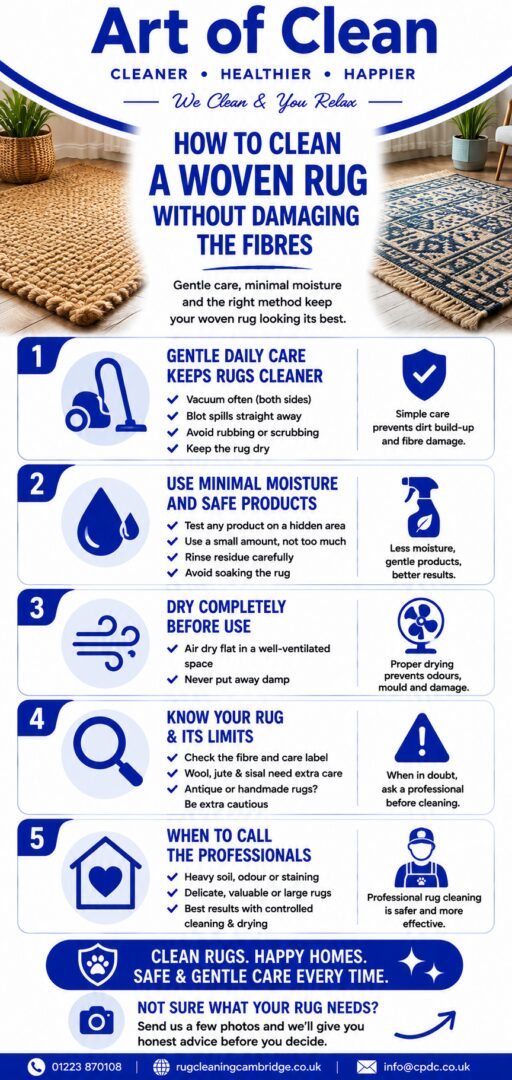
How to Clean a Woven Rug Without Damaging the Fibres Info graphic

Quick answer

To clean a woven rug safely, vacuum both sides slowly, treat fresh spills straight away with a clean white cloth, test any cleaning product on a hidden area, use minimal moisture, remove residue carefully and allow the rug to dry completely before putting it back into use.

The safest home method is gentle maintenance, not soaking, scrubbing or experimenting with strong cleaning products.

For a proper deep clean, especially on larger or delicate rugs, professional rug cleaning is usually safer because dry soil removal, rinsing, water extraction and drying can be controlled more carefully.


Understanding woven rugs before you clean

A woven rug is made by interlacing fibres to create the structure of the rug. Some are flatweave rugs, some are hand-knotted, some are machine-made, and some are made from natural plant fibres such as jute or sisal. Others may be wool, cotton, synthetic fibre or a blend.

That matters because a rug is not just a small carpet. It may have unstable dyes, fringes, a natural fibre foundation, latex backing, old repairs or a weave that can distort when it becomes too wet.

One of the biggest things people underestimate is dry soil. A woven rug can look only slightly dull on the surface while holding grit and dust deep inside the foundation. If a rug is washed before enough dry soil is removed, that soil can turn muddy inside the rug and make cleaning less effective.

This is one reason an offsite cleaning process can be useful. It allows a rug to be inspected, dusted, cleaned and dried with more control than most homes can provide. You can learn more about this on our rug cleaning process page.

rug cleaning comberton art of clean cambridge
rug cleaning service art of clean cambridge bury st edmundsGMB

Identify your rug material first

Before you clean your rug, check the care label if there is one. Look for the fibre type, washing instructions and any warning about dry cleaning, water, heat or machine washing. If the label is missing, treat the rug with caution.

Wool rugs

A wool rug is often practical and hard-wearing, but it still needs careful cleaning. Wool can hold soil in the fibre and may react badly to hot water, harsh products or aggressive scrubbing. Use cool water where suitable, a wool-safe cleaner, and gentle blotting. Avoid soaking the rug or leaving it damp.

If you are dealing with a wool rug that has staining, odour or heavy soil, it is worth reading our guide to wool rug cleaning before trying anything stronger at home.

Cotton rugs

Cotton rugs can be more tolerant of moisture than wool, jute or sisal, but they can still shrink, distort or hold detergent if over-wet. Some small washable rug types may be suitable for a washing machine, but only if the care instructions clearly say so.

Do not assume a small rug is machine washable just because it fits in the drum.

Jute rugs

Jute is very sensitive to water. A jute rug requires dry care wherever possible, regular vacuuming and very cautious spot-cleaning. Too much moisture can cause browning, staining, odour, shrinkage or distortion. Avoid steam cleaning, wet shampooing and soaking.

For more detail, see our advice on cleaning jute and natural fibre rugs.

Sisal rugs

Sisal is another natural fibre that does not like excess moisture. It can look strong, but water can stain, darken or distort the fibre. Blot spills as soon as you can with a dry cloth and ask for advice before using cleaning products.

Synthetic rugs

Polypropylene, polyester and nylon rugs are often more forgiving, but that does not mean every synthetic rug can be soaked or pressure washed. Backing, dye, size and drying still matter.

Type of rugWater toleranceBest home careAvoid
Wool rugLimitedVacuuming, careful blotting, wool-safe spot-cleaningHot water, bleach, scrubbing
Cotton rugModerateGentle cleaning if care label allowsOver-soaking, trapped moisture
Jute rugLowDry vacuuming and cautious spot careWet cleaning, steam cleaning
Sisal rugLowDry soil removal and fast blottingExcess water, harsh brushing
Synthetic rugOften higherMild detergent where suitableBleach, pressure washing, poor drying

Tools and supplies you may need

Keep the kit simple. You may need a vacuum cleaner, soft brush, clean white cloths, white towels, a bucket, cool or lukewarm water, a mild detergent suitable for the fibre and a fan for drying.

Be careful with baking soda, white vinegar and general household cleaning products. They are often recommended online, but they are not safe for every woven rug. Vinegar may affect dyes or natural fibres. Baking soda can leave residue if it is not fully removed. Strong stain removers can change the colour or texture of some fibres.

Always test a small area first.


Step-by-step guide to cleaning a woven rug safely

Step 1: Shake out loose dirt

If the rug is small enough and safe to move, take the rug outside and shake it gently. Do not beat antique, fragile or weakened rugs. For a small sturdy rug, this can remove loose grit before vacuuming.

Step 2: Vacuum correctly

Vacuum the surface of the rug slowly. If possible, turn the rug over and vacuum the back of your rug as well. This helps release dry soil from the foundation. Then turn it face up and vacuum again.

Avoid catching fringe in the vacuum. Use suction rather than an aggressive rotating brush where the rug is delicate, loose, fringed or easily distorted.

Regular vacuuming is one of the safest ways to maintain a woven rug. Busy areas, pet homes, hallways and dining spaces may need more frequent vacuuming than a quiet bedroom rug.

If you are looking after several rugs, carpets or soft furnishings in a busy home, our carpet and upholstery cleaning services may also be useful.

Step 3: Spot test any cleaning solution

Before you use any cleaning product, test it on an inconspicuous area. With a clean white cloth dampened with the solution, press it gently onto the rug. Check whether colour transfers to the cloth. Let it dry and check for texture change, browning or a visible mark.

If colour moves, or the fibre changes, do not continue.

How to Clean a Jute Rug Safely at Home Art of cleaning rug cleaning service (1)

Step 4: Treat spills quickly

For a fresh spill, blot the area immediately. Use a clean white cloth or towel and press gently. Do not rub, because rubbing can spread the stain and distort the fibre.

Work from the outside of the affected area towards the centre. If the spill is thick, carefully lift what you can with a spoon before blotting. Avoid adding several products in a row. That can make the stain harder to assess later.

Spill or stainFirst stepBe careful with
FoodLift solids gently, then blotScrubbing food into the weave
MudLet dry if safe, then vacuum before spot careWetting mud straight away
Coffee or teaBlot with a dry cloth, then use minimal moisture if suitableHot water and strong stain removers
WineBlot quickly and ask for advice on valuable rugsRubbing, salt, bleach
GreaseBlot, avoid spreading, seek advice if visibleStrong solvents on delicate fibres
Pet accidentBlot, keep ventilated, ask earlyOdour sprays, overwetting, delay

Brad, one of Art of Clean’s senior rug cleaning technicians, often sees rugs where a client has already tried a household stain product before asking for help. That is understandable. A spill happens and people want to act quickly. The safest habit is to blot first, avoid scrubbing, and tell your rug cleaner what has already been used.

If a stain matters to you, stop after safe blotting and ask before adding more products.

For more help with marks and spills, see our rug stain treatment advice.

Step 5: Gently clean the surface

If the rug material and spot test allow it, use a lightly damp cloth with a small amount of suitable cleaner. Apply the cleaner to the cloth rather than pouring it onto the rug. Blot gently. Do not soak the rug.

This is surface cleaning, not a full deep clean. It can help with light marks and everyday maintenance, but it will not remove all soil from deep inside the rug.

Step 6: Remove soap residue

Residue matters. If detergent remains in the rug, it can attract more soil and make the area look dirty again.  Use a second clean cloth slightly dampened with plain water to blot the area. Then blot again with a dry cloth.

Use as little water as possible, especially on wool, jute, sisal, viscose, silk, fringe or rugs with unknown backing.

Step 7: Dry the rug properly

Drying is often the part people underestimate. A rug that stays damp too long can develop odour, browning, mildew or shape change.

Allow the rug to dry with good airflow. A fan can help. Avoid direct heat, radiators and harsh sunlight. Do not put the rug back on a wooden floor, carpet or underlay while it is still damp underneath. Let the rug dry completely before you allow anyone to walk on it again.

Large rugs are particularly difficult to dry at home because they become heavy when wet and can hold moisture deep in the foundation.

Cleaning methods to avoid

Avoid excessive water. Over-wetting can cause shrinkage, browning, dye movement, odour and damage to the backing or weave.

Avoid steam cleaning unless the manufacturer clearly says the rug is suitable. Steam cleaning can be too hot or too wet for some woven rugs, especially natural fibre rugs.

Avoid bleach and harsh chemicals. They can remove colour, weaken fibres and create permanent damage.

Avoid pressure washing. It may look dramatic online, but it can distort the weave, force water deep into the rug and make drying difficult.

Avoid aggressive scrubbing. Scrubbing can fuzz wool, distort natural fibres, spread stains and damage fringes.

If a method feels forceful, wet or hard to reverse, it is usually the wrong first step for a woven rug.


How often should you clean a woven rug?

For regular cleaning, vacuum your rug weekly in normal use, and more often in busy areas. Rotate your rug every few months to try and reduce uneven wear and sun fading.

A deeper clean may be needed every 6 to 12 months for rugs in high-traffic areas, homes with pets or rooms where food and drink are often used. Some quieter rugs may need professional cleaning less often. The right timing depends on the type of rug, the level of use and whether there are stains, odours or trapped dry soil.

If rugs, carpets and upholstery are part of your normal home maintenance, you may also find our maintenance cleaning plans helpful.


How to remove odours naturally

Fresh air and dry soil removal can help with mild stale smells. If the rug is suitable, light baking soda may reduce some odours, but it must be vacuumed out thoroughly. Do not use it on damp rugs, delicate fibres or rugs where powder may lodge deep in the weave.

Vinegar is not a safe all-purpose answer. It may be suitable for some household cleaning tasks, but on woven rugs it can affect dyes, natural fibres or residues already in the rug. If the rug is wool, jute, sisal, silk, viscose, antique, handmade or valuable, ask for advice before using vinegar.

If the rug smells of pets, damp, mould or mildew, it may need professional assessment. Odour can sit in the backing or foundation, not only on the surface.

Common mistakes that damage woven rugs

The most common mistake is using too much water. The second is scrubbing. The third is adding one cleaning product after another when the first attempt does not work.

Other mistakes include ignoring the care label, skipping the spot test, using hot water, drying the rug in direct sunlight, leaving moisture trapped underneath and pulling fringe into the vacuum.

A woven rug does not always need more effort. It often needs a more careful decision.


When to call a professional rug cleaner

Ask for professional rug cleaning advice if the rug is valuable, handmade, antique, silk, viscose, wool, jute, sisal, badly stained, pet-affected, water-damaged, mouldy, large, heavy or difficult to dry at home.

Professional rug cleaning is not just about using stronger equipment. A careful process should start with inspection. The cleaner should consider the fibre, dye stability, construction, backing, fringe, previous cleaning attempts, dry soil load and drying risk before choosing the method.

For many rugs, offsite rug cleaning gives more control than cleaning in the home. It allows for dusting, washing where suitable, rinsing, moisture removal, controlled drying and checking after the rug is dry.

If you are unsure what the rug is made from, or you would be upset if the result went wrong, it is safer to ask before cleaning.

Tips to keep your woven rug looking better for longer

Vacuum consistently. Rotate the rug every few months. Use a rug pad where suitable to reduce movement and wear. Keep shoes off where practical. Blot spills immediately. Keep the rug away from prolonged strong sunlight. Do not leave damp items sitting on it.

If the rug sits under a dining table, near a door or in a busy family space, expect it to need more regular attention than a rug in a quiet room.

For delicate, sentimental or specialist rugs, our specialist rug care service can help you understand what is suitable before cleaning begins.


A Safer Way to Keep Your Woven Rug Looking Good

The safest way to clean a woven rug is to start gently. Identify the material, vacuum thoroughly, blot spills, avoid harsh products, use very little moisture and dry the rug completely.

A small, sturdy, clearly labelled washable rug may allow more home care. A wool, jute, sisal, silk, viscose, handmade, antique or sentimental rug deserves more caution. If you are unsure, it is better to pause and ask than to turn a small mark into a permanent problem.

If your woven rug needs more than light surface care, Art of Clean can inspect it and advise whether professional rug cleaning is suitable.

Frequently Asked Questions

Answers to common questions about our How to Clean a Woven Rug Without Damaging the Fibres service.
Only wash a woven rug in a washing machine if the care label clearly says it is machine washable. Many woven rugs are too large, too heavy, too delicate or too risky to machine wash. Jute, sisal, wool, silk, viscose, antique and handmade rugs should not be treated as washable without proper guidance.
Not always. Vinegar can affect some dyes, natural fibres and residues from previous products. It is not a safe default for woven rug cleaning.
Baking soda can leave residue if it is not fully removed. It may also lodge in dense pile or woven foundations. Avoid using it on damp, delicate, valuable or unknown rugs.
Drying time depends on the rug fibre, thickness, backing, room humidity and airflow. The important point is that the rug must dry completely, including the underside, before it is used again.
Only if the manufacturer confirms it is suitable. Steam cleaning can be too wet or too hot for many woven rugs, especially natural fibre, wool, jute, sisal, silk, viscose, handmade or older rugs.
For many suitable rugs, the safest approach is not a strong homemade cleaner. It is cool water, a clean white cloth, gentle blotting and a small amount of fibre-appropriate detergent only after testing.
Many rugs benefit from professional cleaning every 12 to 24 months, depending on use. Busy rugs, pet homes and dining areas may need attention sooner. Valuable or delicate rugs should be assessed before deciding.