How to Clean Your Wool Rug Without Damaging It

A wool rug can make a room feel warmer, softer and more finished. It may sit under a coffee table, beside a bed, in a hallway or in the middle of family life. That also means it collects dust, grit, spills, pet contact and everyday soil over time.

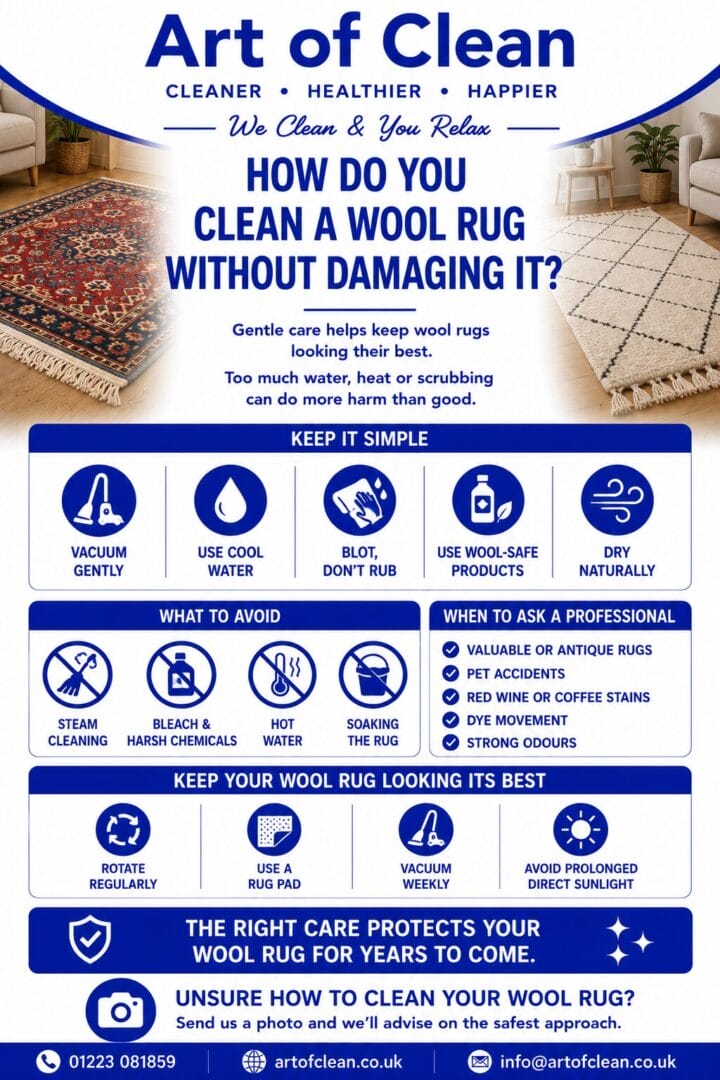
The safest way to clean a wool rug is gently. Use dry vacuuming, careful spot treatment, minimal moisture and slow, controlled drying. Avoid hot water, bleach, ammonia, scrubbing, soaking and steam cleaning, as these can damage wool fibres, affect dyes, cause shrinkage or leave the rug slow to dry.

Light care at home can help keep your wool rug clean between professional cleans. A proper deep clean is different. Some wool rugs are better cleaned off-site, where dust removal, rinsing, extraction and drying can be controlled more carefully.


Why wool rugs need special care

Wool is naturally strong, resilient and useful in busy homes. A well-made wool rug can last for so many years with regular cleaning and sensible wool rug care.

The difficulty is that a wool rug is not the same as a fitted wool carpet. Rugs can have different backing materials, fringes, dyes, repairs and construction methods. They can also hold dry soil deep inside the foundation, even when the surface only looks a little dull.

Wool fibres can react badly to too much water, heat or friction. Hot water may encourage dye movement or shrinkage. Scrubbing can distort the wool pile. Strong detergent, bleach or the wrong stain remover can damage wool fibres or change the colour. Over-wetting can affect the backing and make it difficult for the rug to dry completely.

A rug cleaning expert will usually want to know what the rug is made from, whether the dyes are stable, whether the fringe is delicate, what stains are present and what has already been used on it. Brad, one of Art of Clean’s senior rug cleaning technicians, often sees rugs where a client has tried to help with a household product first. That is understandable, but it can make the final result harder to predict.

DIY cleaning is safest when it is light surface care: regular vacuuming, careful blotting after a fresh spill and gentle maintenance. It becomes riskier when the whole rug is wet cleaned, treated with a strong product or left damp for too long.

rug clean service art of clean cambridge
King's Lynn Rug cleaning Service Norfolk Art of Clean Cambridge GMB

What you’ll need before cleaning a wool rug

Before you clean your wool rug at home, check the care label if there is one. Look for fibre content, cleaning guidance and any warning about dry cleaning, water, heat or professional care. If the label is missing, the rug is valuable, inherited, sentimental, antique or has delicate fringe, pause before applying any cleaning solution.

For safe surface care, keep things simple.

Safe to useAvoid
Wool-safe detergentBleach
Cool waterHot water
Soft clothsStiff brushes
Clean white cloth or white towelsSteam cleaners
Dry towelStrong stain remover
Gentle vacuumHarsh carpet cleaning products

Use products specifically designed for wool where possible. A detergent formulated for wool is safer than a general household cleaner, but it should still be tested first.

Tools to avoid include steam cleaners, harsh brushes, bleach products, ammonia, washing-up liquid used heavily, and any stain remover not recommended for wool rugs. Some products may appear to work at first but leave residue that attracts more soil later.

How to clean a wool rug step by step

Step 1: Shake out loose dirt

If the rug is small enough and safe to move, take your rug outside and shake it gently. You can also hang the rug over a sturdy line or rail and use a rug beater carefully on the back. Do not beat delicate, antique or fragile rugs.

This step helps the rug to remove loose grit before vacuuming. Dry grit can act like tiny sandpaper inside the fibres, so removing it is an important part of general wool rug cleaning.

Step 2: Vacuum both sides carefully

Vacuum your wool rug slowly, using suction rather than an aggressive rotating brush if possible. Vacuum the front first, then flip the rug and vacuum the back. If the rug has fringe, avoid pulling the fringe into the vacuum.

For regular cleaning, vacuuming once a week is sensible for many homes, and more often in high-use areas. A rug outside a busy doorway or under a dining table may need more frequent attention than a rug in a quiet bedroom.

Step 3: Test for colourfastness

Before applying the cleaning solution, test a hidden area with a clean white cloth lightly dampened with cool water and a small amount of wool-safe detergent. Press gently and check whether any dye transfers to the cloth.

If colour moves, do not continue cleaning wool at home. Dye movement can quickly turn a small job into a bigger problem.

Step 4: Spot-clean stains gently

For a fresh stain, blot the rug gently. Do not rub. Use a clean cloth or dry towel to lift as much moisture as possible. Work from the outside of the stain towards the centre so it does not spread.

If a wool-safe cleaning solution is suitable, apply only a small amount to the cloth, not directly onto the entire rug. Blot the area with a clean cloth, then use a second cloth lightly dampened with clean water to remove residue.

This is the safest way to spot clean a wool rug at home. It may remove stains or reduce them, but not every stain will disappear. Red wine, coffee, tea, oil, pet accidents, dye transfer and old marks can all behave differently.

Cambridge and bury st edmunds rug cleaning service art of clean GMB

Step 5: Lightly clean the surface

If you need to clean the rug surface, avoid soaking it. Use a lightly damp, clean cloth or even a damp  sponge with a small amount of wool-safe detergent. Work gently with the wool pile rather than scrubbing across it.

Do not pour water over the whole rug. Do not use a carpet cleaning machine unless the rug has been assessed and the method is known to be safe for wool and the rug’s construction.

A wool rug may look like it should be easy to clean, but the risk is often hidden in the dyes, backing, fringe or previous treatment.

Step 6: Remove excess moisture

After cleaning, press the area with a dry towel to absorb as much moisture as possible. You can stand on the towel gently to help draw moisture out, but avoid twisting or wringing the rug.

If detergent residue remains, it may attract more soil. Use minimal product, rinse carefully with a lightly damp cloth and keep removing moisture until the area feels only slightly damp.

Step 7: Dry the rug properly

Drying matters as much as cleaning. A wool rug should air dry in a well-ventilated place, away from direct heat. Do not put it against a radiator, use a hairdryer, or leave it damp on a wooden floor.

A practical drying checklist:

  • Make sure air can move around the rug.
  • Lift the rug if needed so the backing can dry.
  • Keep it away from direct heat.
  • Do not replace furniture until the rug is completely dry.
  • Check the rug to dry completely before putting it back into normal use.

If the rug smells musty, feels damp underneath or takes too long to dry, ask for advice. Wet wool and slow drying can create odour, browning or backing problems.

How to remove common stains from a wool rug

Different types of stains need different treatments. The first rule is to avoid panic cleaning. More product does not always mean a better result.

Mud and dirt stains should usually be left to dry first. Once dry, gently break up loose soil and vacuum the area. If a mark remains, blot with a wool-safe cleaning solution after testing.

Food and drink spills should be blotted quickly with a clean white cloth. Avoid rubbing, as this can push that stain deeper into the wool pile.

Pet accidents need care because they can affect odour, dyes and backing. Blot fresh moisture, avoid soaking the rug and ask for advice if the rug is valuable, wool, antique, Persian, inherited or sentimental.

Grease or oil marks can be awkward because they may cling to wool and attract more soil over time. Avoid washing-up liquid unless advised, as residue can make the area re-soil.

Wine, coffee or tea stains should be blotted straight away with a dry towel or clean cloth. Avoid heat and avoid adding several products one after another.

A good professional will ask what caused the stain, when it happened and what has already been tried. This is not to judge. It helps the rug cleaner understand whether the mark is likely to be soil, staining, residue, dye change, fibre damage or chemical change.

Can you use baking soda on a wool rug?

Baking soda is often suggested for rugs and carpets because it can absorb some odours and dry surface contamination. On a wool rug, it should be used cautiously.

If you use baking soda, keep it dry, use a light amount and vacuum it away thoroughly. Do not mix it with water to make a paste on wool. Do not scrub it into the fibres. Do not use it as a deep-clean method.

Baking soda may help with a mild surface smell, but it will not properly clean a wool rug, remove deep soil, rinse residue or solve pet contamination. It can also be difficult to remove from dense wool rugs if too much is used.

Avoid baking soda if the rug is damp, delicate, antique, silk-mix, viscose, heavily soiled, pet-affected or has unstable dyes. In those cases, ask before adding anything.

 

Can you steam clean a wool rug?

Steam-cleaning methods can be risky for wool rugs. Heat, moisture and pressure can affect wool and cause problems with dyes, backing, texture and drying. Steam may also set some stains, especially if heat reacts with what has already been used.

A fitted carpet and rug are not the same thing. A wool carpet may be cleaned in the home using suitable professional carpet cleaning methods, but an area rug can behave differently because it has its own construction, backing and edges.

Safer alternatives include regular vacuuming, careful blotting, light surface cleaning where suitable and professional wool rug cleaning when the whole rug needs attention.

For many wool rugs, professional wool rug cleaning off-site gives more control. The rug can be inspected, dusted, tested, cleaned, rinsed, extracted and dried in a more suitable setting. This is often recommended for wool rugs that are valuable, sentimental, heavily soiled, pet-affected, delicate, inherited or uncertain in fibre and dye stability.

When to choose professional cleaning

You can clean your rug lightly at home, but there are times when it is better to ask for advice first.

Choose professional advice if:

  • The wool rug has old or difficult stains.
  • The rug has a pet odour or contamination.
  • The dyes may not be stable.
  • The fringe is weak or damaged.
  • The rug is antique, Persian, Oriental, inherited or sentimental.
  • The rug has already been treated with a stain remover.
  • The whole rug needs a deep clean.
  • The rug needs to dry safely and quickly.

A professional rug cleaner should not promise that every stain will disappear. Some stains can be removed, some may improve, and some may remain because the fibre, dye or backing has changed. Honest expectation setting protects both the rug and the client.

Art of Clean has a long history of collecting off-site rug cleaning in the Cambridge area, giving clients a more controlled option than cleaning suitable rugs in the home.

How to keep your wool rug looking better for longer

Good wool rug care is mostly about steady habits.

Vacuum regularly so dry grit does not build up.

Use a rug pad where suitable to reduce movement and wear.

Rotate the rug occasionally so sunlight and traffic are more even.

Blot spills quickly instead of rubbing.

Keep strong stain products away from wool.

Tell a professional what has already been used before cleaning.

Allow the rug to dry fully after any treatment.

These simple habits help keep your wool rug looking fresher and reduce the chance of damage wool fibres may suffer from scrubbing, heat or overwetting.

Final thoughts

Knowing how to clean a wool rug safely is useful, but knowing when to stop is just as important.

For light maintenance, vacuum carefully, blot fresh spills, use cool water sparingly and choose products that are safe for wool. For stains, odours, heavy soiling or valuable rugs, it is usually better to ask before adding more product or moisture.

A wool rug can often be cleaned effectively, but the method should follow the rug. Fibre, dye stability, construction, condition and previous cleaning attempts all matter.

If you are unsure what your rug needs, send us a photo and a short description of what has happened. We can help you decide whether home care is sensible, whether collection and assessment would be safer, and what result is realistic before you decide what to do next.

Frequently Asked Questions

Answers to common questions about our How to Clean Your Wool Rug Without Damaging It service.
You can carry out light care at home, such as vacuuming, shaking out dry soil and blotting fresh spills. A full deep clean is more difficult because too much moisture, the wrong detergent or slow drying can damage the wool and cause dye, backing or odour problems.
The safest way to clean a wool rug at home is to vacuum gently, test any product first, blot stains rather than rubbing, use minimal cool water and allow the rug to dry completely. Avoid steam cleaning, soaking and harsh stain removers.
Only use a carpet or rug cleaning product if it is clearly safe for wool and has been tested in a hidden area. Many general carpet cleaning products are not suitable for wool rugs, especially if the rug has unstable dyes, a delicate fringe or unknown fibres.
For many homes, weekly vacuuming is a good starting point. Rugs in busy areas, homes with pets or rooms with lots of foot traffic may need vacuuming more often.
Some rugs may need dry cleaning or a low-moisture method, depending on their fibre, dyes, backing and condition. Other rugs can be washed professionally in a controlled way. The right answer depends on the rug, so assessment matters.
No. Some stains can be removed, some may improve, and some may be permanent. Previous products, bleach damage, dye loss, fibre damage, pet accidents and old staining can all affect the result.