Maintaining Wood Floors After Sanding (Complete Guide)

A newly sanded wood floor can change the whole feel of a room. The old wear has gone, the surface feels smoother and the colour of the wood is visible again. But the work is not finished the moment the sanding machine leaves the room.


What happens next matters.

The first few days after floor sanding are when a wood floor is most vulnerable. Dust, grit, excess water, furniture, pets and the wrong cleaner can all mark the new finish before it has had time to settle properly. Good floor care does not need to be complicated, but it does need to be calm, consistent and suitable for the type of finish used.

At Art of Clean, we often remind clients that sanding removes the top layer of wood, but the finish is what protects the wood beneath. Looking after that finish is what helps the floor stay easier to clean, nicer to live with and more resistant to everyday wear and tear.

If you are still planning the work, you may also find our guide to professional wood floor sanding and restoration useful.

Maintaining Wood Floors After Sanding (Complete Guide) Art of clean wood floor restoration service

Key takeaways

Remove dust thoroughly before and after the finishing process. Use soft tools, clean microfibre cloths and the right floor cleaner. Keep moisture low when you mop. Avoid steam cleaners, harsh cleaning products and abrasive pads. Protect the floor from grit, furniture marks, direct sun and early foot traffic. Most importantly, follow the guidance for the exact type of finish used on your floor.


Why maintenance after sanding is critical

Wood flooring is a long-term investment. In many homes, the floor is part of the character of the property, whether it is a simple wooden floor in a family room, old pine boards under a carpet, parquet in a hallway or a hardwood floor in a busy kitchen.

Floor sanding can restore the surface, but it also removes a thin layer of wood. That is why sanding should not be treated as something to repeat unnecessarily. Once the floor has been sanded and sealed, sensible aftercare helps protect the finish so the floor does not need deeper restoration too soon.

Poor maintenance can lead to early scratches, dull patches, water marks, scuffs, staining and uneven wear. Grit is one of the quiet problems. It can sit under shoes, chair legs, rugs and doorways, slowly scratching the finish each time the floor is used. Robby often sees that fixing the cause of scratching matters as much as restoring the floor itself.

The aim is not to keep the room unused. It is to help the floor cope with normal life, from chairs moving around a kitchen table to pets, children, guests and everyday foot traffic

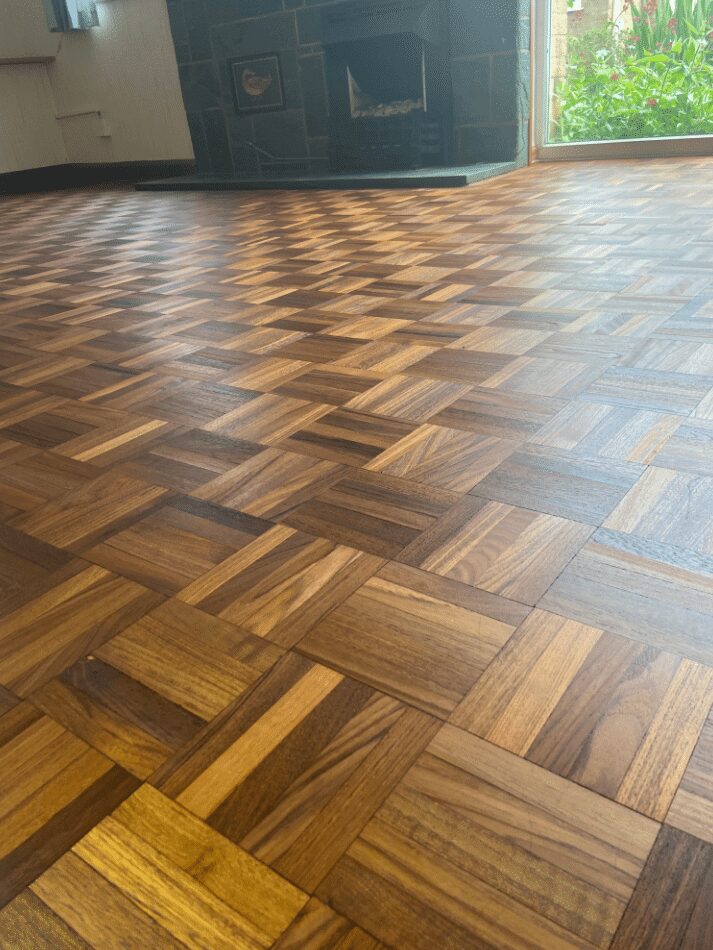
Five-fingered-oak-parquet-floor-restoration-Cambridgeshire
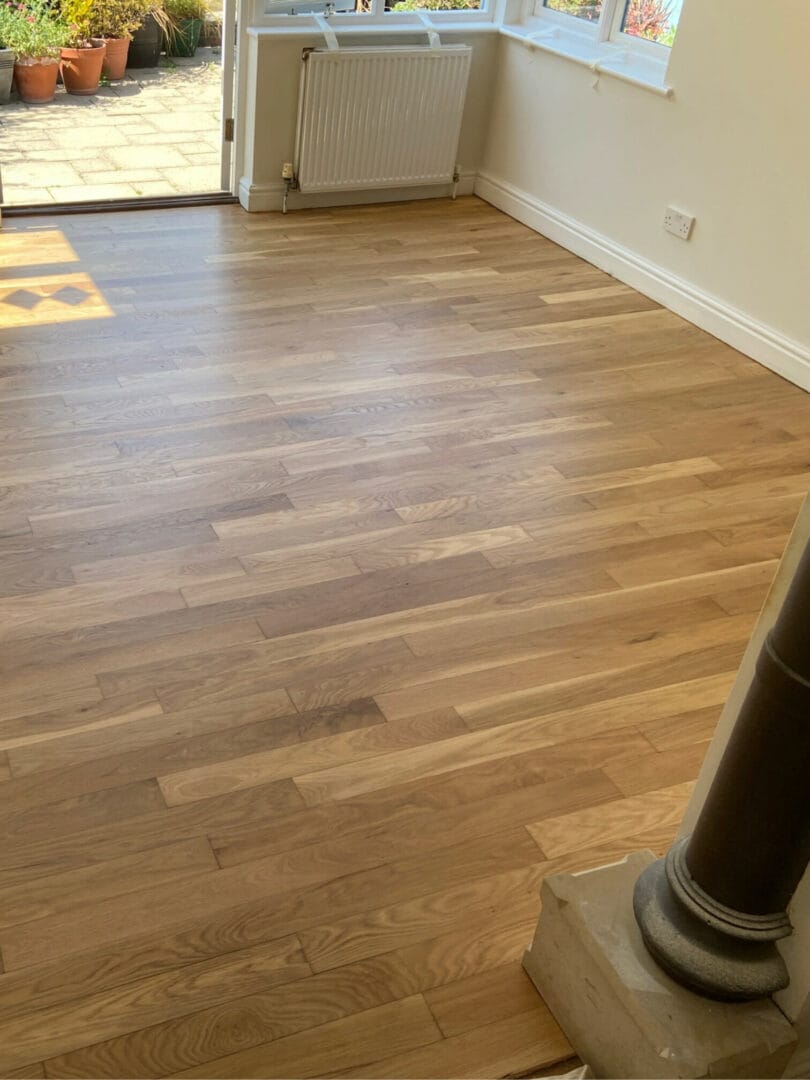
Oak-wood-floor-after-restoration-art-of-clean-cmabridge-bury-stedmunds

What happens immediately after sanding?

Immediately after sanding, the floor is not ready for normal use. Freshly sanded wood may look clean and flawless, but it can still hold fine dust in the grain, gaps and edges.

Before the floor is ready for finishing, sanding dust needs to be removed carefully. That usually means vacuuming with a soft brush attachment, checking edges and corners, and wiping with a suitable tack cloth or microfibre cloth if the finish system allows it. You can read more detail in our guide on how to clean wood floors after sanding.

Once the floor finish is applied, drying and curing become the main concern. Drying means the surface may no longer feel wet. Curing means the finish is hardening properly and gaining strength.

This is where homeowners can get caught out. A floor can feel dry before it is ready for shoes, furniture, rugs or mopping. Bona’s technical data for Traffic HD, for example, gives guidance for light foot traffic, full use and waiting before covering the surface with carpets or other floor coverings. The exact timings depend on the finish used, so manufacturer and contractor guidance should always come first.

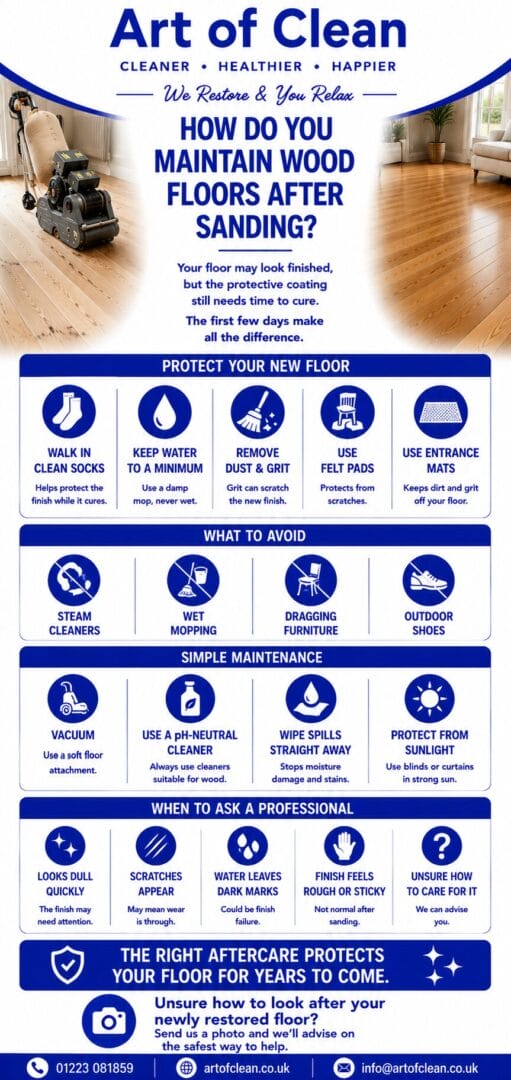
In the first 24 to 72 hours, avoid walking on the floor unless you have been told it is safe. When light walking is allowed, clean socks are usually safer than outdoor shoes. Keep pets away for longer where possible, because claws can mark a finish before it has reached full strength.

Common early mistakes include walking too soon, putting furniture back too quickly, dragging chairs, laying rugs early, damp mopping during cure time and opening windows in a way that blows dust back into the room.

A simple maintenance routine for floors after sanding

A good routine is usually better than occasional heavy cleaning. The aim is to remove dust and dirt before it becomes abrasive, then clean lightly without adding unnecessary moisture.

FrequencyWhat to doWhy it helps
Daily or as neededSweep or vacuum with a soft floor attachmentRemoves grit before it can scratch the floor
WeeklyLightly damp mop with an approved pH-neutral cleanerLifts surface soil without soaking the finish
MonthlyInspect high-use areas, entrances, chair legs and felt padsHelps you catch early wear before it becomes damage
SeasonallyCheck mats, sunlight exposure, humidity and furniture movementReduces fading, scuffing and movement in the wood
Annually or when advisedAsk about professional inspection, buffing or recoatingHelps protect the finish before full sanding is needed again

For daily floor care, a soft broom, dust mop or vacuum with a wood floor setting is usually enough. Do not use a beater bar or anything that may scratch the finish.

For weekly cleaning, the mop should be damp, not wet. If water is left sitting on the surface, especially near gaps, board edges or worn areas, it can increase the risk of swelling, staining or finish problems. Wipe spills promptly with a soft cloth.

For monthly checks, look at the parts of the room that work hardest. Entrances, kitchen tables, desk chairs, dog routes and patio doors often show wear first. This is where mats, felt pads and small habit changes make the biggest difference.

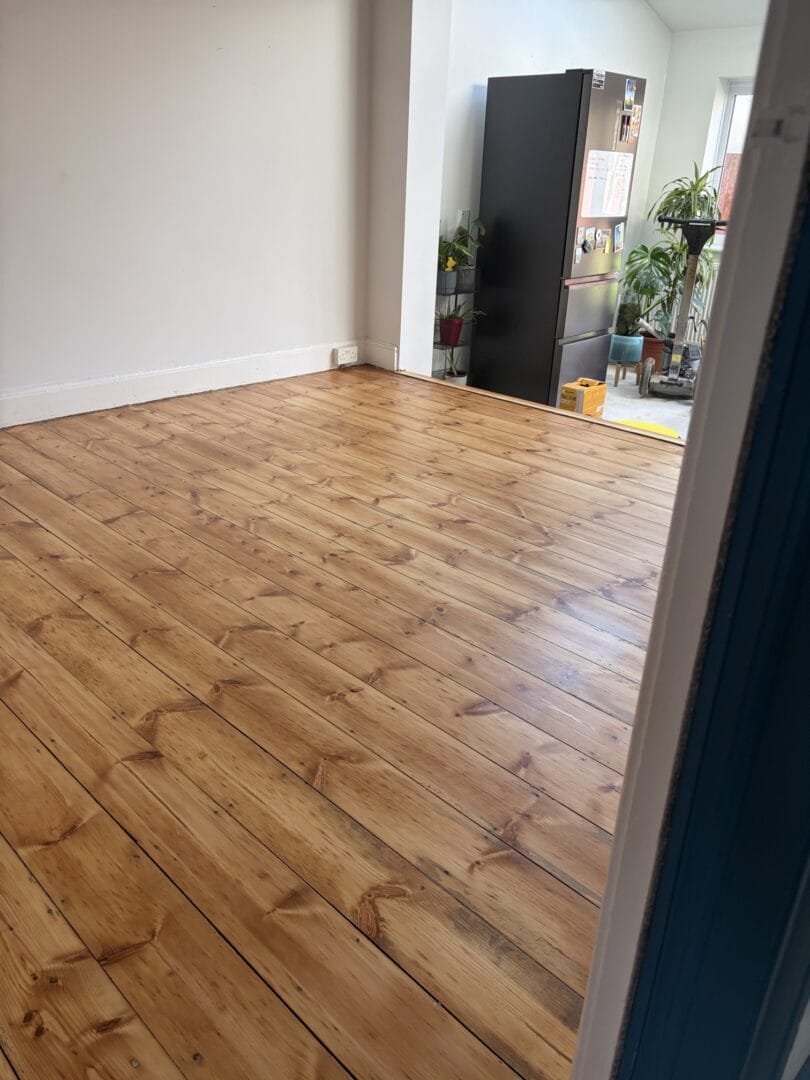
pine wood floor restortation art of clean

Best cleaning products and tools to use

Use cleaning products designed for wood floor care and suitable for your floor finish. A pH-neutral wood floor cleaner is usually a safer starting point than general household sprays, polish, bleach, vinegar mixes or steam.

Useful tools include:

  • A soft floor vacuum attachment.
  • A clean microfibre mop.
  • A soft cloth for spills.
  • Good entrance mats.
  • Felt pads under furniture.
  • A cleaner is recommended for the floor finish.

Avoid steam cleaners on wood floors. Steam adds heat and moisture, which can cause problems if the finish is worn, newly applied or not suited to that treatment. Also avoid abrasive pads, harsh chemicals, silicone furniture sprays and products that promise a quick shine but leave a residue. Residues can make the floor look dull, attract dirt or cause problems if the floor needs recoating later.

If the floor has been finished with a Bona system, use Bona-compatible cleaning and maintenance advice rather than mixing products from different systems. If the floor has been finished with oil, hardwax oil, lacquer or varnish, the care routine may differ.


How to prevent scratches, scuffs and early wear

Most floor damage is not caused by one dramatic event. It often comes from ordinary use.

Grit comes in from outside. Chairs move. Pets run through the same doorway. A plant pot leaks slightly. A rug traps dirt underneath. A desk chair rolls over the same small area every day.

Use entrance mats at external doors and clean them regularly. Fit felt pads under chairs, tables and sofas. Lift furniture instead of dragging it. Keep pet claws trimmed where possible. Avoid walking on the floor with outdoor shoes during the early curing stage. If a rug is used, make sure the backing is suitable and do not place it too early after finishing.

Sunlight can also change the colour of wood over time. This is normal, but rugs and furniture can create uneven fading if they never move. In sunny rooms, blinds, curtains and occasional layout changes can help the floor age more evenly.

Moisture and humidity after floor sanding

Wood moves with changes in moisture. Too much moisture can cause swelling, cupping or staining. Very dry air can contribute to shrinkage and gaps.

Many homes are comfortable for wood floors when humidity is kept broadly stable, often around 40 to 60 percent, unless the flooring or finish manufacturer gives different guidance. The main point is stability. Sudden changes are harder on a wooden floor than gentle seasonal movement.

Be careful with wet mopping, plant pots, pet bowls and damp rugs. In kitchens, hallways and garden-facing rooms, wipe up water quickly. If a room has known damp issues, it is worth dealing with that before sanding and finishing your wood floors.

When should you call a professional?

Ask for advice if the floor starts to look grey, patchy, sticky, rough or dull soon after sanding. Also call if scratches go through the finish, if a spill leaves a dark mark, if boards start moving, or if cleaning seems to make the floor worse rather than better.

Sometimes a maintenance clean or recoat may be enough. Sometimes the finish has failed and sanding is needed. Sometimes, especially with engineered wood floors, a professional needs to check the wear layer before any further sanding is discussed.

A good professional should not rush straight to sanding. They should inspect the floor, ask what products have been used, check how the room is used and explain whether cleaning, recoating, sanding or replacement is the most sensible route.

This is one of the reasons clients often value clear explanation as much as the final result. Wood floor restoration trust is built through process, tidy working, honest expectations and aftercare, not just the before-and-after photo.

Keeping the floor looking good for longer

Maintaining wood floors after sanding is really about protecting the finish while it does its job. Remove grit before it scratches. Clean lightly instead of soaking. Give the finish time to cure. Use the right cleaner. Keep furniture protected. Watch the high-use areas before they become worn through.

A sanded floor should be lived on and enjoyed. It just needs a little care, especially in the first few days and weeks.

If you are planning a floor renovation, or you are unsure how to look after a newly sanded floor, Art of Clean can talk you through the process, the likely finish options and the aftercare that suits your home.

You may also find these guides useful:

Wood floor restoration services

Dust-free floor sanding explained

Wood floor sanding equipment

Art of Clean wood floor aftercare guide

Frequently Asked Questions

Answers to common questions about our Maintaining Wood Floors After Sanding (Complete Guide) service.
This depends on the type of finish used. Some floors may allow light foot traffic after a set period, while others need longer before normal use. Always follow the advice given by the contractor or finish manufacturer. When walking is allowed, clean socks are usually safer than shoes during the early curing stage.
Do not rush furniture back into the room. The floor may feel dry before the finish has fully cured. Putting heavy furniture back too soon can mark the surface. Ask your floor sanding team for the right timing, and use felt pads under chair legs, tables and sofas before anything is moved back.
Not straight away. Water and cleaning products should be avoided until the finish has had enough time to dry and cure. Once cleaning is safe, use a lightly damp microfibre mop and a suitable pH-neutral wood floor cleaner. The mop should never be wet enough to leave water sitting on the surface.
Use a cleaner that is suitable for the finish on your floor. A pH-neutral wood floor cleaner is usually a safer choice than general household sprays, polish, bleach, vinegar or steam. If you are unsure whether the floor has been finished with oil, hardwax oil, lacquer or varnish, ask before changing products.