Rug Cleaning Common Mistakes and How to Avoid Them

A rug can look simple to clean until something goes wrong. A spill spreads. A colour moves. The fringe turns brown. The rug stays damp for too long. A cleaning product leaves a sticky patch that seems to attract more dirt than before.

Most rug cleaning mistakes come from one understandable assumption: treating a rug like a small carpet.

Some rugs can cope with light home care. Others need a much more careful approach. The safest route is to understand what the rug is made from, use as little moisture as possible, avoid harsh products, blot rather than scrub, and ask for advice before cleaning anything delicate, valuable, old, or sentimental.

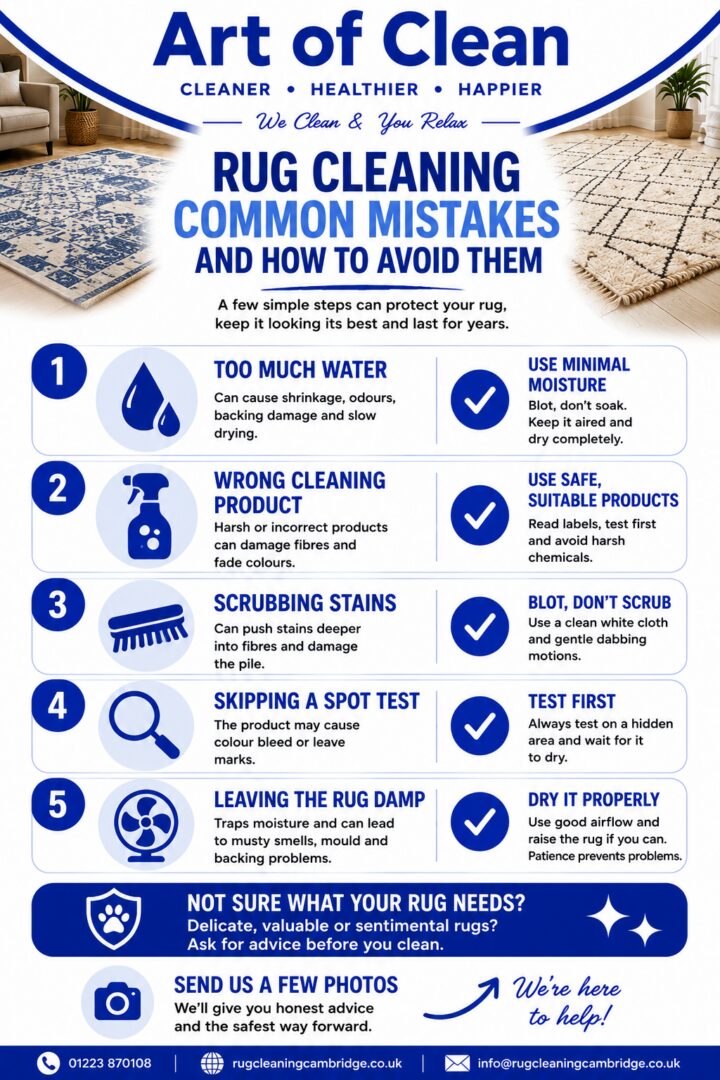
Rug Cleaning Common Mistakes and How to Avoid Them info graphic explaining them

Quick answer

The most common rug cleaning mistakes are using too much water, scrubbing stains, using the wrong cleaning product, skipping a spot test, vacuuming too aggressively and leaving the rug damp. These mistakes can damage fibres, cause colour bleed, leave residue, create odours or make stains harder to treat later.

If the rug is wool, silk, viscose, jute, sisal, hand-knotted, antique or important to you, pause before trying a deep clean at home. A photo, a short description and honest details about what has happened can help a professional rug cleaning team advise what is realistic.


Why proper rug cleaning matters

A rug does more than cover a floor. It takes foot traffic, catches dust, softens a room, protects wood floors and often carries sentimental value. Some rugs are everyday family rugs. Others are hand-knotted, inherited or bought because they finish a room properly.

The difficulty is that rugs vary hugely. A synthetic area rug in a playroom, a wool rug in a sitting room, a silk rug, a jute runner and a Persian rug should not all be cleaned in the same way.

Incorrect cleaning can shorten a rug’s lifespan. Too much moisture may cause shrinkage, browning, odour or backing problems. Harsh products may affect colour or texture. Scrubbing can distort the pile. Slow drying can lead to musty smells and, in some cases, mould and mildew growth.

Brad often starts rug conversations by understanding what the rug is, what has happened and what result the client expects. That matters because a safe clean is not only about removing dirt. It is about choosing a method that fits the fibre, construction, dyes, backing, fringe and condition.

Rug cleaning service cambridge art of clean chittering
2 West Mersea Rug Cleaning December Art of Clean Cambridge

Mistake 1: Not identifying the rug material

This is one of the biggest mistakes homeowners make. The cleaning method should follow the rug material, not the other way round.

Wool is naturally resilient, but it can still be affected by heat, strong alkalinity, scrubbing, unstable dyes and slow drying. Cotton can absorb moisture easily and may shrink or distort. Jute and sisal are especially sensitive to excess moisture. Silk and artificial silk need great caution because texture and shine can change. Synthetic rugs are often more forgiving, but even they can have sensitive backings, latex issues, dye problems or old residue.

A simple care table can help, but it should never replace proper assessment.

Rug materialUsually safer approachAvoid
WoolGentle spot cleaning and professional cleaning where neededHot water, scrubbing, harsh stain removers
CottonMild detergent where suitable, minimal moistureOver-soaking and slow drying
JuteDry or very low-moisture methods where suitableWet cleaning and steam cleaning
SisalDry soil removal and careful spot workSoaking, rubbing and damp rooms
SilkProfessional assessmentDIY stain removal
SyntheticMild products where suitableBleach, over-wetting and product layering

If you are not sure what the rug is made from, check the label, look at the backing and take a photo before you clean. When the label is missing, treat the rug cautiously.

Mistake 2: Using too much water

Using too much water is one of the most damaging rug cleaning mistakes. A wet rug can become very heavy, difficult to rinse and slow to dry. Moisture may reach the backing, loosen adhesives, distort the shape or cause odours.

This is especially risky with thick rugs, natural fibre rugs, rugs with latex backing, rugs over wood floors and rugs that have already had pet accidents or previous cleaning products applied.

At home, controlled spot cleaning is usually safer than soaking. Use a clean white cloth, work with minimal moisture and keep air moving while the area dries. Do not put a damp rug back flat on a wooden floor, laminate floor or carpet and hope it will dry underneath.

In professional area rug cleaning, drying control is part of the cleaning process. At Art of Clean, collected rug cleaning gives the team more control over inspection, dry soil removal, cleaning, rinsing, extraction and drying than trying to deep clean a rug in the middle of a home.


Mistake 3: Scrubbing stains aggressively

Scrubbing feels useful because it feels active. Unfortunately, it often makes the problem worse.

When you scrub a stain, you can push contamination deeper into the fibre and backing. You may spread the stain sideways, distort the pile or create a fuzzy patch that remains visible after the stain has improved. On some fibres, the damage from scrubbing can be more permanent than the original spill.

The safer first response is to blot gently.

Remove any solids first. If there is liquid, press with a clean white towel. Keep moving to a dry part of the towel so you are lifting moisture rather than spreading it. If a suitable cleaner is used, test first and apply it sparingly. Blot again, then dry the area thoroughly.

For pet accidents, wine, coffee, grease or unknown stains, avoid adding several products one after another. Layering vinegar, supermarket stain remover, washing-up liquid, deodoriser and more water can leave residue and make professional stain treatment harder later.


Mistake 4: Using the wrong cleaning products

Not every carpet cleaner is safe for every rug. This is where carpet cleaning mistakes and rug cleaning mistakes overlap, but rugs often carry more risk because they may have different dyes, backings, fringes and fibres from fitted carpet.

Products to be very careful with include bleach, ammonia, strong solvents, high-alkaline cleaners, laundry detergents, washing-up liquid and heavily fragranced odour sprays. Some can cause colour change. Some leave sticky residue that attracts soil. Some react with previous products already in the rug.

A pH-neutral product may be safer for some rugs, but “gentle” on the bottle does not mean suitable for every fibre. Always check the manufacturer’s care instructions where available and test in an inconspicuous area first.

Mistake 5: Skipping a spot test

Spot testing is not exciting, but it can prevent costly damage.

Choose a hidden area of the rug, such as a corner or a part usually under furniture. Apply a small amount of the cleaning solution to a very clean white cloth, not directly to the rug. Press gently, then check the cloth for colour transfer. Wait and check the fibre for texture change, dullness, browning or distortion.

This is especially important with deep reds, dark blues, blacks, bright colours, silk, viscose, wool rugs, handmade rugs and older rugs.

A spot test cannot guarantee the whole rug will clean safely, but it is a useful warning step. If colour transfers or the fibre changes, stop.


Mistake 6: Vacuuming incorrectly

Vacuuming is one of the best forms of routine rug care, but it still needs judgement.

Regular vacuuming removes dry soil before it works deeper into the pile. That matters because grit can act like fine sandpaper under foot traffic. In rug cleaning, dry soil removal is not a small step before the “real clean”. It is part of protecting the rug.

Common vacuuming errors include using excessive suction, vacuuming fringes, using a rotating brush bar on delicate rugs or repeatedly catching the rug edges. Fringes can weaken, edges can fray and delicate pile can distort.

For many rugs, vacuum with the pile and adjust the suction if possible. Avoid running a rotating brush bar over fringes. For delicate, antique or loosely woven rugs, gentler methods may be safer.

Professional rug cleaning goes further than ordinary vacuuming. Art of Clean’s off-site process includes deeper dry soil removal before washing, because rugs can hold dust and grit well below the visible surface.


Mistake 7: Leaving rugs damp

A rug that smells worse after cleaning has often been left damp for too long, cleaned with too much product or dried without enough airflow.

Dampness can cause musty odours, browning, dye movement, backing issues and mildew growth. Thick rugs, rugs with dense pile and rugs cleaned in cool rooms can be particularly slow to dry.

Safe drying usually means good air movement, careful extraction where appropriate, flat drying where suitable and avoiding direct heat that may distort fibres or backing. Do not use a hairdryer on a delicate rug. Do not hang a very heavy wet rug in a way that stretches or distorts it.

If the rug has been soaked by a leak, flood, pet accident or cleaning attempt, ask for advice early. Waiting several days can reduce the chance of a good outcome.

Mistake 8: Ignoring care instructions

Care labels are not always complete, and older rugs may not have one. But when instructions are present, they are worth checking before you clean.

A label may tell you the fibre, whether the rug can be washed, whether dry cleaning is recommended, whether colour fastness is limited, and whether certain methods should be avoided. It may also affect warranty or retailer advice.

For imported, Oriental, Turkish, Persian, antique or delicate rugs, manufacturer or specialist advice matters even more. These rugs may need professional cleaning rather than a general carpet cleaning approach.


Mistake 9: Waiting too long to clean spills

Fresh spills are usually easier to improve than old stains. Once a spill dries, oxidises, reacts with dyes or has been treated with the wrong product, the result becomes less predictable.

Here are safer first steps for common spills.

Spill or stainImmediate actionAvoid
CoffeeBlot with a clean white towel, use minimal moistureRubbing or soaking
WineBlot quickly and ask for advice if the rug is valuableHot water and harsh products
MudLet it dry, then vacuum gently before spot workSmearing wet mud deeper
Pet accidentBlot, ventilate and tell the cleaner what happenedBleach, perfume sprays and hiding the history
GreaseBlot surface residue and seek adviceSpreading it with water
Food spillsRemove solids, blot moisture, test before cleaningScrubbing and product layering

There is no judgement in telling a professional what happened. In fact, it helps. If a stain has already had vinegar, carpet cleaner, washing-up liquid or odour spray applied, say so. That information helps the technician choose the safest next step.

Mistake 10: Cleaning valuable rugs yourself

Some rugs are better left alone until they have been assessed.

Professional cleaning is usually the safer choice for antique rugs, Persian rugs, Oriental rugs, silk rugs, handmade rugs, inherited rugs, rugs with unstable dyes, rugs with weak fringes and rugs with pet contamination or water damage.

This does not mean every valuable rug needs a dramatic restoration process. Sometimes the aim is simply to remove dry soil, clean as safely as the rug allows, dry it properly and explain the limits honestly.

Signs it is time to call a professional include colour bleeding, strong odour, mould spots, old pet accidents, water damage, persistent stains, loose edges, weak fringe, unknown fibres or sentimental value.

A careful rug cleaning service should be willing to say when cleaning is suitable, when extra testing is needed and when the likely result may not justify the cost.


Rug cleaning best practices

Good rug care is usually built on steady habits rather than dramatic cleaning.

Vacuum regularly, but gently. Rotate rugs so wear and sunlight are more even. Use a rug pad where suitable. Keep natural fibre rugs away from damp areas. Deal with spills quickly. Avoid strong products unless you are sure they are suitable. Let the rug dry fully after any treatment.

For rugs in busy homes, pet households, dining areas, hallways or sunny rooms, keep a closer eye on wear, odour and colour change. These rugs work hard every day, and cleaning is only one part of care.

DIY vs professional rug cleaning

DIY rug care is suitable for light maintenance, regular vacuuming, careful blotting of fresh spills and minor surface marks on rugs that are stable, washable and not valuable.

Professional rug cleaning is the safer choice for deep cleaning, embedded dirt removal, delicate fibres, handmade rugs, wool rugs, silk or artificial silk, jute and sisal, pet odour, colour bleeding, old stains and rugs that matter financially or sentimentally.

A good rule is this: if you would be upset if the rug changed colour, shrank, smelled worse or became distorted, ask before you clean it.


When to pause and ask for rug cleaning advice

Most rug damage is preventable. The safest approach is to slow down before cleaning, identify the rug material, avoid excess moisture, blot rather than scrub, test products first and dry the rug properly.

If the rug is delicate, valuable, old, handmade, pet-affected or simply important to your home, professional rug cleaning may be the safer choice. Send a few clear photos, explain what has happened, and mention anything already used. Art of Clean can then help you decide whether home care, collected rug cleaning, specialist treatment, or replacement is the most sensible next step.

Frequently Asked Questions

Answers to common questions about our Rug Cleaning Common Mistakes and How to Avoid Them service.
Only if the product is suitable for the rug fibre and has been tested first. A product that is safe for some carpet may not be safe for wool, silk, viscose, jute, sisal, handmade rugs or unstable dyes.
It depends on the rug, use, foot traffic, pets, spills and where it sits in the home. A rug in a busy hallway or family room may need attention sooner than a rug in a quiet bedroom. If it looks dull, smells musty, feels gritty or has stains, it is worth asking for advice.
No. Steam cleaning is not safe for every rug. Too much heat or moisture can cause problems for some fibres, dyes and backings. Jute, sisal, silk, viscose, antique rugs and some handmade rugs need particular caution.
The safest home response is often not a homemade cleaner. For fresh spills, blot with a clean white towel and use minimal moisture. If you use any product, test first. Avoid vinegar, bleach and strong mixtures unless a care label clearly supports that method.
Yes, vinegar can cause problems on some rugs, especially if used too strongly, mixed with other products or applied to sensitive dyes or fibres. It can also leave odour or residue issues. It is safer to ask before using vinegar on wool, silk, viscose, jute, sisal or valuable rugs.
A rug may smell after cleaning if it stayed damp too long, was over-wetted, still contains residue, has pet contamination, has mildew growth or was not dried with enough airflow. Strong odour after cleaning is a sign to ask for advice.
You cannot always stop colour bleeding at home. Test first, avoid over-wetting, avoid hot water and stop immediately if colour transfers to a white cloth. Rugs with unstable dyes should be assessed professionally
Only if the manufacturer’s care instructions say it is suitable. Many outdoor rugs are more robust than indoor rugs, but pressure washing can still damage fibres, loosen backing or leave the rug too wet to dry properly.