Silk Rug Cleaning: Caring for those Delicate Fibres

Silk rugs are beautiful because they catch the light, feel soft underfoot and often show a level of craftsmanship that makes them feel special in the home.

That same beauty is also why cleaning needs care.

A silk rug should not be treated like a standard rug or carpet.

Too much moisture, heat, harsh cleaning solution or scrubbing can affect the fibre, the dye, the pile and the way the rug reflects light.

With valuable silk, antique rug pieces, Persian rug styles or oriental rug cleaning, the safest route is usually assessment first, cleaning second.

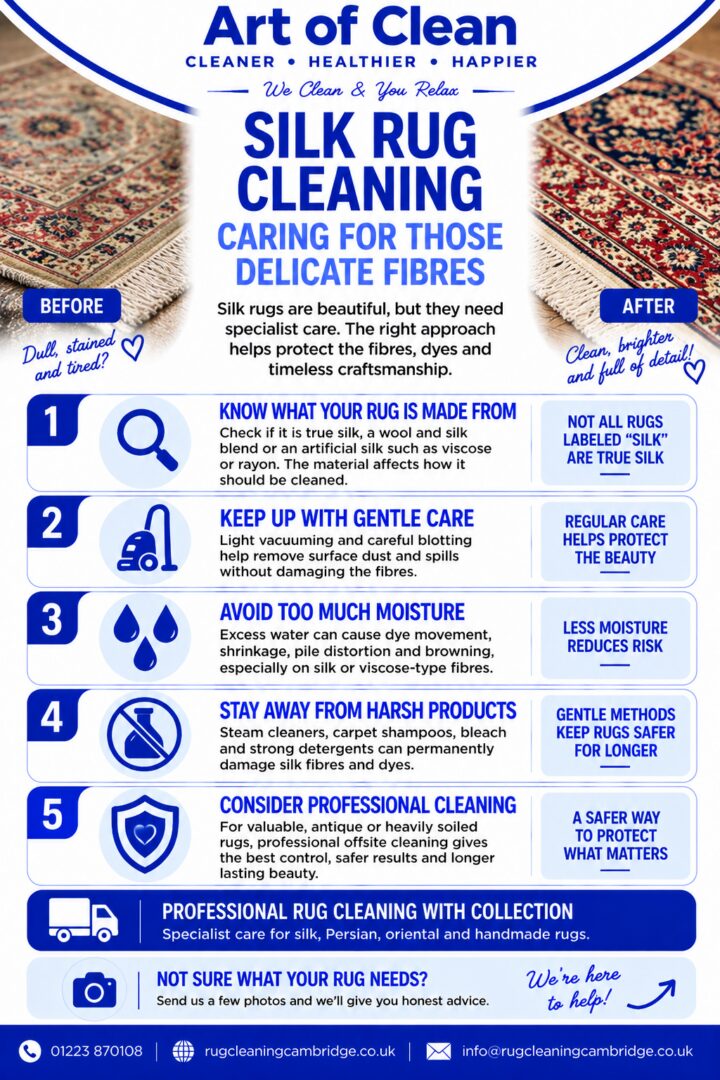
Silk Rug Cleaning Caring for those Delicate Fibres infographic

Quick answer

Silk rug cleaning needs a gentle, controlled approach.

Light vacuuming, careful blotting after a spill, low moisture and fast, even drying all help reduce risk.

Steam cleaning, carpet shampoo machines, bleach, strong detergents and aggressive rubbing can cause permanent damage.

Before trying to clean a silk rug, it is important to know whether it is true silk, a wool and silk blend, or an artificial silk such as viscose, rayon or bamboo silk.

The word “silk” on its own is not enough to choose the right rug cleaning method.

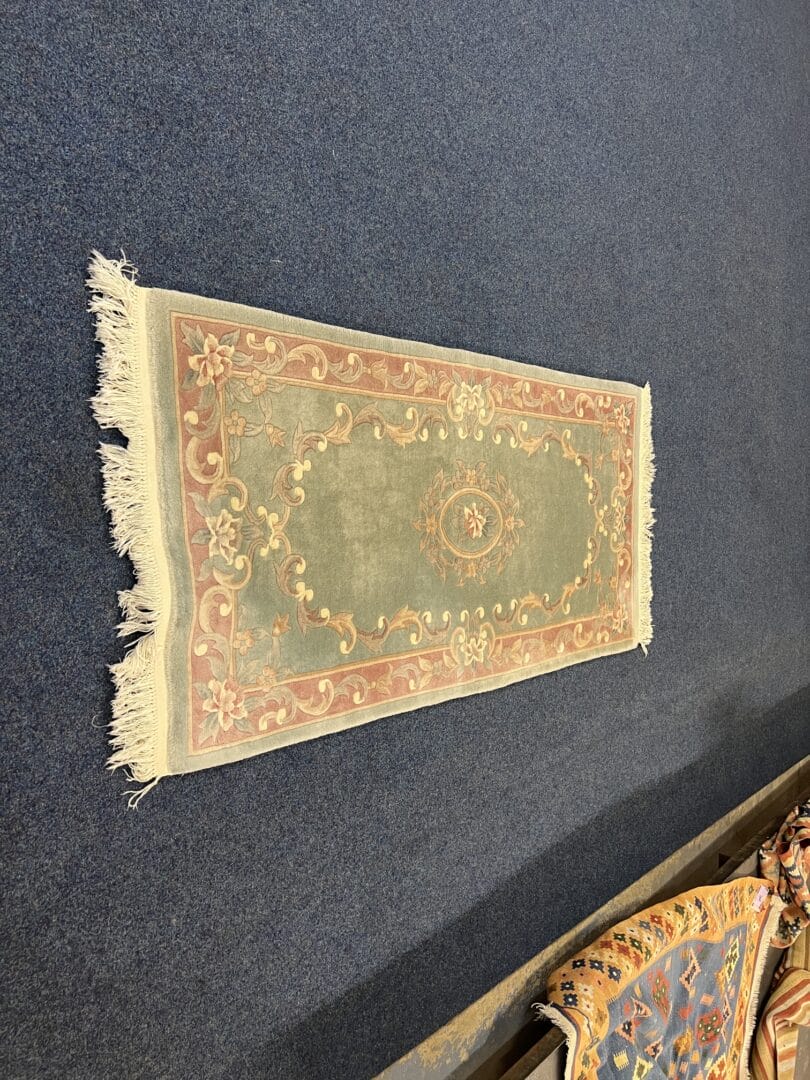
Silk Rug Cleaned at Art of Clean Cambridge UK 3
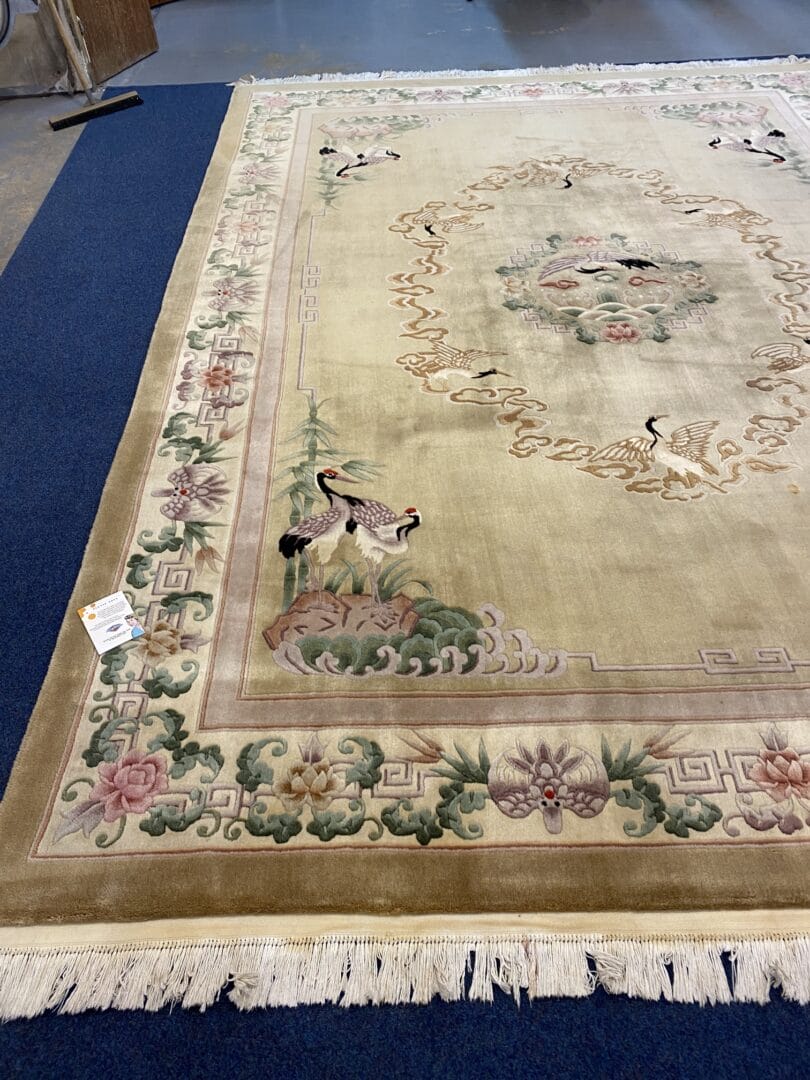
Silk Rug Cleaned at Art of Clean Cambridge UK 5

Why silk rugs need special care

Silk fibres are fine, smooth and naturally lustrous. This gives a silk rug its soft sheen and detailed appearance, especially on hand-knotted rugs where the pattern depends on very fine threads.

The difficulty is that a rug can look strong while still being vulnerable. Moisture can affect the surface.

Dye can move. The pile can flatten or distort. Abrasion can dull the shine. A stain that looks small on the surface may also have travelled further into the rug than expected.

A technician will not only ask, “Can we clean this?” The better question is, “What is this rug made from, how stable is it, and what result is realistic?” That judgement matters because some cleaning methods that are suitable for wool rugs or synthetic area rug cleaning may be too risky for fine silk.

Is it true silk or artificial silk?

This is one of the most important checks before cleaning your silk rug.

Some rugs described as silk are true silk. Others may be artificial silk, bamboo silk, rayon or viscose-type fibre.

These can look luxurious, but they may be far more sensitive to water, staining, browning, yellowing, distortion and texture change.

That does not mean every artificial silk rug is beyond help.

It does mean you need to manage expectations carefully.

With viscose-type fibres, the aim may be improvement and risk control rather than full restoration.

A professional rug cleaning service should identify the fibre and construction before choosing a method.

If you are buying or cleaning a silk rug, ask what it is actually made from.

A label, sales description or showroom name may not tell the whole story.

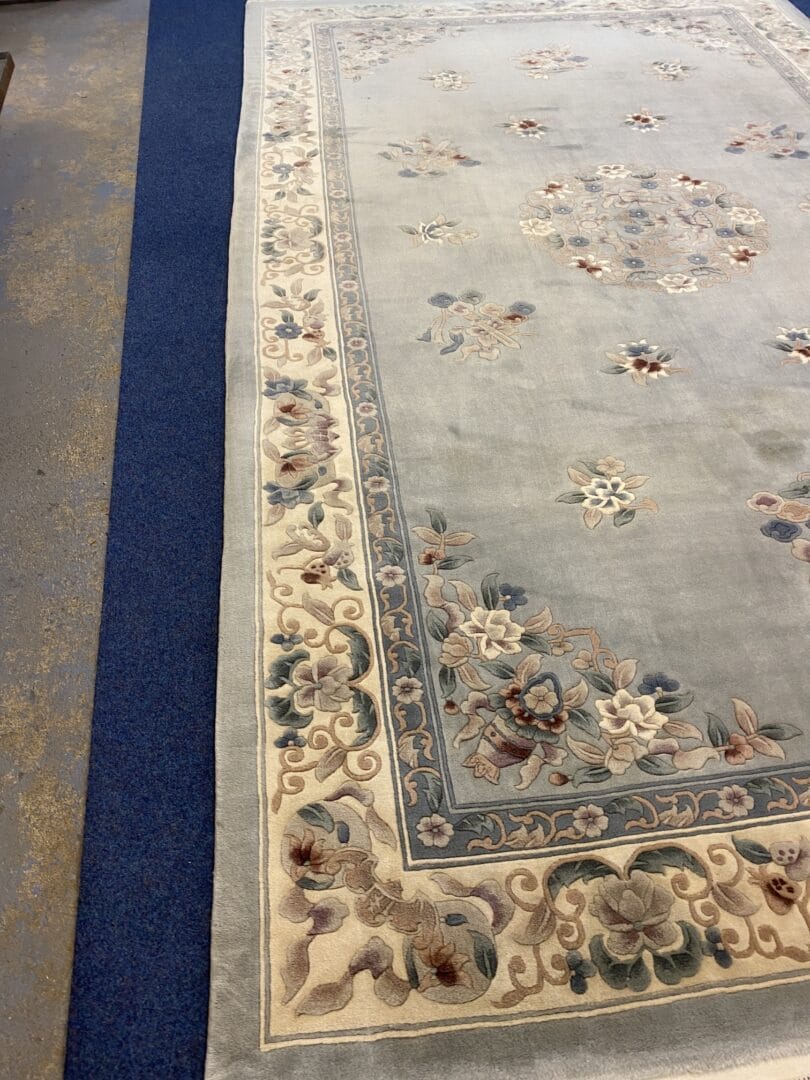
Silk Rug Cleaned at Art of Clean Cambridge UK 6

Types of silk rugs and what they mean for cleaning

A pure silk rug often has fine detail, delicate pile and a high level of craftsmanship. It may be valuable, decorative or sentimental.

DIY cleaning should be limited to safe routine care and immediate spill response.

A wool and silk blend rug may be more durable, but the silk areas can still react differently from the wool areas.

These rugs need careful testing because one cleaning method may not suit every part of the rug.

Machine-made silk blend rugs vary widely.

Some are practical decorative rugs, while others include fibres that mark easily when wet.

The safest approach is still to check the label, test carefully and avoid heavy wet cleaning at home.

In all cases, construction matters as much as fibre.

A hand-knotted Persian rug, an oriental rug, an antique rug, and a modern rug or spa-style area rug may each need a different method.


Before you clean a silk rug

Start by looking closely at the rug in good light.

Check for loose fibres, worn pile, frayed edges, colour movement, old repairs, weak fringes, moth damage, odour, mildew or water marks.

These details affect whether cleaning is sensible and how far it should go.

Read the care label if there is one, but do not rely on it alone. Labels can be missing, vague or wrong, especially on older rugs.

If you are using any product, test for dye movement in an inconspicuous area first. Use a clean white cloth and stop if colour transfers.

Most importantly, avoid adding products when you are unsure.

Brad, one of Art of Clean’s senior rug technicians, often sees rugs and fabrics where a stain has already been treated at home. Sometimes the product used has changed the mark, affected the fibre or made the final result harder to predict.


Safe routine care for a silk rug

For everyday rug care, keep things light and consistent.

Vacuum gently using low suction.

Avoid a beater or roller brush, as aggressive mechanical action can damage delicate materials and pull at the pile or fringes.

Vacuum in the direction of the pile where possible. For a very fragile rug, it may be safer to ask for advice before vacuuming at all.

If a spill happens, blot. Do not rub. Use a clean white cloth or white towel & press gently from the outside of the spill towards the centre. Rubbing can spread the mark, push it deeper or damage the silk threads.

Use as little moisture as possible. If a barely damp cloth is appropriate, use it sparingly and avoid saturating the rug.

Do not use rug shampoo, vinegar, bleach, laundry detergent or household stain products unless a specialist has confirmed they are suitable for that exact rug.

Dry the area naturally and evenly. Keep it away from direct heat, hairdryers and strong sunlight. Uneven drying can leave marks, especially on fibres that are sensitive to water.


Why professional silk rug cleaning is different

Proper rug cleaning does not start with washing. It starts with inspection and dry soil removal.

Rugs can hold dry dust, grit and soil deep inside the foundation.

If that soil is not removed before washing, the cleaning process is already compromised.

In a bespoke rug cleaning facility, a specialist rug cleaner can inspect the rug, test dyes, remove dry soil, choose the right cleaning method, control moisture and use suitable drying methods to ensure the rug dries as safely and evenly as possible.

For some silk rugs, hand-washing may be appropriate.

For others, low moisture cleaning or a more cautious specialist process may be safer. The right method depends on the rug, not the label.

Professional cleaning can help with soil, some marks, odour, residue and general appearance, but it should not be sold as a guaranteed fix.

Stains, colour bleed, wear, fibre distortion and previous product damage may remain.

Cleaning methods to avoid

Do not steam clean a silk rug. Heat and moisture can affect the fibre, dye and appearance.

Avoid carpet shampoo machines. They can over-wet the rug, leave residue and use agitation that is too strong for delicate pile.

Do not pressure wash a silk rug. This is far too aggressive.

Avoid bleach, strong chemicals and harsh homemade cleaning solutions. Vinegar is often suggested online, but it is not a safe default for silk or artificial silk.

Do not scrub a stain. Scrubbing can cause texture change, pile distortion and permanent dulling.

Do not assume a method is safe because it worked on a carpet, wool rug or synthetic rug. Silk carpets and rugs need a more cautious assessment.


How often should a silk rug be professionally cleaned?

There is no single timetable that suits every silk rug.

A silk rug in a quiet room with little foot traffic may need professional cleaning less often than a rug in a hallway, sitting room or busy family space.

Sunlight, pets, shoes, dust, moth risk, humidity and previous spills all affect the decision.

As a broad guide, inspect valuable silk rugs every few years, or sooner if there has been a spill, odour, water mark, moth concern, or visible soil.

Routine care at home should focus on prevention, gentle vacuuming and fast spill response.

Long-term silk rug care

The best care is preventative.

Use a quality rug pad where suitable to reduce movement and wear.

Rotate the rug occasionally so one area does not take all the foot traffic.

Keep it out of strong direct sunlight where possible, as light can fade dyes and weaken fibres over time.

Try to keep indoor conditions steady.

Excess moisture can encourage mildew, odour and fibre problems. Very dry or very damp conditions can also affect delicate textiles.

If you store a silk rug, make sure it is clean and fully dry first.

Roll it rather than folding it, protect it from dust and pests, and avoid plastic wrapping that can trap moisture.

For valuable rugs, ask about suitable wrapping and storage before storing the rug.


When to call a professional rug cleaner

Call a professional if the rug is valuable, handmade, antique, Persian, oriental, pure silk or unknown fibre.

You should also ask for advice if there is colour bleeding, water damage, pet contamination, mildew, moth damage, structural weakness, old repairs or a stain that has already been treated.

Choose rug cleaners who are willing to inspect first, explain risk clearly and say when cleaning may not be the right route.

A good cleaning service should not promise that every stain can be removed or every rug can be restored.

The safest and most effective way to clean silk rugs is often to pause, ask early and avoid adding more products at home.

Good advice can prevent a small mark from becoming a larger problem.


A careful final word

Silk rug cleaning is about care, judgement and restraint. The most important step is not choosing a product. It is identifying the rug correctly and understanding what the fibre, dye and construction can safely tolerate.

Light vacuuming, fast blotting and avoiding harsh products will help protect the rug between cleans. For deep cleaning, difficult stains, odour, mildew, colour movement or valuable rugs, professional assessment is the safer route.

If you are unsure what your rug is made from or what has caused a mark, ask before adding more moisture or cleaning products. A short chat can help you choose the right next step and avoid making the rug harder to save.

Frequently Asked Questions

Answers to common questions about our Silk Rug Cleaning: Caring for those Delicate Fibres service.
You can carry out light routine care, such as gentle vacuuming and careful blotting after a fresh spill. Deep cleaning should usually be left to a professional rug cleaning service, especially for valuable silk, antique rugs or rugs with unknown fibres.
No. Steam cleaning is not recommended for silk rugs. Heat, moisture and pressure can affect the fibre, dye and pile.
Yes. Water can cause marks, dye movement, texture change, browning or distortion, especially if the rug is artificial silk, viscose-type fibre or already weak.
There is no universal safest cleaner. The correct cleaning solution depends on the fibre, dye, construction and condition. If unsure, do not apply products. Blot fresh spills and ask for advice.
Vinegar should not be used as a default silk rug cleaner. It can affect dyes and fibres, especially where the rug is artificial silk or an unknown blend.
Loss of shine may be caused by abrasion, wear, moisture, product residue, fibre distortion or previous cleaning attempts. Cleaning may improve appearance in some cases, but worn or damaged fibre cannot always be restored.