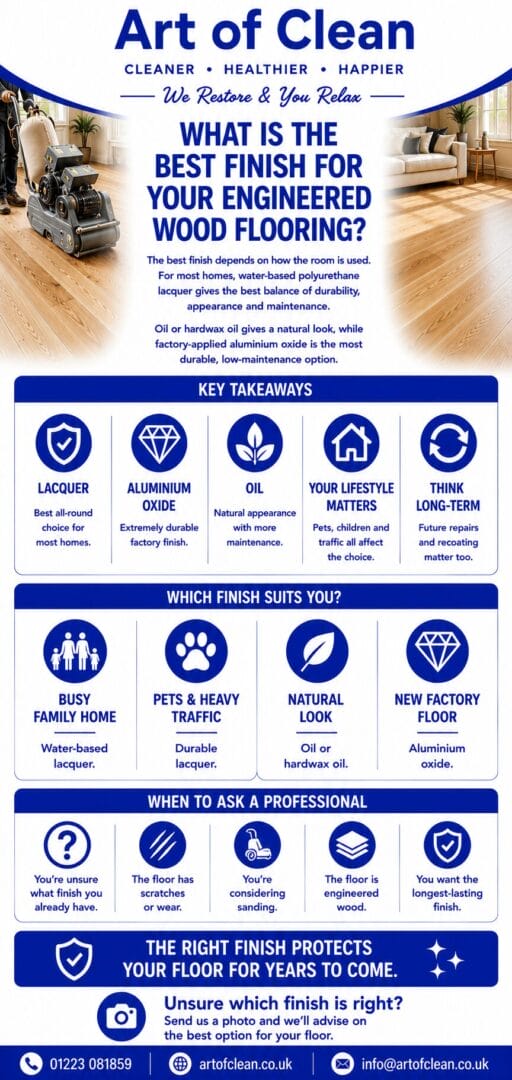

The best finish for engineered wood flooring depends on how the room is used. For most homes, a good water-based polyurethane lacquer gives the best balance of durability, appearance and maintenance. Oil or hardwax oil gives a more natural look, while factory-applied aluminium oxide is usually the most durable low-maintenance option.
An engineered wood floor is made with a real wood veneer on top and a layered core underneath. That top layer gives the floor its natural beauty, wood grain and authentic wood feel. It is also the part that takes the wear from shoes, chairs, pets, grit, cleaning and everyday life.
That is why the finish matters so much. A floor finish is not only about shine or flooring colour. It protects the surface of the wood, affects how the floor copes with stains and moisture, and changes how easy the floor is to maintain.
This matters even more with engineered wood flooring than with some solid wood flooring. A solid wood floor can often be sanded several times over its life. An engineered hardwood floor may only have a limited top layer of wood. Some oak engineered boards have enough of a wear layer for careful sanding, while others may not. Once too much of that real wood veneer has been removed, there may be no safe way to sand again.
At Art of Clean, our wood floor team will usually look at the condition of the floor before talking about the right finish. Robby often checks the remaining wear layer, the cause of damage, the existing finish and how the room is used before suggesting sanding, recoating, or a full refinish. That judgement matters because not every engineered wood floor should be treated in the same way.
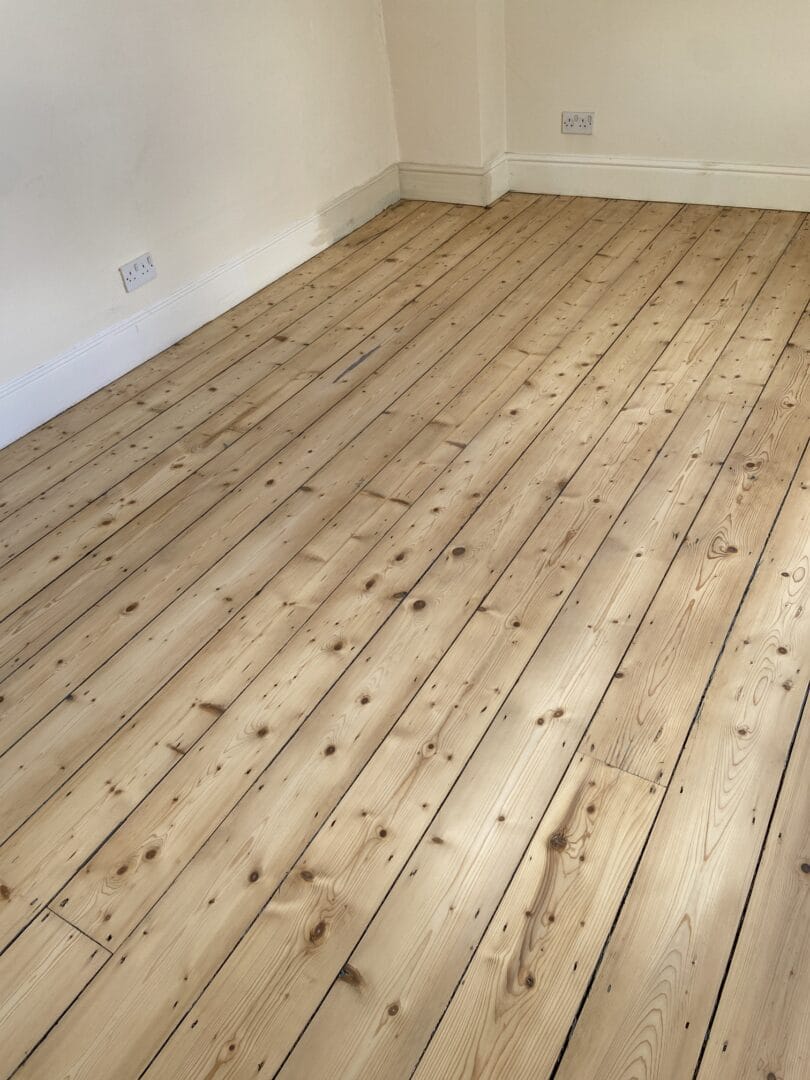
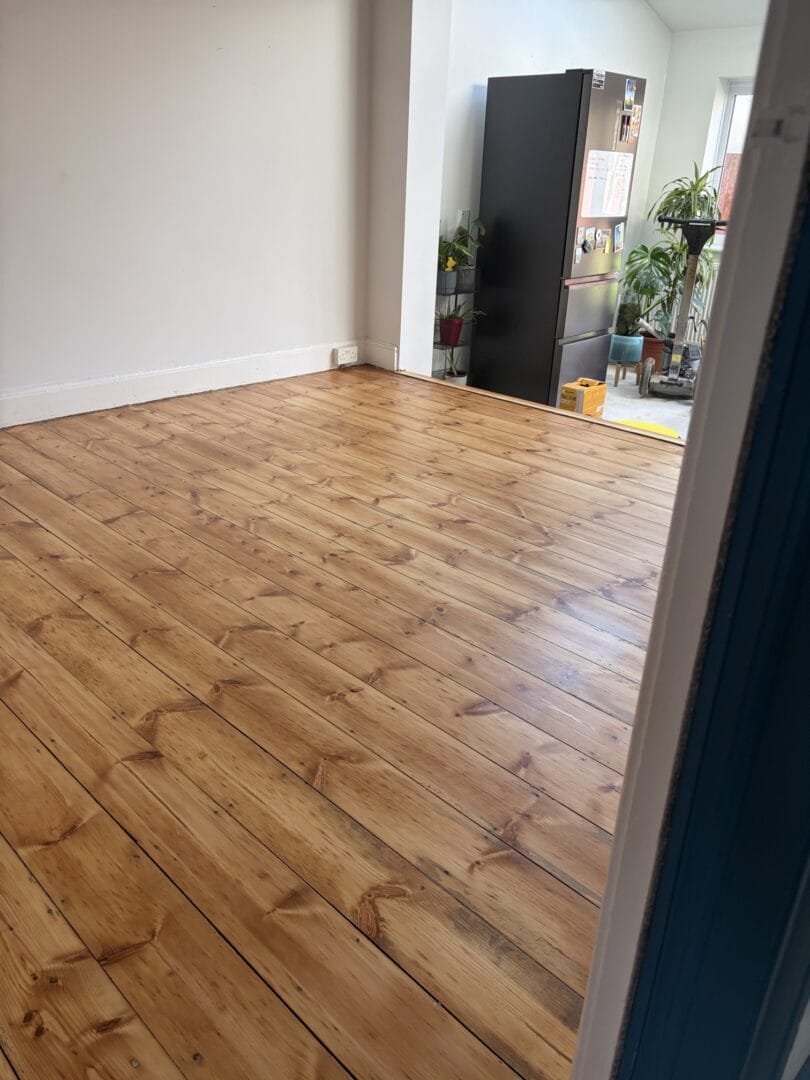
There are several different finishes available for engineered wood flooring. The most common finish options are polyurethane lacquer, aluminium oxide, oil or hardwax oil, wax and shellac. For most modern homes, the real decision usually comes down to oil or lacquer, with aluminium oxide being common on factory-finished boards.
Polyurethane is one of the most widely used wood floor finish options. In the UK, many people will talk about this as lacquer, varnish or a lacquered finish. It works by forming a protective film on top of the wood rather than soaking deeply into the grain of the wood.
A lacquered engineered wood flooring finish can be water-based, oil-based or UV-cured. Water-based polyurethane is popular because it dries clear, has a lower odour than many oil-based systems and is less likely to amber the wood over time. Bona describes water-based finishes as durable, quick drying and really suitable for high-traffic residential and commercial spaces.
A lacquered finish is often a good choice for busy homes, hallways, kitchens, dining spaces and living rooms. It gives the engineered wood floor a protective surface that can resist everyday wear when the floor is cared for properly.
The main drawback is repair. If a lacquered wood flooring surface is scratched deeply or the finish wears through in patches, it is often harder to repair invisibly in one small area. The damaged section may need wider sanding and refinishing so the sheen and flooring colour blend properly.
For many households, especially homes with children, pets, chairs and frequent foot traffic, water-based polyurethane lacquer is a sensible all-round choice. It protects well without hiding the natural wood too heavily.
Aluminium oxide, often written as aluminium oxide in some manufacturer guidance, is usually a factory-applied finish. It is one of the toughest finishes available for engineered wood flooring.
The advantage is durability. The National Wood Flooring Association describes aluminium oxide finishes as factory-applied and extremely durable. They are made for strong wear resistance and low maintenance, which makes them suitable for heavy-use homes and some commercial environments.
This finish is common on prefinished engineered wood flooring. It can be useful if you want a floor that is ready to use soon after installation and does not need on-site finishing.
The limitation is that it is not easy to recreate on-site. If a factory-applied aluminium oxide finish eventually becomes worn, scratched or patchy, a normal recoat may not behave in the same way as the original surface. The floor may need a specialist assessment before sanding or refinishing is considered.
This is a good example of why the best finish is not always the easiest finish to repair later. Aluminium oxide can be excellent for durability, but it gives you less flexibility than some site-applied finishes.
Oil and hard wax oil finishes work differently from lacquer. Instead of sitting mainly as a film on top of the wood, they penetrate into the surface of the wood and help harden and protect it from within.
An oiled finish gives a warm, natural look. Many people choose brushed and oiled floors because they like the texture, matte appearance and close-to-natural wood feel. It can make oak engineered flooring, smoked engineered boards and herringbone engineered flooring look softer and more traditional.
Hard wax oil can also be more forgiving for local repairs. If a small area becomes worn, it may be possible to clean, prepare and re-oil that area without sanding the entire wooden floor. This is one reason oiled engineered wood can appeal to design-conscious homeowners who want an authentic wood look and a finish that can be maintained in stages.
The trade-off is maintenance. Oiled flooring normally needs more regular care than lacquered flooring. It may need cleaning with the right floor cleaner and periodic re-oiling, especially in busy areas. If it is neglected, the wood underneath can become vulnerable to dirt, moisture and staining.
Oil is a good choice when you want a natural look and are willing to maintain the floor. Lacquer is usually better when you want a tougher protective surface with simpler day-to-day care.
The oil vs lacquer question is one of the most common decisions with engineered wood flooring. There is no single best answer for every home.
Choose lacquer if you want a durable, practical finish for a busy household. Lacquered finishes often suit hallways, family rooms, kitchens and spaces where chairs, shoes and pets create regular wear. A brushed and lacquered finish can still look natural, especially in a modern matt or extra-matt sheen.
Choose oil if the feel of the floor matters more than maximum surface protection. Oil can really enhance the natural beauty of your wood and make the grain feel more open and tactile. Brushed and oiled floors work well in rooms where you want warmth, texture and a less polished finish that reflects light softly rather than brightly.
One point many clients miss is that appearance can be misleading. Lacquered wood flooring does not have to look glossy, and oiled flooring does not always look completely flat. Modern finishes can blur the visual difference. The more important question is how the finish behaves over time.
If you have a busy home, pets, grit from entrances or furniture that moves often, a suitable durable lacquer may be the safer recommendation. In one Art of Clean engineered oak floor example, scratches were caused by grit trapped beneath a utility room door. Robby explained that the cause needed fixing before restoration, otherwise the same damage could return. The finish mattered, but so did the reason the floor became scratched in the first place.
Wax and shellac are more traditional wood floor finishes available, but they are less common as the main finish for modern engineered wood flooring.
Wax can give a soft, traditional wood appearance, but it does not offer the same practical protection as modern lacquer or some hardwax oil systems. It can also mark, wear and need more regular attention. Shellac can create a smooth finish, but it is generally more vulnerable to moisture and wear than modern floor lacquers.
For most homes, these are not the first finish options we would suggest for a main engineered wood flooring finish. They may have a place in specialist restoration, traditional wood surfaces or certain design-led flooring ideas, but they need careful judgement.
The finish can change the final flooring colour as much as the stain or species of wood. A clear water-based lacquer usually keeps the wood closer to its freshly sanded colour. An oil-based system may warm the timber and give it a richer tone. Oil can deepen the wood grain and create a more natural wood appearance.
A stain can be used before the final finish to adjust the flooring colour, but staining engineered wood flooring should be approached carefully. The top layer of wood is limited, and the final colour can be affected by the species of wood, sanding, previous finishes, grain variation and how the stain takes.
This is why small samples help, but they cannot always show the whole room perfectly. Light, plank variation and older areas of the floor can affect the finished look. A good flooring project should include a conversation about expectations, not just a colour choice from a chart.
Craig’s work on wood floors often centres on this type of practical confidence. Clients value clear explanations, tidy working and realistic expectations before the job begins, especially when a floor has wear, old coatings, scratches or colour uncertainty.
For a busy family home, a water-based polyurethane lacquer is often the best finish for engineered wood flooring. It gives a strong protective surface, keeps the look clear and is usually easier to care for than oil.
For a quiet sitting room or bedroom, oil or hard wax oil can be a lovely choice. It gives a natural look and can make real wood flooring feel warm and calm underfoot.
For commercial areas or very heavy-use residential spaces, factory-applied aluminium oxide may be worth considering if you are buying new boards. It is extremely durable, but less flexible if you want to refinish the floor on site later.
For a design-led home where texture matters, brushed and oiled or brushed and lacquered boards can both work. The right finish depends on whether you prefer easier maintenance or a more natural surface feel.
For parquet flooring or herringbone engineered flooring, the finish choice should consider both appearance and future maintenance. Patterned floors show light differently, so sheen and colour should be chosen carefully.
Even the best wood floor finish needs sensible care. Grit is one of the quiet enemies of a wood floor. It can sit under shoes, chairs, mats or doors and create scratches long before the floor looks dirty.
Use entrance mats, vacuum or sweep with a suitable soft tool, and clean with a wood floor cleaner that matches the finish. Avoid steam mops, soaking wet cloths, harsh products and general household cleaners unless they are approved for your floor finish.
A lacquered floor may need periodic inspection for dull, worn or thin areas. If the finish wears through and dirt reaches the wood underneath, sanding may become more likely. An oiled floor may need refreshing with maintenance oil before it becomes dry or vulnerable.
If you are not sure what finish you already have, do not guess. The wrong cleaner or maintenance product can make future finishing more difficult.
Sometimes, yes. But it depends on the wood top layer, previous sanding, floor condition and type of finish. Unfinished engineered flooring can be finished on site, but an older lacquered engineered floor or oiled floor needs assessment before sanding or recoating.
The key question is how much usable wood remains. Some engineered floors have a thick enough wear layer for careful sanding. Others have a very thin real wood veneer and cannot safely lose much material.
This is where professional assessment matters. A tired floor may not always need sanding. Sometimes, cleaning and recoating are enough if the existing finish is still suitable. In other cases, sanding and a new finish may be the better route. Occasionally, replacement is more sensible than trying to restore a floor that has too little wear layer left.
For most homes, the best finish for engineered wood flooring is a good quality water-based polyurethane lacquer. It offers a strong balance of durability, clear appearance, lower odour, faster drying and practical maintenance.
Choose oil or hardwax oil if you want a more natural look and are happy with more regular upkeep. Choose aluminium oxide if you are buying factory-finished boards and want maximum durability with very low maintenance. Choose lacquer if you want the safest all-round option for ordinary household use.
The right finish should not be chosen from a sample alone. It should match the room, the wear level, the floor construction, the wood top layer, your maintenance habits and the result you want to live with.
If your engineered wood floor already looks worn, scratched or dull, the next step is not always to pick a finish first. It is to check whether the floor can be cleaned, recoated, sanded or restored safely. From there, the final choice becomes much clearer.
If you are unsure what your floor needs, send us a clear photo or ask for an assessment. We can help you understand what is realistic, what may improve and which finish options are suitable for your home.