Can You Steam Clean a Rug Safely at Home?

You can steam clean some rugs safely at home, but not every rug should be treated this way. Synthetic rugs usually tolerate steam cleaning better than wool, jute, sisal, silk, viscose or handmade rugs. The safest decision depends on the rug material, backing, dyes, age, condition and how quickly you can dry it afterwards.

A steam cleaner can make a rug look fresh on the surface, but it can also push heat and moisture into fibres that do not cope well with either. If your rug is valuable, sentimental, antique, wool, silk, jute, sisal, or difficult to replace, it is safer to ask for advice before steam cleaning it.

For rugs that need a deeper clean, Art of Clean offers professional rug cleaning with inspection, dust removal and controlled drying where suitable.

Can You Steam Clean a Rug Safely at Home info graphic

What is steam cleaning?

Steam cleaning uses a mixture of heat and moisture to loosen soil from carpet fibres or rug fibres. In everyday language, people often use “steam cleaning” to describe several different cleaning methods.

True steam cleaning uses vapour. Hot water extraction, which many people also call carpet steam cleaning, uses heated water, cleaning solution and extraction to rinse and remove soil. Many rental machines and home carpet cleaner machines are closer to hot water extraction than true steam.

That difference matters because a rug is not always the same as a fitted carpet. A carpet is fixed in place and usually made to be cleaned in the home. A rug may have a different backing, fringe, dye system, foundation or fibre mix. It can move, shrink, bleed colour or hold moisture deep inside the base.


Can every rug be steam cleaned?

No. Not every rug can be steam cleaned safely.

Before you use a steam cleaner, check:

  • the fibre type
  • the care label
  • the backing material
  • whether the dyes are stable
  • whether the rug has fringe, repairs or loose edges
  • whether the rug has already been treated with cleaning products
  • whether you can dry the rug completely

This is where people often get caught out. A rug may look strong, but you may find the risk is hidden in the backing, dye or foundation. Brad, one of Art of Clean’s senior rug cleaning technicians, often sees rugs where a client has already tried a household product before asking for help. It is understandable, but it can make the result harder to predict.

If you are not sure what the rug is made from, do not start with steam. Start with dry soil removal and advice.

after-cleaning-rug
rug cleaning service little shelford art of clean cambridge GMB

Which rug materials can be steam cleaned?

Some rugs are more forgiving than others. This table is a simple guide, not a guarantee.

Rug materialSteam cleaning suitable?Main risks
PolypropyleneUsually, if care label allowsExcess moisture, backing issues
PolyesterUsually, if care label allowsOverheating, residue, poor drying
NylonUsually, if care label allowsResidual moisture
WoolUse cautionShrinkage, colour bleed, pile distortion
CottonLimitedSlow drying, shrinkage
JuteNoBrowning, swelling, fibre damage
SisalNoWarping, water staining, distortion
SilkNoPermanent damage, texture change, dye movement
Viscose or artificial silkNoCrushing, water marks, fibre distortion

Synthetic rugs such as polypropylene, polyester, olefin and nylon are often easier to clean than natural fibre rugs. They may tolerate a careful steam clean or hot water extraction clean when the manufacturer allows it. Still, “synthetic” does not mean “safe to soak”. A thick synthetic shag rug, for example, can hold moisture deep in the pile while the surface feels dry.

Wool rugs need more caution. Wool can be strong and long-lasting, but too much heat, moisture or friction can cause shrinkage, colour movement or pile distortion. If you are dealing with a wool rug, read our guide to how to clean and care for a shaggy rug if the pile is long, and ask before using hot steam.

Jute and sisal rugs should not be steam cleaned. These natural plant fibres dislike moisture. Water can cause browning, swelling, staining, odour and shape change.

Silk, viscose and artificial silk rugs should be left to a specialist. These fibres can mark, crush or change texture very easily.

Benefits of steam cleaning a rug.

For a suitable rug, steam cleaning can help loosen soil, reduce some odours and refresh high-traffic areas. It can also help with general home cleaning where a rug or carpet has collected dust, pet hair and everyday dirt.

A good clean may:

  • lift some surface soil
  • freshen a synthetic area rug
  • reduce some everyday odours
  • improve the look of busy walkways
  • help clean carpets and rugs as part of wider spring cleaning

However, steam cleaning works best when the rug is suitable, and the cleaning process is controlled. It is not the best way to clean every rug, and it is not a guaranteed stain remover.


The risks of steam cleaning a rug.

The main risks are heat, moisture and drying.

Shrinkage: Natural fibres can move when they become wet or hot. Wool, cotton and some handmade rugs are more vulnerable.

Colour bleeding: Dyes that look stable in daily use may move when exposed to heat, water or cleaning products. This is why a colourfastness test matters.

Fibre damage: Heat and friction can distort wool, flatten viscose, affect silk or make delicate fibres look fuzzy.

Backing delamination: Some rugs have latex or glued backing. Too much moisture can weaken it.

Mould and mildew: If a rug stays damp for a long time, it can develop a musty smell or mould risk. Drying is the part many people underestimate.

Over-wetting: A rug that feels only slightly damp on the surface may still be wet underneath. Do not put a damp rug back onto carpet, wood flooring or underlay.

For more on drying, see our guide: How do I dry my rug at home?

Rug cleaning service cambridge art of clean GMB

How to steam clean a rug safely at home

Only follow these steps if the care label and fibre type suggest steam cleaning is suitable.

Step 1: Read the care label

Look for fibre content, cleaning symbols and manufacturer guidance. If the label says dry clean only, do not use a steam cleaner.

Step 2: Identify the rug material

If you cannot identify the fibre, pause. A wool rug, jute rug, silk rug or viscose rug should not be treated like a synthetic carpet.

Step 3: Vacuum thoroughly

Use your vacuum cleaner slowly. If the rug is safe to move, vacuum the back first, then the face. Dry soil removal matters because washing a rug full of grit can turn hidden dust into muddy residue.

Step 4: Spot test first

Test a small hidden area with clean water and the cleaning solution you plan to use. Use a clean white cloth and check for colour transfer, texture change or distortion.

Step 5: Use the correct steam cleaner settings

Use moderate heat, controlled moisture and slow, even passes. Avoid repeated passes over one area. Do not flood the rug with carpet shampoo or cleaning products.

Step 6: Avoid over-wetting

Use as little moisture as possible. A rug too wet can shrink, smell, brown or damage the backing.

Step 7: Dry the rug completely

Use airflow, ventilation and fans. Where safe, elevate the rug so air can move underneath. Do not walk on it until it is dry. Do not hang a heavy wet rug in a way that pulls it out of shape.

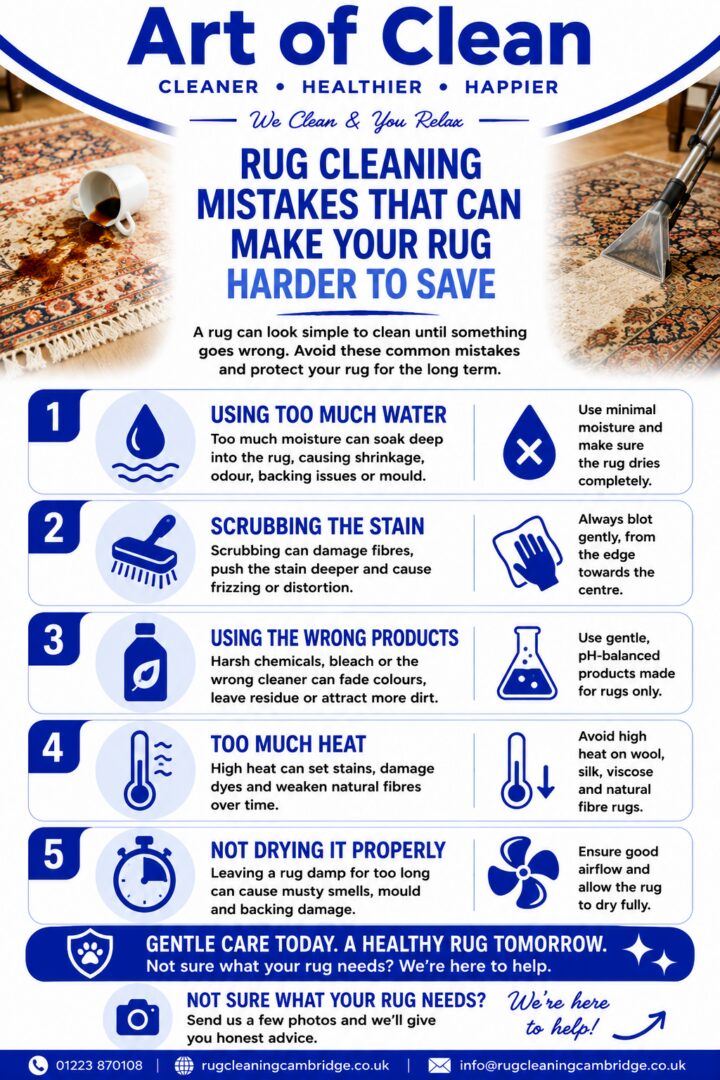
Steam cleaning mistakes to avoid

Do not use excessive heat. Hot steam can set some stains and affect dyes.

Do not steam clean pet urine marks. Heat can set the smell and stain, making the problem harder to treat. The Carpet and Rug Institute also advises against using a steam cleaner on urine spots for this reason.

Do not skip vacuuming. Dry grit can sit deep in a rug and damage fibres over time.

Do not use harsh chemicals. Strong cleaning products can leave residue, affect colour or damage fibres.

Do not assume steam mops are safe for rugs. A steam mop comes with heat and moisture, and many rugs are not designed for that.

Do not clean a shag rug aggressively. Long fibres can hold water and distort if treated too harshly.

Do not use your washing machine unless the label clearly says it is safe. A small rug is not automatically machine washable just because it fits.


Alternatives to steam cleaning

Steam is only one of several ways to clean rugs.

Vacuuming is the safest regular cleaning method for many rugs. Slow, thorough vacuuming helps remove dry soil before it works deeper into the foundation.

Spot cleaning can help with fresh spills. Blot with a clean cloth. Avoid scrubbing and do not layer product after product.

Dry carpet cleaning compounds may be suitable for some rugs, but they are not right for every fibre or construction.

Low-moisture cleaning methods can be safer where the rug is moisture-sensitive but still needs attention.

Professional rug cleaning is usually the better route for large, valuable, delicate, handmade or difficult-to-dry rugs. Offsite cleaning allows the rug to be inspected, dusted, cleaned, rinsed where suitable, extracted, dried and checked with more control.

You can also read our comparison of DIY rug cleaning vs professional rug cleaning.

When should you avoid steam cleaning completely?

Avoid steam cleaning if the rug is:

  • antique
  • Persian, Oriental or hand-knotted
  • silk, viscose or artificial silk
  • jute, sisal or seagrass
  • wool with unstable dyes
  • already damaged or loose at the edges
  • affected by pet urine
  • mouldy, musty or previously soaked
  • valuable, inherited or sentimental
  • too large to dry properly at home

If colour bleeding is your concern, this article may help: Rug Cleaning: Bleeding Rugs.


DIY steam cleaning vs professional cleaning

DIY steam cleaningProfessional rug cleaning
Lower upfront costExpert fibre assessment
Convenient for some synthetic rugsSafer for delicate rugs
Depends on home equipmentProfessional equipment and process
Drying can be difficultControlled drying process
Higher risk if fibre is unknownMethod chosen after inspection
Surface fresheningDeeper dry soil removal where suitable

The biggest difference is judgement. A professional rug cleaner should not simply choose the strongest cleaning method. They should look at the rug first and decide what is safe.

How often should you steam clean a rug?

For suitable rugs in light household use, a deep clean every 12 to 18 months may be enough. Homes with pets, children, food spills or heavy foot traffic may need more frequent cleaning, but that does not always mean steam.

Regular cleaning should start with vacuuming. A rug in a hallway, under a dining table or in a family room will need more attention than a rug in a quiet bedroom.

If your carpets and rugs are part of normal home maintenance, you may also find Art of Clean’s carpet cleaning services useful.


So, Should You Steam Clean a Rug at Home?

Steam cleaning is not universally safe for every rug. It can be suitable for some synthetic rugs when the care label allows it, but it can damage wool, jute, sisal, silk, viscose, handmade and moisture-sensitive rugs.

Before using a steam cleaner, identify the type of rug, vacuum thoroughly, spot test, use minimal moisture and dry the rug completely. If you are unsure, or you would be upset if the rug changed shape, colour or texture, professional advice is the safer next step.

For help with rug or carpet cleaning in Cambridge, you can contact Art of Clean and tell us what your rug is made from, what has happened to it and what result you are hoping for.

Frequently Asked Questions

Answers to common questions about our Can You Steam Clean a Rug Safely at Home? service.
Yes, if the rug is not suitable. Steam cleaning can cause shrinkage, colour bleeding, fibre damage, backing problems and slow drying.
Not always. The best method depends on the rug. Some rugs need dry soil removal and low-moisture cleaning. Others may tolerate hot water extraction. Some should not be wet cleaned at home at all.
Usually, this is not the safest home option. Wool can react to heat, moisture and friction. Ask for advice first, especially if the rug is valuable, handmade or dyed.
No. Jute is highly moisture-sensitive. Steam cleaning can cause browning, distortion and fibre damage.
Not reliably. Heat can set urine stains and odours. Pet contamination often needs a different assessment and treatment.
It depends on the fibre, thickness, backing, room conditions and how much moisture was used. Some rugs may dry in hours. Thick rugs can stay damp much longer, especially underneath.
Yes, if the rug is valuable, delicate, large, natural fibre, stained, pet-affected or difficult to dry at home.
True steam cleaning uses vapour. Hot water extraction uses heated water, cleaning solution and extraction. Many people call our hot water extraction “steam cleaning”, but they are not exactly the same.