Cotton Rug Cleaning: A Guide to Everyday Care

Cotton rugs are popular for good reason. They are soft, practical and work well in the everyday parts of a home, from bedrooms and living rooms to kitchens and children’s spaces.

They can also be easier to look after than some more delicate rugs. But that does not mean every cotton rug should go straight into the washing machine.

The safest approach to cotton rug cleaning depends on how the rug is made, whether other fibres are present, the stability of the dyes and, importantly, what the care label says.

For everyday care, regular vacuuming, quick spill cleanup, and avoiding unnecessary moisture will go a long way.

When a deeper clean is needed, knowing when you can safely do it yourself and when to stop can save you from accidentally turning a small problem into a bigger one.

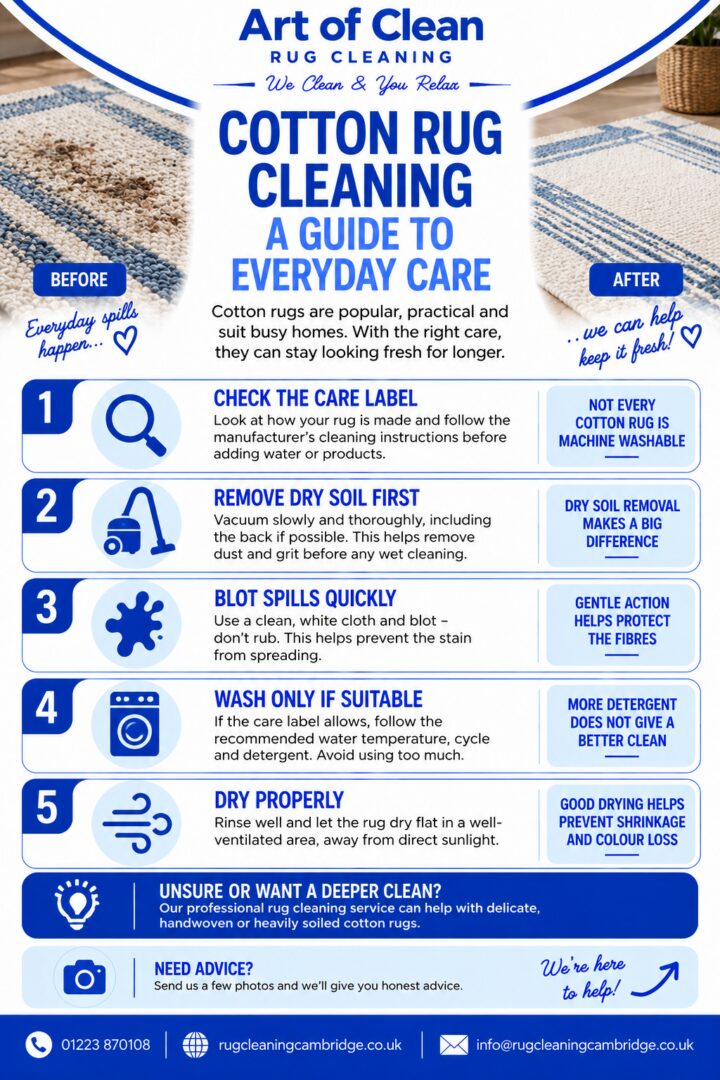
Cotton Rug Cleaning Care Guide info graphic

Why are cotton rugs popular in everyday homes?

Cotton rugs tend to suit busy homes because they are soft underfoot, relatively lightweight and available in a big range of designs and colours.

Smaller cotton rugs are often used in places where everyday spills and dirt are more likely, such as kitchens, entrance areas and children's rooms. Some are designed to be washable, which is another reason people choose them.

But the word "cotton" only tells you part of the story.

A machine-made cotton rug may respond very differently to cleaning from a handwoven rug. Some rugs described as cotton may also contain other fibres, backing materials, fringes or dyes that need more careful treatment.

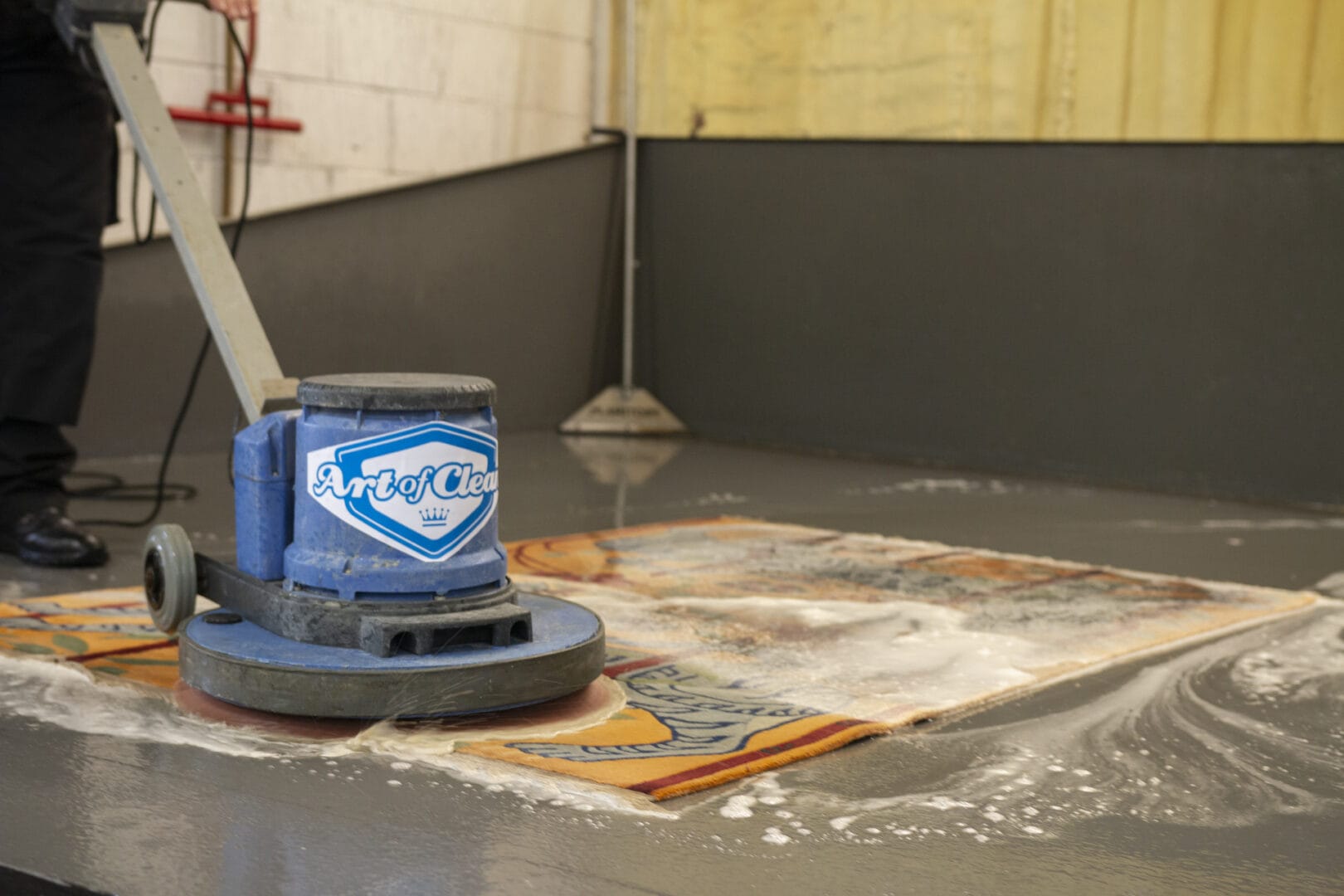
Art_of_Clean_Brusher_0045
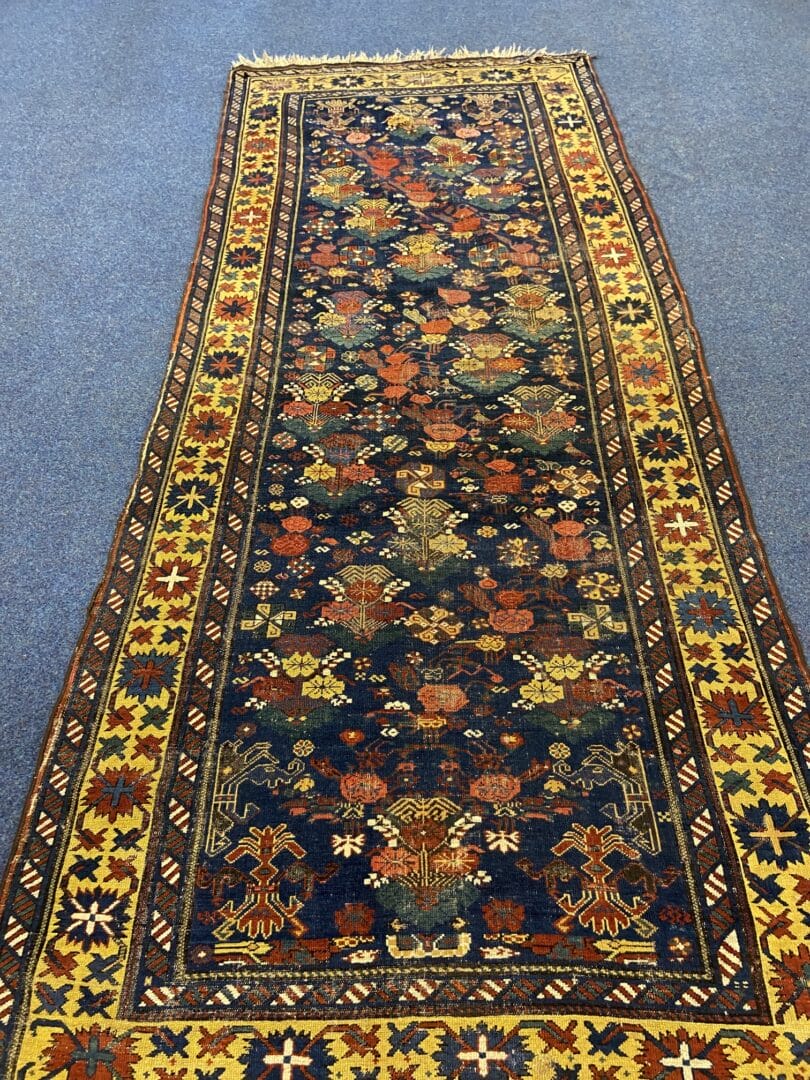
rug cleaning colour run art of clean cambridge

Understanding how your cotton rug is made

Before you clean the rug, have a look at its construction.

Rug typeWhat to consider
Machine-made cotton rugSome can be washed at home, but check the care label first
Handwoven cotton rugConstruction, dyes and fringes may need more careful cleaning
Cotton blend rugCleaning depends on the other fibres and materials present

This is one of the reasons we do not like giving a blanket answer such as "cotton rugs are machine washable". Some are. Some definitely are not.

Before cleaning a cotton rug

Start with the care label.

It may tell you whether the rug can be machine washed, the recommended water temperature and how it should be dried. If the manufacturer gives specific cleaning instructions, follow those rather than a general cleaning tip you have found online.

Next, inspect the rug.

Look for loose stitching, damaged edges, worn areas, unstable backing or previous repairs. Cleaning can put additional stress on an already weakened area.

If you use a cleaning product, test a small amount in an inconspicuous area first. A clean white cloth can help you spot any unexpected colour transfer.

And before introducing moisture, remove as much dry soil as possible.

This is an important step that is often missed. A rug can look reasonably clean on the surface while still holding dust and gritty soil deeper within its fibres and construction. Adding water before removing that dry soil can make the cleaning process much harder.

Our rug aftercare guide explains more about simple care for dry and wet spills between deeper cleans.

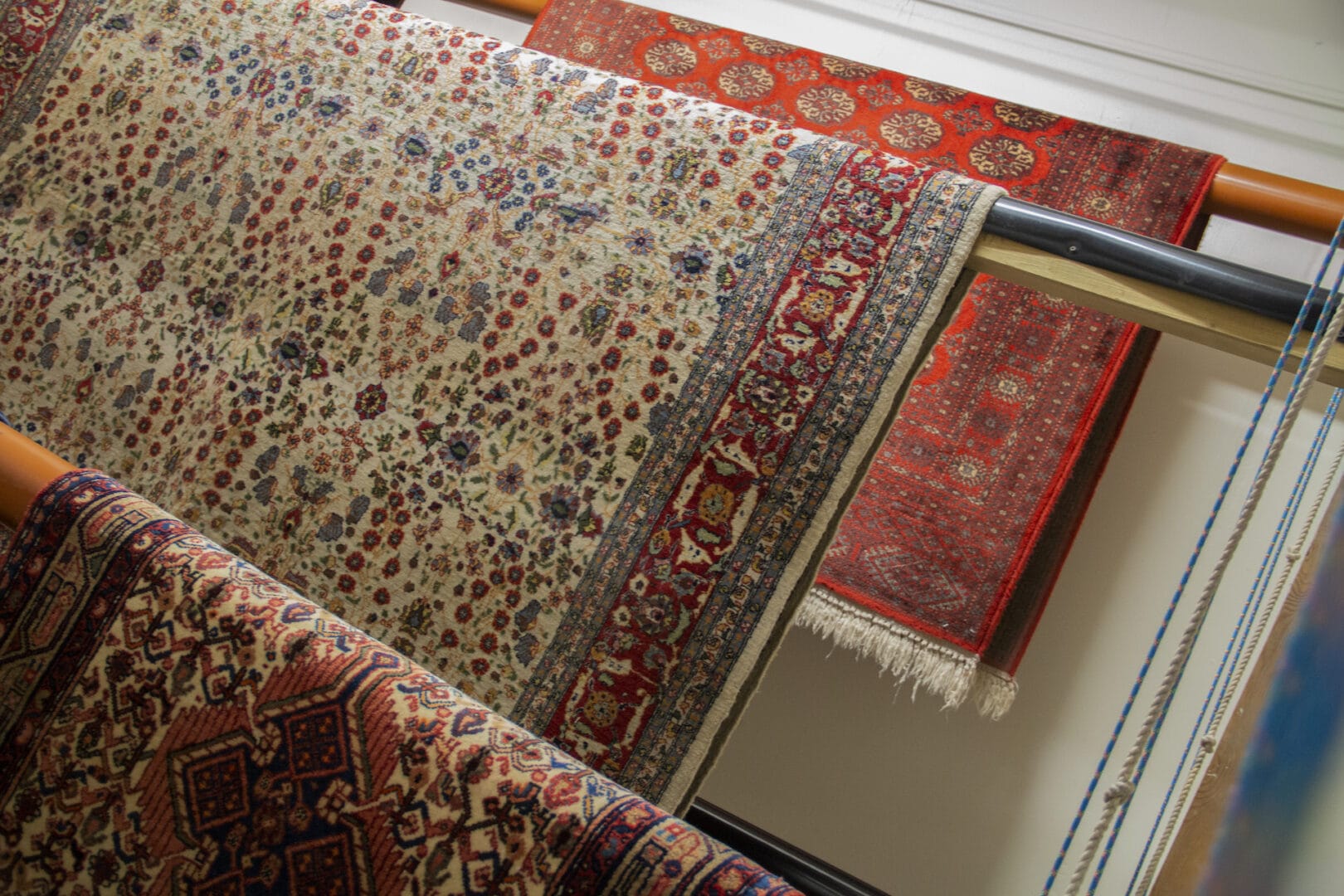
Art_of_Clean_Drying_Room_0244

How to clean a cotton rug at home

If the care label confirms that home cleaning is suitable, keep things gentle.

  1. Remove loose dirt

If the rug is small and light enough to handle safely, take it outside and gently shake away loose debris.

  1. Vacuum thoroughly

Vacuum the surface slowly rather than rushing over it. If the construction allows, turn the rug over and vacuum the reverse too.

Take care around fringes and loose edges, where aggressive vacuuming can cause damage.

  1. Deal with fresh spills by blotting

For a fresh spill, use a clean white cloth or absorbent towel and blot rather than scrub.

Scrubbing can spread the contamination and may distort the surface of the rug. Start gently and avoid soaking the area.

If you have a more stubborn mark, our information on professional stain removal explains why some stains need a more considered approach rather than repeated applications of household products.

  1. Wash only if the care label allows it

Some smaller cotton rugs can be machine washed. Others may require you to hand wash them or have them professionally cleaned.

If machine washing is approved, follow the manufacturer's instructions for water temperature, cycle and detergent.

Do not assume hotter water or more detergent will give you a better clean. More aggressive cleaning can increase the risk of colour loss, shrinkage and residue.

  1. Rinse properly

If you use detergent, rinse it out properly. Residue left in a rug can affect its feel and may attract further soil.

  1. Dry the rug completely

Drying is just as important as washing.

Where appropriate, allow the rug to air dry with good airflow around it. Avoid leaving a damp rug sitting directly on a wood floor, laminate or carpet.

Do not put it back into normal use until it is completely dry.


What about common stains on cotton rugs?

Different spills need different treatment, but a good starting point is usually to act quickly and avoid aggressive scrubbing.

StainFirst stepAvoid
Coffee or teaBlot with a clean white clothScrubbing
Red wineBlot up as much liquid as possibleHot water
MudAllow loose mud to dry, then vacuumSmearing wet mud further
Pet accidentBlot promptly and check suitable treatmentBleach or excessive moisture
Grease or oilBlot excess carefullyStrong solvents without checking suitability

One thing we regularly caution against is layering different products on top of each other.

A stain remover followed by washing-up liquid, followed by another spray, followed by more water can leave you with residue and make the eventual treatment harder to predict.

If the first sensible attempt is not improving the mark, it can be better to stop.

 

Can you machine wash a cotton rug?

Sometimes.

The care label should make that decision for you, not simply the fact that the rug contains cotton.

Machine washing may be suitable when the manufacturer specifically allows it, the rug fits comfortably inside the machine, and its construction is stable enough for washing.

Be more cautious with handmade rugs, decorative trims, unstable dyes, unusual backing materials or rugs that are too large for your machine.

If you are unsure, it is worth checking before taking the risk.

Colour movement is one of the issues we assess before cleaning certain rugs. We explain more about why this can happen in our guide to colour bleeding during rug cleaning.


Cotton rug cleaning mistakes to avoid

Most problems do not happen because someone failed to clean enough. They happen because the cleaning became too aggressive.

Common mistakes include using bleach or harsh chemicals, scrubbing a stain, using very hot water without checking the label, adding too much detergent, washing a rug that is too large for the machine or leaving the rug damp for too long.

Another common mistake is assuming that because a cleaning product is safe for one carpet or rug, it must be safe for another.

Fibre is only one part of the assessment. Construction, dyes, backing, previous treatments and the condition of the rug all matter.


How often should you clean a cotton rug?

There is no single timetable that works for every home.

Regular vacuuming is the most useful starting point. Once a week may be enough in a quieter room, while rugs in busy family areas may need attention more often.

Spills are best dealt with promptly rather than waiting for the next full clean.

How often the rug needs deeper cleaning will depend on where it sits, foot traffic, pets, children and how quickly it becomes soiled. The manufacturer's care instructions should always take priority over a fixed cleaning schedule.

Rotating the rug occasionally can also help spread wear more evenly, particularly in areas with strong foot traffic or sunlight.

DIY or professional cotton rug cleaning?

Routine maintenance does not automatically require a professional cleaner.

Vacuuming, quick spill care and washing a genuinely machine-washable cotton rug can often be handled at home.

Professional cleaning becomes more useful when the rug is large, handmade, heavily soiled, has persistent stains or odours, has suffered water damage, or you are uncertain about its dyes or construction.

At Art of Clean, rugs that need deeper cleaning can be dealt with in a more controlled environment. That gives us the opportunity to inspect the rug, remove dry soil, select a cleaning method based on what we find and control the drying afterwards.

It is not simply a case of using a stronger cleaner or a bigger machine.

If you are weighing up the two options, our guide to DIY rug cleaning versus professional rug cleaning goes into the differences in more detail.


Simple ways to keep a cotton rug cleaner

Vacuum it regularly and deal with spills when they happen.

Rotate the rug from time to time to help even out wear. A suitable rug pad can also reduce movement and help protect the rug and floor beneath it.

Most importantly, avoid experimenting with lots of cleaning products when you do not know how the rug will react.

Sometimes the safest first step really is the simplest one: remove what you can, blot the spill and stop before you make the problem harder to correct.

A little care goes a long way.

Cotton rugs can be wonderfully practical, but practical does not mean indestructible.

For most homes, good cotton rug cleaning starts with the basics: vacuum regularly, act quickly when something is spilt, use cleaning products carefully and follow the manufacturer's instructions before washing.

And if you have a rug that is handmade, particularly large, badly stained or simply too important to experiment with, there is nothing wrong with asking before you clean it.

Sometimes knowing when to stop is just as important as knowing how to start.

Frequently Asked Questions

Answers to common questions about our Cotton Rug Cleaning: A Guide to Everyday Care service.
Follow the rug manufacturer’s instructions. If detergent is permitted, use an appropriate product in the recommended amount rather than assuming a stronger mixture will clean better.
Yes, some cotton rugs can shrink during washing or drying. This is another reason to follow the care label rather than treating all cotton rugs in the same way.
There is no reliable universal drying time. It depends on the thickness of the rug, its construction, how much moisture it contains, temperature, humidity and airflow. What matters is that it is completely dry before being put back into use.
Do not assume that cotton automatically makes a rug suitable for steam cleaning. Check the manufacturer’s instructions and consider the backing, dyes and overall construction before introducing heat and moisture.
Wash it when needed and when the care instructions allow. Regular vacuuming and fast attention to any spills can reduce the need for frequent full washing.
Only if the care label specifically permits it. Heat can affect some cotton rugs and may contribute to shrinkage or changes in shape.
Act quickly and blot up as much liquid as possible without scrubbing. Avoid soaking the rug or reaching immediately for strong household chemicals. Repeated pet accidents, persistent odours or contamination that has reached deeper into the rug may need professional attention.