How to Clean a Jute Rug Safely at Home

A jute rug can make a room feel warmer, softer and more natural, but it does need careful treatment. If you have bought one for a sitting room, bedroom, hallway or under a kitchen table, you may already have noticed that it behaves differently from a normal fitted carpet.

The most important thing to know is this: jute does not like being wet.

A jute rug should be cleaned using dry methods wherever possible.

Regular vacuuming, quick attention to spills and very careful spot cleaning with minimal moisture can help maintain the rug without causing unnecessary damage.

Soaking, steam cleaning, carpet shampoo machines and harsh stain treatments should be avoided, as jute is highly absorbent and can stain, brown, distort or develop mildew if it stays damp.

This guide explains how to clean a jute rug at home as safely as possible, what to avoid, and when it is better to ask for advice before doing more.


How to Clean a Jute Rug Safely at Home Infographic

What is a jute rug?

Jute is a natural fibre made from the stalks of the jute plant. It is often woven into rugs because it has a warm, earthy look and a textured feel that works well in relaxed, natural interiors.

People choose jute rugs because they are attractive, practical in the right place and often more affordable than some wool or handmade rugs. They can look lovely under a coffee table, beside a bed or in a calm, low-moisture space.

However, jute is not the easiest fibre to clean. The same natural texture that gives it character also means it can hold dust and dirt inside the weave. The fibres are absorbent, and once moisture gets into the rug, it can be difficult to dry the rug quickly and evenly.

That is why jute rug care should focus on prevention, regular dry maintenance and careful first steps after a spill.

How to Clean a Jute Rug Safely at Home Art of cleaning rug cleaning service (1)
How to Clean a Jute Rug Safely at Home Art of cleaning rug cleaning service (2)

Why does cleaning jute need extra care?

Jute is a natural fibre, and natural fibre rugs can react badly to the wrong cleaning methods.

With a jute rug, the main risk is excessive moisture. Too much water can weaken the fibres, leave tide marks, cause browning or create a musty smell if the rug does not dry completely. The backing and weave may also become misshapen if the rug is soaked.

This is why we would not treat a jute rug in the same way as a synthetic carpet. A carpet cleaning machine, shampoo or steam cleaning may sound like a deeper clean, but on jute, it can create more problems than it solves.

A useful rule is: if the cleaning method makes the rug wet, pause and think carefully before using it.

How often should you clean a jute rug?

For normal jute rug maintenance, little and often is better than waiting until the rug looks dirty.

Vacuum regularly, especially if the rug is in a room used every day. This helps remove dust and grit before it works deeper into the weave. Dry soil is one of the main things that makes rugs look dull and tired over time, and it can also contribute to wear and tear.

For a jute rug in a quiet bedroom, weekly vacuuming may be enough. For a rug in a living room, hallway or family space, you may need to vacuum more often.

Once a month, it is worth checking the rug more closely. Look for flattened areas, spills, stains, odour, curled edges or signs that the rug is holding more dust than usual. Rotate the rug if one side is taking more use than the other. This helps the rug wear more evenly.

How to Clean a Jute Rug Safely at Home Art of cleaning rug cleaning service (3)

Tools and supplies you may need

You do not need a cupboard full of products to clean and maintain a jute rug. In fact, fewer products are usually safer.

Useful items include:

  • A vacuum cleaner with suction control if available
  • A brush attachment or upholstery tool
  • Clean white microfibre cloths
  • A dry cloth or absorbent towel
  • A soft-bristle brush
  • Baking soda for dry odour freshening
  • A suitable rug pad to reduce movement and wear

Avoid bleach, harsh detergents, carpet shampoo, steam cleaners and anything that requires soaking the rug. Be cautious with online advice suggesting white vinegar or vinegar and water. Even diluted vinegar adds moisture, and on jute, the moisture itself can be the bigger problem.

How to vacuum a jute rug safely

Vacuuming is the safest regular cleaning method for most jute rugs.

Use suction rather than aggressive brushing. If your vacuum has a beater bar, turn it off if you can. A rug beater or rotating brush can be too harsh for some natural fibre rugs and may pull at the weave.

Vacuum slowly in different directions so dust and dirt are lifted from the texture of the rug. If the rug is small enough and safe to move, you can take it outside and gently shake it first. Do not beat it heavily if the weave feels loose or fragile.

If there is loose soil under the rug, vacuum the floor underneath as well. A rug pad can help reduce movement, protect the floor and limit some of the friction that contributes to wear.


How to clean spills on a jute rug

If a spill happens, act quickly but calmly.

First, you need to blot the spill with a clean cloth or absorbent towel. Do not rub. Rubbing can spread the spill and push it deeper into the fibres. It can also roughen the texture of the rug.

Keep blotting with dry sections of the cloth until no more liquid is transferred. Work from the outside of the spill towards the centre so you do not spread it further.

If the spill is still visible, use only the smallest amount of moisture. Dampen a clean cloth very lightly, then dab the stain. The cloth should not be wet enough to soak the rug. Follow immediately with a dry cloth and press gently to lift as much moisture as possible.

The aim is not to wash the rug. The aim is to reduce the spill without over-wetting the jute.

Once finished, help the area dry as quickly as possible. Improve airflow, lift the rug if safe to do so, and avoid putting furniture back over the damp area. The rug should dry completely before it is used again.


Can you use baking soda on a jute rug?

Baking soda can be useful for dry freshening, but it should be used carefully.

If the rug has a mild odour and is dry, sprinkle baking soda lightly over the surface. Leave it for a short time, then vacuum thoroughly using suction. Do not mix baking soda into a wet paste, and do not use it as a heavy treatment for pet stains or damp odours.

Baking soda helps absorb some surface odours, but it will not solve deeper contamination. If a smell remains, especially after a pet accident or a large spill, the problem may be inside the rug rather than just on the surface.

What about pet stains on a jute rug?

Pet stains are more difficult on jute because they bring moisture, odour and possible staining together.

Blot the area straight away with a dry cloth or towel. Do not scrub, soak or add several cleaning products one after another. This can make the fibres wetter and may set the stain or spread the odour.

Avoid strong deodorising sprays and carpet products unless you know they are suitable for jute. Some products leave residues, and some can change the colour or feel of natural fibres.

If the rug is valuable, sentimental, large or badly affected, it is better to ask for advice before doing more. Pet stains can be hard to fully remove from any rug, and jute gives you less room for error because it is so moisture-sensitive.


Can you deep clean a jute rug at home?

This depends on what you mean by deep cleaning.

If deep cleaning means thorough vacuuming, dry soil removal, careful spot cleaning and freshening with dry methods, then yes, you can do some useful maintenance at home.

If deep cleaning means soaking, shampooing, steam cleaning or using a wet carpet machine, then no, this is not a safe home method for most jute rugs.

A jute rug at home should be treated with dry cleaning methods as far as possible. It is tempting to think that more water means a better clean, but with jute, more water often means more risk.


Products and methods to avoid

The safest way to clean jute rugs is often knowing what not to do.

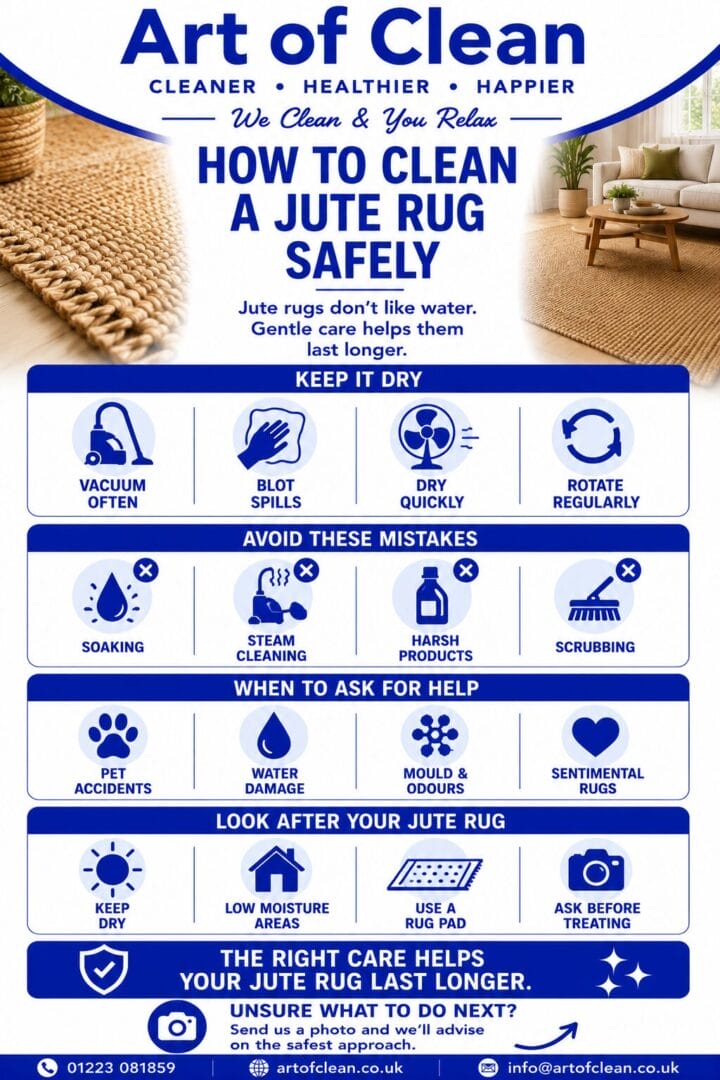
Avoid steam cleaning. Steam adds heat and moisture, both of which can cause problems for natural fibres.

Avoid carpet shampoo machines. They normally put too much moisture into the rug, and jute can be slow to dry.

Avoid soaking stains. Even if the stain looks better at first, the damp area may dry with a larger mark.

Avoid scrubbing. This can damage the texture and push soil deeper into the weave.

Avoid bleach and harsh chemicals. These can weaken or discolour the fibres.

Be careful with white vinegar. You may see advice to mix equal parts white vinegar and water or use a vinegar solution to dab the stain. On jute, this should be treated with caution. The moisture can still cause browning, marking or distortion, even if the vinegar itself seems mild.


Where not to use jute rugs

Jute rugs are not ideal for every room.

Avoid using them in bathrooms, damp utility rooms, wet entrances or anywhere spills are likely to happen often. They can also be a challenge under dining tables if food and drink spills are common.

A jute rug can work well in calmer spaces where it is not exposed to regular moisture. Bedrooms, sitting rooms and low-traffic areas are usually kinder environments than kitchens, bathrooms or busy entrances.

If you love the natural look but need something easier to clean, it may be worth comparing jute with sisal rugs, wool rugs or synthetic options before buying. Each fibre has its own benefits and limits.

How to keep your jute rug looking its best

Good jute rug care is mostly about prevention.

Vacuum regularly so dry soil does not build up. Rotate the rug so one area does not take all the wear. Use a rug pad where suitable to reduce movement. Keep the rug away from damp areas. Deal with spills quickly, using blotting rather than rubbing.

Try not to leave heavy furniture in exactly the same place for years if it is crushing the weave. If the rug is in sunlight, remember that natural fibres can change colour over time. Rotation can help the rug age more evenly.

The better you control dust, dirt, moisture and wear, the longer the life of the rug is likely to be.


When to ask for professional rug advice

Ask for advice if the rug has a large stain, pet contamination, a strong odour, water damage, mould or mildew, colour change, browning, or previous product use that has made the mark worse.

It is also sensible to ask before trying to clean a jute rug if it is expensive, sentimental, handmade or difficult to replace.

At Art of Clean,we have learned over many years that rug cleaning is rarely just about the surface. Rugs can hold dry soil deep inside them, and drying control matters just as much as the cleaning itself. Some rugs are suitable for professional cleaning, while others need very cautious advice because the likely result may not justify the risk or cost.

That honest assessment matters. A good rug clean should help the client make a sensible decision, not push them into treatment that may not be right for the rug.


Before you try more cleaning

A jute rug can be a lovely addition to a home, but it needs gentle care. The safest approach is regular vacuuming, dry maintenance, quick blotting after spills and very limited moisture when spot cleaning.

Avoid soaking, scrubbing, steam cleaning and carpet shampoo machines. Be cautious with home remedies, including vinegar and water, because jute can react badly to dampness even when the cleaning product sounds gentle.

If you are unsure what to do next, especially after a spill or pet accident, pause before adding more products. Take a photo, make a note of what happened, and ask for advice. A careful first step can often protect the rug better than rushing into a full clean.

If you would like help deciding whether your jute rug can be cleaned, send Art of Clean a few clear photos and tell us what has happened. We can advise on the most sensible next step.

Frequently Asked Questions

Answers to common questions about our How to Clean a Jute Rug Safely at Home service.
It is not usually a good idea to wash a jute rug with water. Jute is highly absorbent, and too much moisture can cause staining, browning, mildew or fibre damage. Dry methods, regular vacuuming and careful spot cleaning are usually safer.
No. Steam cleaning is not recommended for jute rugs. Steam adds heat and moisture, which can damage natural fibres and make the rug difficult to dry properly.
The safest approach is to vacuum regularly, blot spills quickly with a clean dry cloth, and use as little moisture as possible when spot cleaning. Avoid scrubbing, soaking or using carpet shampoo machines.
Yes, baking soda can be used lightly on a dry jute rug to help freshen mild odours. Sprinkle a small amount, leave it briefly, then vacuum thoroughly. Do not mix it with water or use it as a paste.
Be cautious. Vinegar and water are often suggested online, but jute does not respond well to moisture. Even a mild vinegar solution can leave marks if the rug becomes too wet or dries unevenly.