Persian Rug Cleaning Tips to Preserve Timeless Craftsmanship

Clean Persian rugs with patience, testing, and the right level of care for the fibre, dyes, and condition of the rug. A handmade rug is not the same as a fitted carpet. It may hold years of dry soil deep inside the knots, have natural dyes that need caution, or have fringes and edges that are weaker than they look.

For everyday care, vacuuming, blotting spills quickly, and avoiding harsh products can help preserve your rug. For antique, silk, inherited, or valuable Persian rugs, professional rug cleaning is usually the safer route… especially where colour movement, odour, pet accidents, moth damage or old repairs are involved.

At Art of Clean, we clean rugs offsite because many rugs need more control than a living room can offer. You can read more about our collected rug cleaning service if you would like to understand how professional inspection, dust removal, washing, rinsing and drying work together.

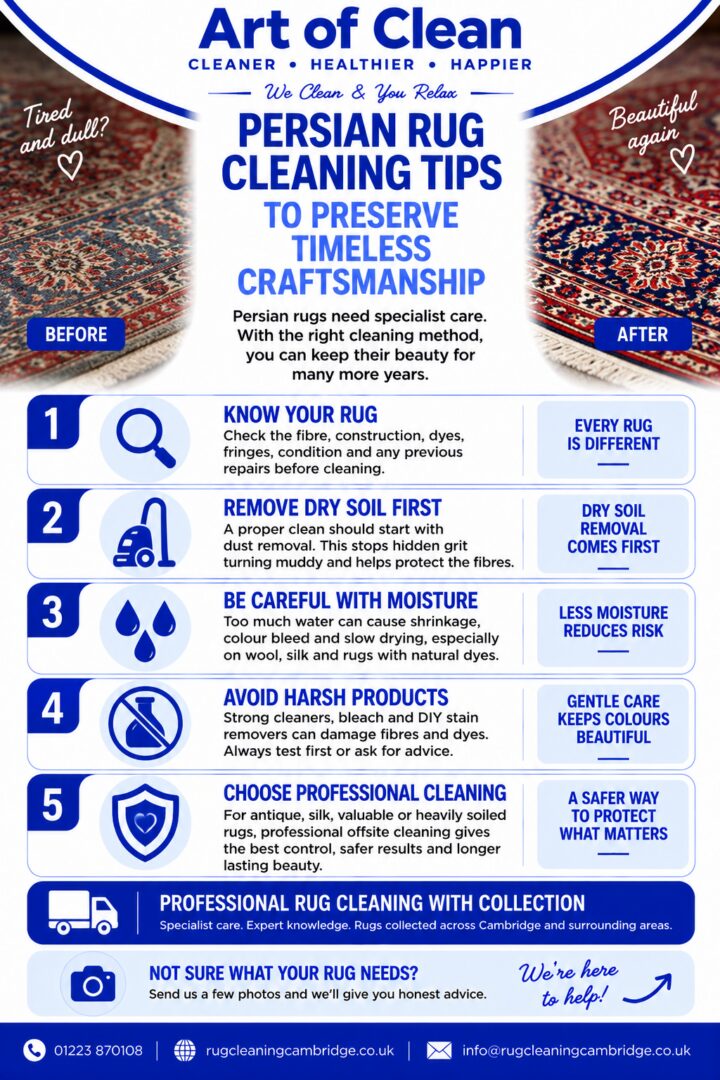
Persian Rug Cleaning Tips to Preserve Timeless Craftsmanship Infographiic

What makes a Persian rug unique?

A Persian rug is traditionally made in Iran and is often valued for its hand-knotted construction, detailed pattern work and long textile history. Some Persian rugs are everyday household rugs. Others are antique pieces, family heirlooms or high-value rugs bought for their design, origin or craftsmanship.

The important thing is this: the word “Persian” tells you where the rug style comes from, but it doesn't tell you exactly how to clean the rug. A professional rug cleaner still needs to assess the rug itself.

That usually means looking at the fibre, construction, dye stability, fringe condition, past repairs, odour, stains, moth activity and how much dry soil is sitting inside the foundation.

A good wool Persian rug may clean very well. A silk Persian rug may need far more caution. An old rug with natural dyes may need a different cleaning method from a newer contemporary rug. This is why Persian rug cleaning should never be treated as a one-size-fits-all cleaning service.

Persion Rug Cleaning Art of Clean Cambridge 2

Why Persian rugs need special care

Persian rugs are often hand-knotted, which means the pile is tied into a foundation rather than simply attached to a backing. This construction is part of what gives them their beauty and durability, but it also means dust, grit and soil can sit deep inside the rug.

A proper rug clean should not start with washing. It should start with dry soil removal.

This is one of the biggest things people miss when they try to clean a rug at home. If you wash a rug before removing enough dry soil, hidden grit can turn muddy inside the foundation. Over time, that grit can also act like sandpaper against the fibres when the rug is walked on.

Art of Clean’s own rug cleaning process grew from this lesson. Early rug cleaning showed that some rugs could not be cleaned properly in the home because they needed better dusting, rinsing, water removal and controlled drying. That experience is why our specialist rug cleaning is carried out offsite, where the process can be managed more carefully.

Understanding Persian rug materials

Before you clean your rug, try to understand what it is made from. If you are not sure, pause before adding water, stain remover or cleaning products.

MaterialCleaning difficultyCommon risksSafer care
WoolModerateShrinkage, colour bleed, texture changeGentle maintenance and professional cleaning where needed
SilkVery highFibre damage, fading, distortionSpecialist assessment before cleaning
Cotton foundationModerateBrowning, shrinkage, slow drying issuesMinimal moisture and careful drying
Natural dyesHighDye movement or colour bleedingColourfastness testing and pH-neutral cleaning only

Wool Persian rugs are often durable and can respond well to cleaning, but wool is not risk-free. Heat, strong alkalinity, aggressive scrubbing and poor drying can all cause problems.

Silk Persian rugs need a much more cautious approach. True silk can be delicate, and many rugs described as silk are actually artificial silk, viscose, rayon or bamboo silk. These fibres can be very moisture-sensitive. If you think your rug may be silk or artificial silk, do not attempt a full home clean.

Cotton is often found in foundations and fringes. It can absorb moisture and may brown or weaken if it is overwet or dried too slowly.

Natural and vegetable dyes can be beautiful, but they need testing. Some colours are stable. Others can move when moisture, cleaning solution or previous household products are introduced.


Before you start cleaning

The safest cleaning decision is made before any product touches the rug.

Lay the rug flat in good light and inspect it slowly. Look for worn pile, frayed edges, loose knots, old repairs, moth damage, weak fringe, colour bleed, pet marks and any areas that already feel stiff or sticky from previous cleaning products.

If the rug has a care label… ALWAYS read it. If it came from a dealer, check whether they gave you any care advice. If it has been cleaned professionally before, look for any notes or recommendations from that visit.

Then test for colourfastness in a hidden area. Use a clean white cloth, very light moisture and no harsh products. If colour transfers to the cloth, stop. The rug needs specialist advice.

This is especially important for Persian and oriental rugs with strong reds, deep blues, dark borders or pale fringes.


Step-by-step guide to safe Persian rug maintenance

This section is for light maintenance and fresh spills, not full deep cleaning. If the rug is antique, silk, very valuable, badly stained, pet-affected or showing colour movement, speak to a professional rug cleaner first.

Step 1: Remove loose dirt 

Only take the rug outside if it is small enough to move safely, and the weather is dry. Gently shake out light debris. DON’T beat an old, fragile or valuable rug over a rail, as this can stress the foundation and fringe.

For large rugs, remove surface debris indoors before vacuuming.

Step 2: Vacuum gently

Vacuum in the direction of the pile, using suction only where possible. Avoid rotating brush bars, especially on fringes and delicate areas.

Do not vacuum fringes aggressively. Fringes are often part of the rug’s foundation, not just decoration, and damage here can lead to further unravelling.

Step 3: Blot spills immediately

If something is spilt, blot it with a clean white cloth. Work from the outside of the stain towards the centre so you do not spread it.

Do not scrub. Scrubbing can distort fibres, push the spill deeper and make some stains harder to treat.

Step 4: Spot clean only where safe

If the rug is a stable wool rug and the spill is fresh, you may be able to use a small amount of mild, pH-neutral cleaning solution on a cloth. Apply sparingly. Never pour cleaner directly onto the rug.

If you are unsure what the rug is made from, or if the stain is on a silk, antique or sentimental rug, stop and ask for advice.

Step 5: Remove residue

Cleaning residue can attract soil and leave the area looking dull. Lightly blot with a barely damp cloth, then blot again with a dry white towel.

Do not over-wet the rug.

Step 6: Dry the rug properly

Drying matters as much as cleaning. Lay the rug down flat in a well-ventilated area and use airflow to help it dry. Avoid direct sunlight, radiators, hairdryers and artificial heat.

If a rug stays damp too long, odour, browning, dye movement and foundation problems can follow. For more detail, see our guide on how to dry a rug at home.

How to deal with common Persian rug stains

Fresh stains are usually easier to improve than old stains, but no rug cleaner should promise that every stain can be removed. Some marks are fibre damage, dye change, sun fading or chemical damage rather than removable soil.

StainImmediate actionAvoid
Coffee or teaBlot gently with a clean white clothScrubbing or hot water
Red wineBlot immediately and keep the area controlledFlooding the rug
MudLet it dry, then vacuum gentlyRubbing wet mud into the fibres
Pet accidentBlot and seek advice if odour remainsBleach, disinfectant or deodorising sprays
Food spillLift solids carefully, then blotSmearing the stain
Grease or oilBlot carefully and ask for adviceStrong solvents

Pet accidents need particular care. Urine can affect dyes, fibres and odour in a way that ordinary surface cleaning may not solve. Cleaning may improve the rug, but odour removal depends on the material, depth of contamination and what has already been used.


Cleaning methods to avoid

Some cleaning methods can cause more damage than the original dirt.

Steam cleaning is risky for many Persian rugs because excessive heat and moisture can affect natural fibres, traditional dyes, cotton foundations and fringes.

Pressure washing is not suitable for handmade rugs. It can distort fibres, damage foundations and drive water too deeply into the rug.

Bleach and harsh chemicals should not be used on Persian rugs. They can remove colour, weaken fibres and leave permanent damage.

Carpet shampoo machines are also a common problem. A Persian rug is not a fitted carpet. Machines designed for carpets may overwet the rug, leave residue behind or fail to remove enough water.

Avoid aggressive scrubbing, soaking the rug in the garden, using household stain removers without fibre identification, and trying to deep clean a valuable rug before you know whether the dyes are stable.

If you are weighing up home cleaning against professional rug cleaning, our guide to DIY rug cleaning vs professional rug cleaning may help.


How often should a Persian rug be cleaned?

For routine maintenance, vacuum weekly or as needed, depending on the room, foot traffic, pets and how much dry soil the rug collects. Rugs in hallways, dining rooms and family spaces usually need more attention than rugs in quiet rooms.

Rotate your rug every 6 - 12 months so wear and sunlight are more even. Try to keep it away from prolonged strong sunlight, as textile colours can fade over time.

A professional deep clean may be useful every 1 to 3 years, depending on use, fibre, condition, pets, stains and specialist advice. Some rugs need attention sooner. Others may need a more cautious schedule.

The right timing depends on the rug, not just the calendar.

DIY cleaning vs professional Persian rug cleaning

DIY care has a place. It can help with regular maintenance, fresh surface spills and keeping a rug presentable between professional cleans.

Professional rug cleaning is different. It allows for inspection, fibre testing, dye stability checks, dry soil removal, controlled washing, rinsing, water extraction and proper drying.

DIY rug careProfessional rug cleaning
Regular vacuumingFibre and dye assessment
Blotting fresh spillsDry soil removal before washing
Light spot cleaningControlled cleaning and rinsing
Lower immediate costBetter drying control
Surface-level maintenanceSafer route for valuable or delicate rugs

Art of Clean clients often value collection and return because it removes the worry of trying to manage a large rug at home. It also gives the team the right space to inspect the rug, clean it carefully and dry it properly.


When to call a professional rug cleaner

Call a professional rug cleaner if your Persian rug is antique, silk, inherited, hand-knotted, valuable, water-damaged, pet-affected, moth-damaged, showing colour bleeding or difficult to dry.

You should also ask for advice if the rug has weak fringe, fraying edges, old repairs, persistent odour or a stain that has already had household products applied.

A good Persian rug cleaning company should be willing to explain what is realistic. Cleaning may improve brightness, remove dry soil, reduce odour and freshen the rug, but it cannot promise to remove every stain, reverse wear, restore sun fading or undo fibre damage.

Look for rug cleaning specialists who understand:

  • fibre identification
  • dye stability
  • handmade rug cleaning
  • controlled drying
  • rug repair and restoration limits
  • Persian and oriental rug cleaning risks
  • honest expectation setting

If repair is needed, cleaning may be only one part of the decision. Some rugs also need help with side cords, fringe damage, moth treatment, underlay or storage. You can read more in our guide to storing your rugs.


Persian rugs vs oriental rugs: is cleaning different?

All Persian rugs are a type of oriental rug, but not all oriental rugs are Persian. Persian rugs traditionally come from Iran. Oriental rugs may come from several rug-making regions, including Turkey, Afghanistan, India, China and other areas.

The cleaning principles are similar: identify the fibre, test the dyes, inspect the construction and avoid harsh cleaning.

The differences come from the individual rug. A Persian wool rug, a silk rug, a flatweave kilim and a contemporary rug may all need different handling. That is why an expert rug cleaner looks beyond the label and assesses the rug in front of them.

Long-term care tips to preserve your Persian rug

A good rug pad or underlay can help reduce movement and wear, especially on hard floors. It can also make a rug feel more stable underfoot. Make sure the underlay is suitable for your floor type.

Rotate the rug every few months in busy areas. This helps reduce uneven wear and fading.

Keep the rug away from prolonged direct sunlight where possible. Strong light can fade colours over time, especially on older or naturally dyed rugs.

Vacuum gently and regularly. Do not wait until the rug looks dirty, because much of the damaging soil may be hidden deep in the foundation.

Deal with spills quickly, but calmly. Blot first. Do not scrub, soak or reach for bleach.

If the rug is going into storage, have it cleaned first where suitable, then wrapped properly. Storing a dirty rug can encourage moths, odour and permanent staining.


Common mistakes that damage Persian rugs

The most common mistakes are usually made with good intentions. Someone wants to act quickly, save money or stop a stain before it sets. The problem is that the wrong action can make the result worse.

Avoid overwetting the rug, steam cleaning without confirming suitability, using bleach or harsh detergents, scrubbing stains, vacuuming fringes with a beater bar, drying in direct sunlight, delaying stain treatment and trying a full DIY deep clean without knowing the fibre type.

If the rug is valuable to you, financially or sentimentally, the safest first step is often to pause and ask before adding anything to it.


Not Sure What Your Persian Rug Needs?

Persian rug cleaning is about more than making a rug look cleaner. It is about protecting fibres, dyes, construction, history and future use.

A careful clean may brighten the rug, remove hidden dry soil, reduce odour and make the rug feel fresher in the room. But the method should always fit the rug.

If you are unsure what your rug is made from, or if it has sentimental, antique or financial value, ask before you clean it. Art of Clean can inspect your rug, explain the likely risks and talk through the safest next step.

For advice or a free quote, visit our rug cleaning service page or contact the team with a few photos of the rug, including the front, back, fringe and any areas of concern.

Frequently Asked Questions

Answers to common questions about our Persian Rug Cleaning Tips to Preserve Timeless Craftsmanship service.
Steam cleaning is not usually the safest choice for Persian rugs. Heat and moisture can affect natural fibres, dyes, fringes and foundations. A specialist should inspect the rug before any wet cleaning method is chosen.
Many rugs benefit from professional cleaning every 1 to 3 years, but the timing depends on foot traffic, pets, fibre, condition, stains and indoor environment. A lightly used rug may need less frequent cleaning. A busy family rug may need help sooner.
We would not recommend vinegar as a general Persian rug cleaning solution. It can affect dyes, fibres and residues in unpredictable ways. Use pH-neutral products only where suitable, and avoid home remedies on valuable or delicate rugs.
Colour bleeding can happen when dyes are unstable, the rug has been overwet, cleaning chemistry is unsuitable, or previous products are reactivated. Stop cleaning and ask a professional rug cleaner for advice.
It is risky. Outdoor washing can lead to overwetting, poor rinsing, slow drying, dye movement, distortion and contamination from the ground. A professional rug cleaning facility gives better control over dusting, washing, rinsing and drying.
Clean it first where suitable, make sure it is fully dry, roll it rather than folding it, and use suitable protective wrapping. Avoid damp lofts, garages and sheds. If the rug is valuable or moving overseas, ask for professional storage or wrapping advice.
Look for frayed edges, loose fringe, holes, moth damage, weak areas, unravelling, or old repairs coming apart. Cleaning can improve many rugs, but structural damage may need rug repair or rug restoration advice before or after cleaning.