Viscose Rug Cleaning: A Guide to Delicate Rug Care

Viscose rugs can look beautiful in a room. They often have a soft sheen, a smooth feel and the kind of light-catching finish that makes them look similar to silk.

The difficulty is that viscose is not silk. It is also not as forgiving as many wool or synthetic rugs. When a viscose rug is cleaned with too much moisture, heat, rubbing or the wrong cleaning solution, the fibres can change in ways that are difficult or impossible to reverse.

The safest approach is to keep routine care gentle, deal with spills quickly, avoid aggressive DIY cleaning and ask for professional advice before attempting deep cleaning.


Quick answer

Viscose rug cleaning needs extra care because viscose fibres are highly sensitive to moisture, friction and harsh cleaning products. Regular gentle vacuuming, careful blotting after spills and minimal moisture can help maintain the rug’s appearance. Steam cleaning, soaking, scrubbing and carpet shampoo machines should be avoided because they can cause browning, yellowing, pile distortion and texture change.

For significant stains, water marks or full rug cleaning, a professional rug cleaner is usually the safest option.

Viscose Rug Cleaning Guide

Key takeaways

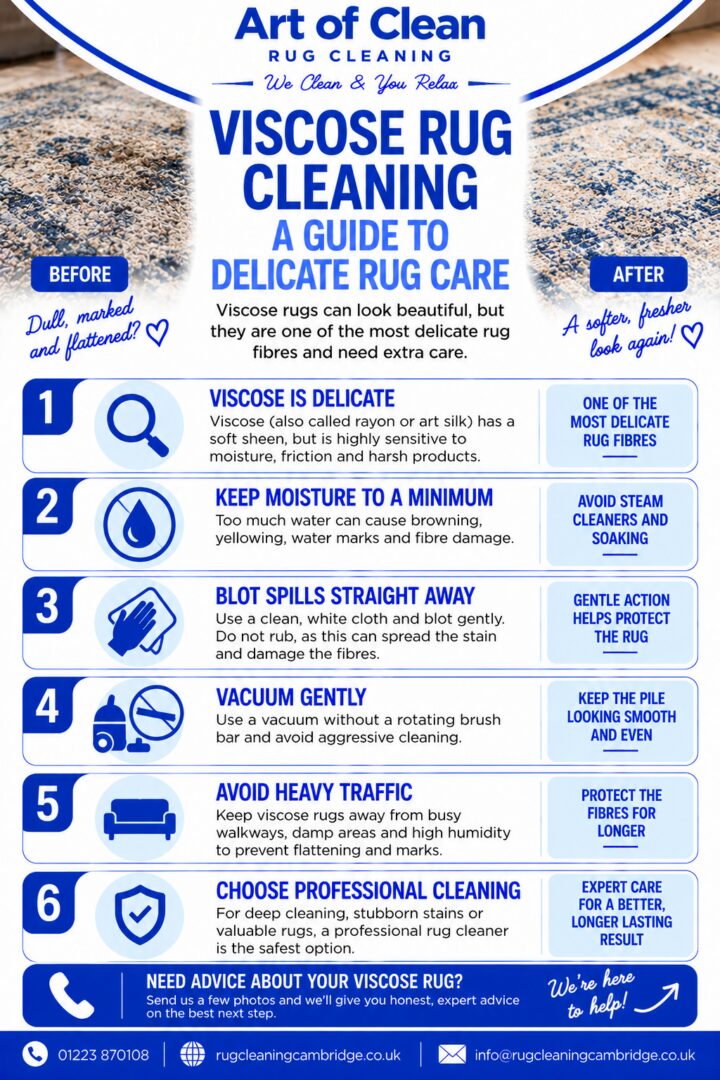
  • Viscose is one of the most delicate rug fibres.
  • Keep moisture to an absolute minimum.
  • Blot those spills straight away with a clean white cloth.
  • Never scrub a viscose rug.
  • Avoid steam cleaners, carpet shampoo machines and harsh detergents.
  • Vacuum gently without a rotating brush bar.
  • Keep viscose rugs away from heavy traffic, damp areas and excessive humidity.
  • For deep cleaning and stubborn stains, professional cleaning is recommended.


What is a viscose rug?

A viscose rug is made with regenerated cellulose fibre. You may also see viscose described as rayon, art silk, bamboo silk or artificial silk.

These names can be confusing. A rug may be sold with language that makes it sound close to real silk, but viscose behaves differently during cleaning. The Federal Trade Commission explains that many textiles marketed with bamboo wording are actually rayon or viscose, which is useful to understand before buying or cleaning a rug.

Viscose is commonly used because it gives rugs a soft, lustrous appearance. It can reflect light beautifully and feel pleasant underfoot. That same surface is also easily marked, flattened or dulled.

Rug Cleaning Cambridge Cambridgeshire Ely
Rug 5

Why viscose rugs require special care

The main issue with viscose is that it does not respond well to moisture and friction.

When viscose gets wet, the fibre can weaken. If it is then rubbed, scrubbed, brushed aggressively or walked on while damp, the pile may distort or flatten. A small stain can quickly become a larger patch of texture change.

Viscose rugs are also prone to browning and yellowing. This can happen when moisture, residues, previous cleaning attempts or slow drying affect the fibre. Once that change has occurred, full restoration may not be realistic.

This is also why dye testing matters before cleaning delicate rugs. Art of Clean has explained this in more detail in its guide to rug colour bleeding, where a small test area can reveal whether dyes are likely to transfer before the full cleaning process begins.

A professional rug cleaner should not simply ask, “Can we clean this?” The better question is, “What is the rug made from, how stable is it, what has already happened to it, and what result is realistic?”

That judgement matters because the aim with viscose is often controlled improvement rather than a promise of complete restoration.


Why viscose rugs are difficult to clean

Moisture sensitivity

Viscose absorbs moisture readily. Even a small spill can spread into the fibres and leave a visible water mark. Unlike some more resilient rug materials, viscose may show the outline of the treated area after cleaning.

This is why spot cleaning has to be careful and limited. The aim is to remove or reduce the problem without creating a larger wet patch.

Fibre weakening when wet

Viscose fibres can become weaker when wet. If you rub or brush the rug during this stage, the surface may lose its smooth finish.

This is one reason cleaning viscose at home can go wrong. The person cleaning may think they are being thorough, but the physical action can be more damaging than the original mark.

Colour changes and water marks

Brown or yellow marks are common concerns with viscose rugs. Water, residues, previous spill treatments, slow drying or changes within the cellulose fibre can cause these.

A yellow stain on a pale viscose rug can be particularly frustrating because the rug’s sheen can make the mark more visible from certain angles.

Pile distortion

Viscose pile can crush easily. Foot traffic, furniture pressure, rubbing and wet cleaning can all change the way the pile sits. Once the fibres reflect light differently, the area can look darker, lighter or flatter even if the soil has been reduced.

Permanent fibre damage

Some damage cannot be cleaned away because it is no longer just soil on the rug. It may be fibre distortion, chemical change, dye movement or permanent texture loss.

This is why standard carpet cleaning methods are often unsuitable for viscose rugs. A method that works well on a fitted synthetic carpet may be too wet, too hot or too aggressive for a delicate viscose rug.

Rug Care and cleaning cambridgeshire Ely Royston

Before cleaning your viscose rug

Read the care label

Start with the care label if the rug has one. Look for the fibre content, cleaning restrictions and manufacturer guidance.

Some labels are vague, missing or not especially helpful, but they are still worth checking. If the rug is under warranty, using the wrong cleaning method may also affect that warranty.

Inspect the rug

Before you clean a viscose rug, look closely in good light. Check for:

  • existing stains
  • flattened pile
  • loose fibres
  • frayed edges
  • water marks
  • previous colour change
  • weak fringes
  • signs of earlier cleaning attempts

These details matter because they affect what can be safely done.

Test any cleaning product.

If you use any cleaning product, test it first in a hidden area. Use a clean white cloth and check for colour transfer, fibre change or marking.

If the test area changes colour, feels rough, turns yellow or looks different once dry, stop. Do not continue across the visible area.


Step-by-step guide to cleaning a viscose rug

This guidance is for light routine care and immediate spill response. It is in no way a substitute for professional rug cleaning.

Step 1: Vacuum carefully

Vacuum the rug gently using low suction. Work in the direction of the pile where possible.

Avoid rotating brush bars, beater bars and aggressive vacuum heads. These can pull at the fibres, disturb the pile and damage fringes.

Regular gentle vacuuming helps remove dust particles and dry soil before they settle deeper into the rug.

Step 2: Treat spills immediately

If something spills, blot it straight away with a clean white cloth or plain kitchen roll.

Press gently. Keep turning the cloth to a dry area. Absorb as much liquid as possible without rubbing.

Do not scrub backwards and forwards. Scrubbing can distort the pile and spread the stain.

Step 3: Spot clean with minimal moisture

If spot cleaning is suitable, use only a very small amount of appropriate cleaner. Apply it with a soft cloth rather than pouring it onto the rug.

Keep the treated area as small as possible. Never saturate the fibres.

For valuable rugs, large stains, old marks or unknown products, it is safer to stop after blotting and ask a professional rug cleaner for advice.

Step 4: Remove residue carefully

If residue needs to be removed, use light blotting only. Repeated wetting can create more risk than benefit.

Avoid household mixtures, strong stain removers, bleach, washing-up liquid and layers of different cleaning agents. The more products added, the harder the final result can be to predict.

Step 5: Dry quickly and evenly

Moisture should not sit in a viscose rug. Improve airflow around the area and use a fan if needed.

Do not use direct heat. Do not put the rug in direct sunlight to force drying. Heat and uneven drying can create further marks or texture changes.

Drying is not an afterthought with delicate rugs. If a rug has become wet at home, this guide on how to dry a rug safely explains why airflow, moisture control and avoiding slow drying all matter.

How to remove common stains from a viscose rug

With viscose, stain treatment is mainly about a safe first response. Difficult stains should be professionally assessed.

StainImmediate actionAvoid
Coffee or teaBlot immediately with a clean white clothScrubbing or soaking
Red wineBlot gently and stop once liquid transfer slowsHot water or harsh stain removers
Food spillsLift solids carefully, then blotRubbing food deeper into the pile
MudLet dry, then vacuum gentlyWet scrubbing
Pet accidentsBlot and seek advice if severeSteam cleaning or household chemicals
GreaseBlot carefully and ask for advice if visibleStrong solvents

Pet stains need particular caution. Heat can set urine-related staining and odour, so steam cleaning is not a safe shortcut.


Cleaning methods to avoid

Steam cleaning

Steam cleaning is usually not recommended for viscose rugs. Heat and moisture can weaken fibres, cause water marks, encourage browning or yellowing and flatten the pile.

Carpet shampoo machines

Domestic carpet shampoo machines are often too wet and too uncontrolled for cleaning viscose. They may leave residue, overwet the rug or distort the pile.

Pressure washing

A viscose rug should not be pressure washed. The force, water volume and drying risk are far too high for such a delicate fibre.

Excessive water

Soaking a viscose rug can lead to browning, yellowing, shrinkage, texture change and slow drying problems.

Harsh chemicals and bleach

Bleach, strong detergents and aggressive stain removers can permanently alter colour and fibre texture.

Aggressive scrubbing

Scrubbing is one of the quickest ways to damage viscose. It may make the treated area look rough, dull or permanently flattened.

DIY deep cleaning

DIY deep cleaning is risky because viscose needs fibre identification, careful testing, controlled moisture, proper drying and realistic expectation setting.

If you are weighing up whether to handle a rug at home or send it away, Art of Clean’s guide to DIY rug cleaning versus professional rug cleaning explains why some rugs need more than surface treatment.

Can you steam clean a viscose rug?

In most cases, no. Steam cleaning is not a suitable method for viscose rug cleaning.

The problem is the combination of heat, moisture and pressure. Viscose fibres can weaken when wet, and heat may make staining or texture change worse. Steam cleaning can also leave water marks, browning, pile flattening and a permanent loss of softness.

Safer alternatives include regular vacuuming, careful dry soil removal, gentle spot cleaning and professional low-moisture cleaning where suitable.


How often should you clean a viscose rug?

For weekly maintenance, vacuum gently and remove dust before it settles deeper into the rug. Rotate the rug periodically so one area is not taking all the foot traffic.

Spot cleaning should be limited to immediate spill response. Blot first. Avoid repeated product use.

Professional cleaning may be needed every 12 to 24 months, depending on where the rug sits, how much traffic it receives, whether there are pets or children in the home, and what the manufacturer recommends.

A viscose rug in a quiet bedroom may need less frequent cleaning than one in a hallway, lounge or dining area.


Long-term care tips for viscose rugs

Keep viscose rugs away from heavy foot traffic where possible. They are often better suited to lower-use rooms than busy hallways, doorways or dining areas.

Use a rug pad to reduce movement and help support the rug. Rotate it regularly to even out wear.

Limit direct sunlight, as this can affect colour over time. Avoid damp areas, wet shoes and rooms with high humidity.

If the rug is being moved, stored or protected during decorating or building work, read Art of Clean’s advice on storing rugs before wrapping it away. Viscose is already moisture-sensitive, so poor storage can create problems before the rug is even used again.

Most importantly, deal with spills quickly and gently. The first few minutes matter, but doing too much can be worse than doing too little.


DIY cleaning vs professional cleaning

DIY careProfessional cleaning
Gentle vacuumingFibre and construction assessment
Immediate spill blottingSpecialist stain treatment
Light routine maintenanceControlled cleaning method
Lower cost for simple careReduced risk of permanent damage
Suitable for surface care onlyBetter for valuable or stained viscose rugs

Professional rug cleaning does not mean every mark will disappear. It does mean the rug can be assessed properly before a method is chosen.

For viscose, that matters. The wrong method can make the problem so much worse, while a careful approach can often reduce risk and improve appearance.

Common mistakes that damage viscose rugs

The most common mistakes are steam cleaning, overwetting, scrubbing stains, using bleach or strong detergents, ignoring the care label, drying too slowly, placing the rug in damp areas and attempting DIY deep cleaning.

Another common mistake is adding one product after another. A stain remover does not work, so washing-up liquid is added. Then vinegar. Then bicarbonate of soda. Then a stronger spray.

Each product can leave residue or affect the fibre. By the time the rug reaches a professional cleaner, the original stain may no longer be the only issue.


When to call a professional rug cleaner

Call a professional if the rug has persistent stains, water damage, colour change, fibre distortion, pet contamination, previous cleaning damage or a large stained area.

Professional help is also sensible for valuable designer rugs, inherited rugs and rugs sold as silk, bamboo silk, art silk or artificial silk.

Look for a rug cleaner with experience in viscose and delicate rug materials. They should understand fibre identification, dye stability, moisture control, low-moisture methods, dry soil removal and controlled drying.

A good professional should also be honest about limits. With viscose, the safest answer may be that improvement is possible, but you can't promise full restoration.


Need help with a viscose rug?

Viscose rugs can bring a soft, elegant finish to a room, but they need careful handling. They are sensitive to moisture, friction, heat, and harsh cleaning products, so keep cleaning gentle and controlled.

For day-to-day care, vacuum carefully, blot spills immediately and avoid rubbing. Do not steam clean, soak, scrub or use aggressive stain products.

If the rug has a significant stain, water mark, pet accident or texture change, professional rug cleaning is usually the safest route. With viscose, the right advice before cleaning can prevent a small problem from becoming permanent damage.

Frequently Asked Questions

Answers to common questions about our Viscose Rug Cleaning: A Guide to Delicate Rug Care service.
You can carry out light routine care yourself, such as gentle vacuuming and careful blotting after spills. Deep cleaning a viscose rug at home is not recommended because moisture, rubbing and unsuitable products can cause permanent damage.
Steam cleaning is usually not safe for viscose rugs. Heat and moisture can cause browning, yellowing, pile flattening, fibre weakening and water marks.
Viscose is highly absorbent and moisture-sensitive. Spills can spread quickly, and even clean water may leave a visible mark or change the way the pile reflects light.
Yes, water can permanently affect a viscose rug. It may cause yellowing, browning, texture change, pile distortion or water marks.
There is no single safest cleaner for every viscose rug. The safest approach is to test first, use minimal moisture and avoid strong products. For anything more than a small fresh spill, professional advice is recommended.
Many viscose rugs benefit from professional cleaning every 12 to 24 months, depending on use, foot traffic, location and manufacturer guidance. Rugs in busy areas may need attention sooner.
A rough feel can happen when viscose fibres are affected by moisture, cleaning residue, scrubbing, or pile distortion. Once the fibre texture has changed, full reversal may not be possible.
Sometimes it can be improved, but restoration depends on the type of damage. Assess staining, browning, yellowing, and texture changes before making any promises.