Hand-Knotted Rug Cleaning Without Taking Risks

A hand-knotted rug can be one of the most beautiful things in your home.

Perhaps you chose it for its colours and craftsmanship, or maybe it has been in your family for years.

Either way, when it needs cleaning, you want to know that you are looking after it properly.

Cleaning a hand-knotted rug needs a careful approach.

Gentle vacuuming, prompt attention to spills and avoiding excessive moisture can help protect the fibres and colours.

However, deep cleaning is best left to a specialist who can assess the rug before choosing a suitable method.

The important thing is knowing what you can safely do at home and when to leave things alone.

Hand-Knotted Rug Cleaning Guide

What Makes a Hand-Knotted Rug Different?

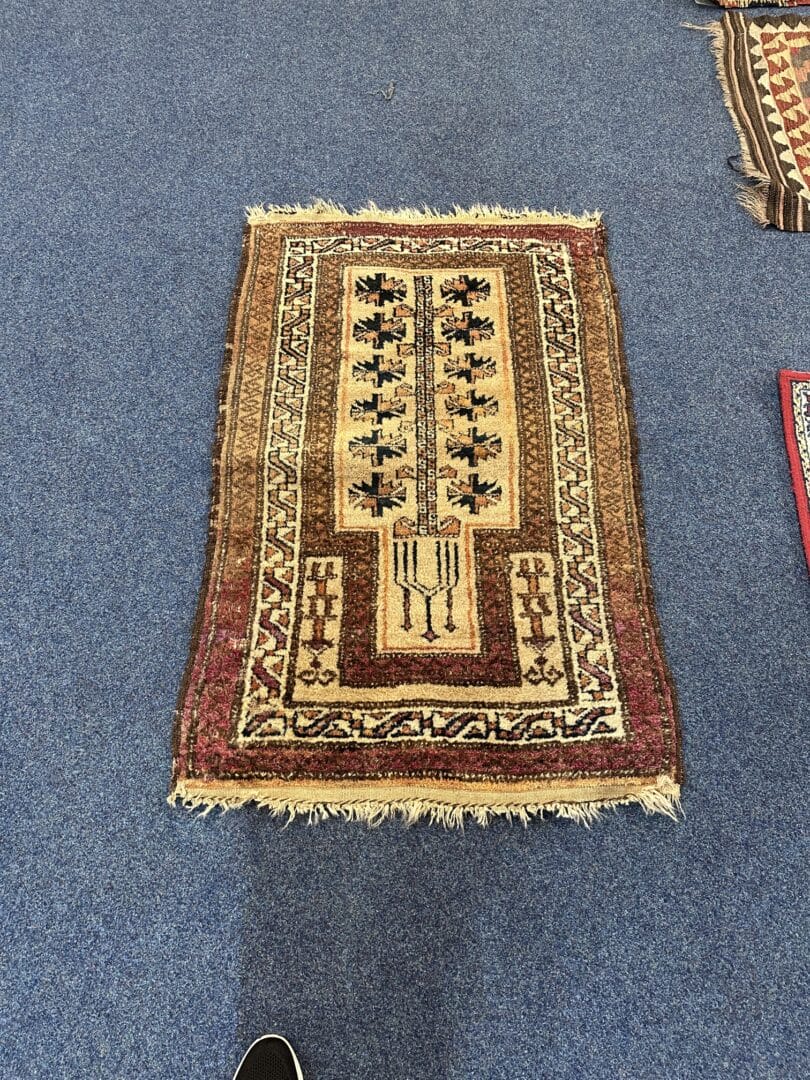
Unlike machine-made rugs, a handmade rug is created by tying individual knots around foundation threads.

Depending on its size and design, making one can take months or even years.

This craftsmanship makes each piece distinctive, but its construction also affects how it should be cleaned.

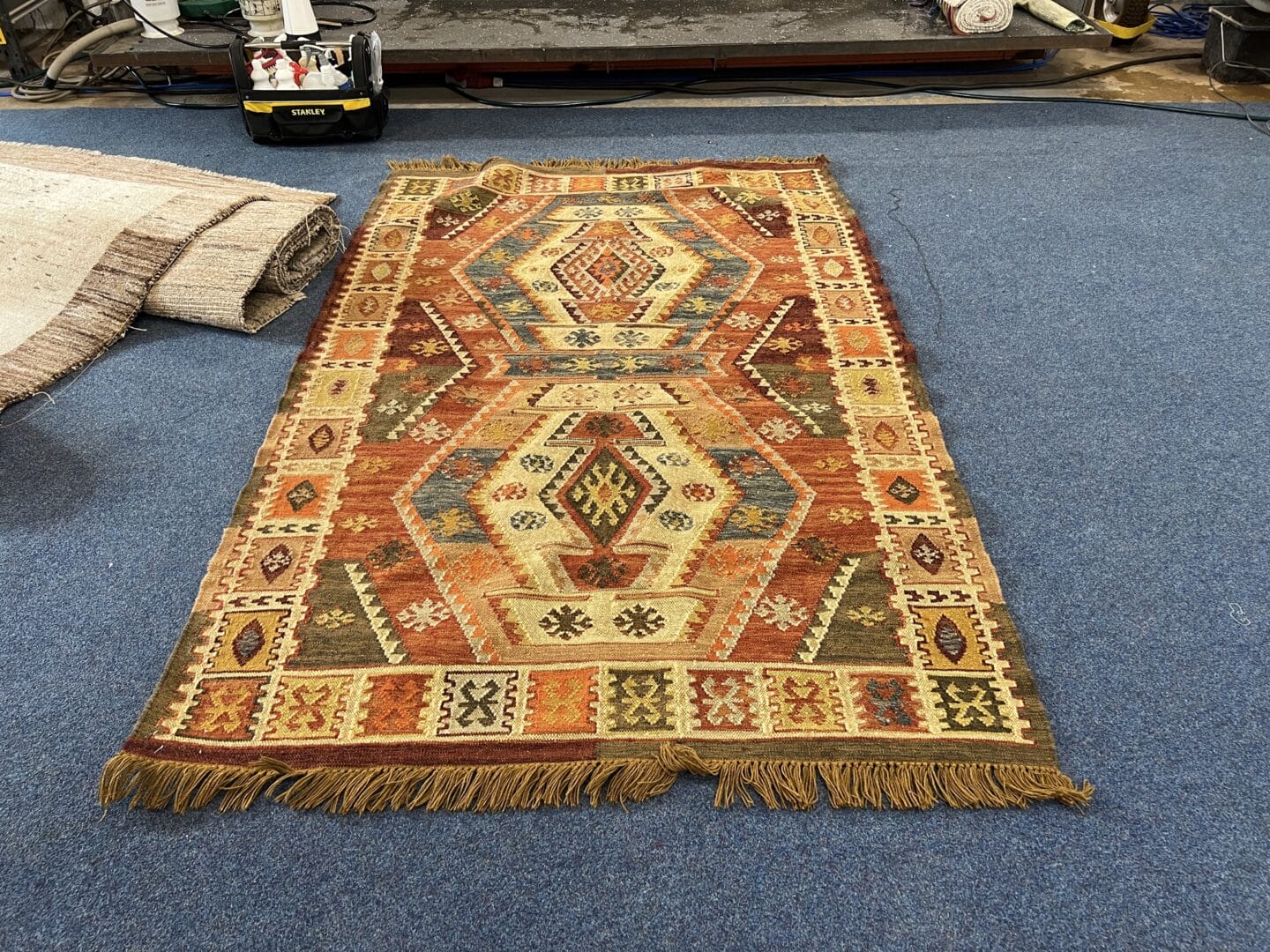
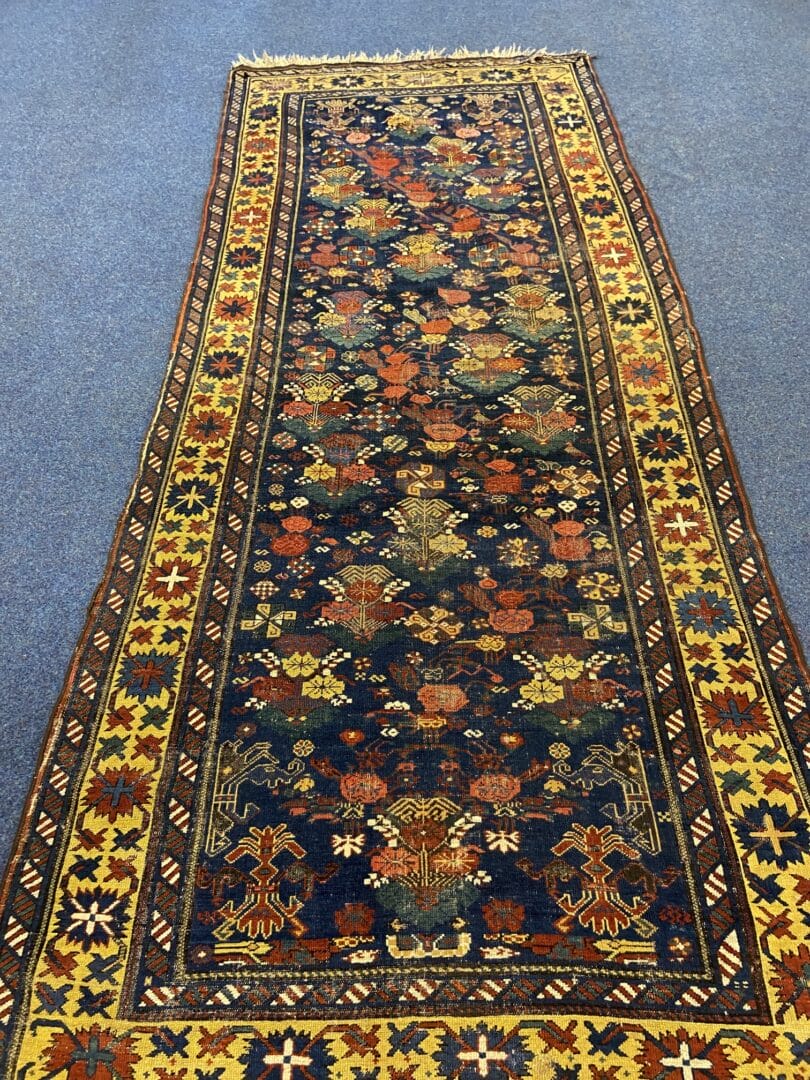
A traditional Persian rug, for example, may have a wool pile, cotton foundation and dyes that react differently to moisture.

At Art of Clean, one of the most important lessons we have learnt is that two rugs that look similar may need entirely different cleaning methods.

That is why understanding the construction comes before choosing a treatment.

CB4 1NS Rug cleaning service art of clean cam,bridge 3
rug cleaning colour run art of clean cambridge

Common Materials Used in Hand-Knotted Rugs

Not all natural fibres respond to cleaning in the same way.

MaterialMain cleaning concernSensible approach
WoolShrinkage, colour movement and product residueGentle maintenance and suitable professional treatment
SilkDelicate fibres and potential texture changesSpecialist assessment
Cotton foundationShrinkage and distortion when wetCareful moisture control
Wool and silk blendDifferent fibre reactionsTesting before treatment
Natural dyesColour bleedingDye stability testing

A silk rug may need a much more cautious approach than a hard-wearing wool rug in a busy sitting room.

The age and condition matter too. An older Oriental carpet with worn areas or previous repairs may not tolerate cleaning that a newer rug could manage.

Before Cleaning a Hand-Knotted Rug

Take a moment to inspect your rug before using any product or equipment.

Look for loose knots, worn areas, damaged edges, weakened fringes or unusual discolouration.

Check any care information supplied by the retailer, particularly if you are unsure whether the rug is handmade.

Colour stability is another important consideration.

Some rugs contain dyes that can move when exposed to moisture. Once one colour transfers into another, correcting the damage may be difficult.

We explain this in more detail in our guide to why rugs bleed during cleaning.

For valuable rugs, colourfastness testing should be carried out by someone who understands how the fibres and dyes may react.

A simple home test cannot guarantee that wet cleaning will be safe.

Rug cleaning Cambridge Rug cleaning and repair service art of clean

How to Clean a Hand-Knotted Rug Safely at Home

Routine maintenance does not need to be complicated. In fact, a gentler approach is often better.

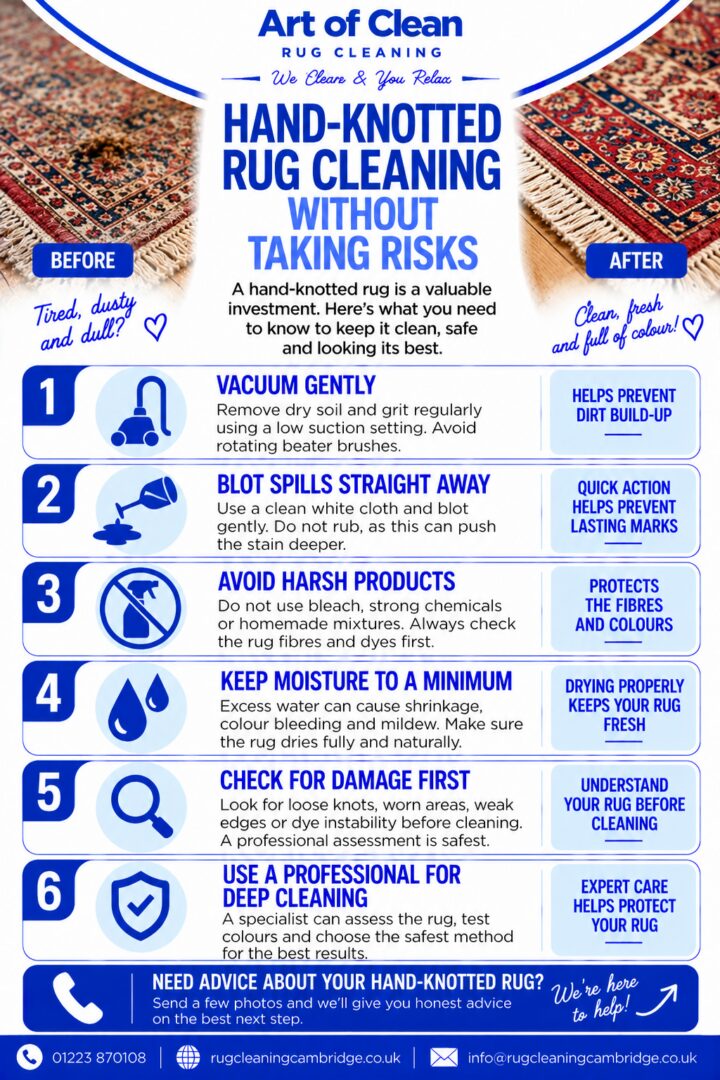
  1. Remove Surface Dust Carefully

Dust and grit gradually settle between the fibres, particularly in high-traffic areas.

For a sound rug, regular vacuuming can reduce this build-up before it becomes embedded.

Use an appropriate suction setting and avoid aggressive rotating beater brushes.

Follow the direction of the pile where possible, keeping the vacuum away from loose fringes.

If the rug is fragile or has damaged knots, seek advice before vacuuming.

  1. Deal With Spills Promptly

Imagine someone knocking a glass of red wine onto your dining room rug.

Your first instinct might be to grab a stain remover and start scrubbing.

Unfortunately, that can make matters worse.

Instead, gently blot the spill using a clean, absorbent white cloth.

Work from the outside towards the centre without rubbing.

Avoid adding cleaning chemicals before you know how the rug will react.

  1. Be Cautious With Spot Cleaning

A mild, pH-neutral detergent suitable for the particular fibres may be appropriate for some rugs.

However, it should not be assumed safe for every handmade carpet.

Even a gentle product can cause colour movement or leave residue.

For silk, antique or unstable rugs, avoid experimenting with homemade solutions.

  1. Make Sure the Rug Dries Properly

Excess moisture can cause shrinkage, colour bleeding, unpleasant odours and mildew.

If a small area becomes damp, encourage airflow without applying direct heat.

Do not hang a heavy, wet hand-knotted rug where its own weight could distort the construction.

If your rug has become significantly wet, our guide on how to dry a wet rug explains why drying deserves particular attention.

 

What Should You Do About Common Rug Stains?

The safest first response depends on what has been spilt and the condition of the rug.

Spill or stainFirst actionAvoid
Coffee or teaBlot with a clean white clothScrubbing
Red wineAbsorb excess liquid promptlyHot water and DIY mixtures
Pet accidentsBlot and seek advice if liquid has soaked throughBleach and strong deodorisers
MudAllow to dry before gently removing loose soilRubbing wet mud
FoodCarefully lift away loose materialGrinding it into the pile
Grease or oilBlot without spreadingHousehold solvents

Persistent stains, pet odours or contamination that reaches the foundation may need professional attention.

Remember that cleaning can improve many marks, but complete removal is not always possible.


Cleaning Methods That Can Damage Handmade Rugs

Some cleaning methods work well on suitable fitted carpets but are too aggressive for certain handmade rugs.

Be particularly careful with:

  • Steam cleaning: Heat and moisture may affect dyes, fibres and dimensions.
  • Pressure washing: Excessive force can damage the pile or foundation.
  • Carpet shampoo machines: Rotating brushes and unsuitable products may cause wear or leave residue.
  • Bleach and harsh chemicals: These can permanently affect colours and fibres.
  • Aggressive scrubbing: Friction can damage the pile and disturb weakened areas.

A professional deep clean does not mean using the strongest available method. It means selecting the appropriate treatment after understanding the rug.

How Often Should a Hand-Knotted Rug Be Cleaned?

There is no single cleaning schedule that suits every rug.

A rug in a quiet bedroom may stay cleaner for longer than one beneath the dining table, where shoes, food and everyday activity introduce more soil.

As a practical guide, vacuum suitable rugs regularly, rotate them approximately every 6 to 12 months and deal with spills promptly.

Consider professional cleaning every 1 to 3 years, depending on use, fibre type, and condition.

The National Trust's advice on caring for precious textiles also highlights the importance of gentle vacuuming and periodically rotating rugs to reduce uneven wear.

A suitable rug pad can help prevent slipping, while limiting direct sunlight may reduce fading.


DIY Care or Professional Hand-Knotted Rug Cleaning?

There is plenty you can do to look after a rug between professional cleans.

However, removing deeply embedded soil requires more than surface vacuuming.

At Art of Clean, we developed our dedicated rug cleaning facility in Chittering, near Cambridge, after learning how important thorough dust removal, rinsing, water extraction and controlled drying are.

Our cleaning process begins with inspection and testing. Depending on the rug's construction and condition, we can then decide which stages are suitable.

That might involve specialist dusting, washing, rinsing and controlled drying.

Sometimes a delicate rug needs a modified approach. Occasionally, the sensible recommendation is not to proceed with conventional cleaning at all.

This is particularly important for antique rugs, silk rugs, inherited pieces and rugs with previous damage.

When choosing a cleaner, ask about their experience, assessment process, handling of delicate dyes and appropriate insurance.

You can also read about what our rug cleaning customers have experienced to understand the importance of careful handling and communication.

Looking After Your Rug for Years to Come

A well-made hand-knotted rug can give years of enjoyment, but its lifespan depends partly on how it is used and cared for.

Regular maintenance, gentle handling and sensible decisions after a spill can all make a difference.

Most importantly, avoid treating every rug like an ordinary fitted carpet.

At Art of Clean, we understand that a rug does not have to be expensive to matter.

It might be an everyday family rug, a carefully chosen Persian piece or something inherited from someone special.

If you are unsure how to care for yours, our specialist rug cleaning service in Cambridge can help you understand the options.

We would rather assess the rug and give you clear advice than recommend a treatment that may not be right for it.

Frequently Asked Questions

Answers to common questions about our Hand-Knotted Rug Cleaning Without Taking Risks service.
You can usually carry out gentle routine maintenance if the rug is in sound condition. Full washing is best approached after professional assessment.
Not automatically. Heat, moisture and cleaning products can affect natural fibres and unstable dyes. Suitability must be assessed first.
It is better not to experiment with vinegar. Its acidity may affect some dyes or fibres, and it is not a universally safe stain treatment.
Some dyes become mobile when exposed to moisture or unsuitable cleaning solutions. Stop adding liquid and seek specialist advice if colour transfer appears.
Outdoor washing is risky without identifying the fibres, checking dye stability and having a suitable way to remove water and dry the rug thoroughly.
Loose knots, damaged foundations, worn edges or significant fringe damage may need repair assessment. Cleaning cannot replace missing fibres or restore structural damage.