How to Clean a Carpet by Hand (and What a Hand Clean Can’t Do)

Yes, you can clean a carpet by hand to tackle small marks and freshen lightly soiled areas, provided its care guidance allows it.

You cannot give the pile a thorough rinse or remove dirty water as an extraction machine can.

Perhaps guests are coming, a tenancy check-out is approaching, or your Cambridge living room needs attention without hiring a machine.

A careful hand clean can help. Just keep the bucket firmly off the carpet.

We are freshening the fibres, not giving the floor a bath!

If you are wondering how to clean carpet without a machine, these steps help you avoid soaking, leftover soap and enthusiastic scrubbing.

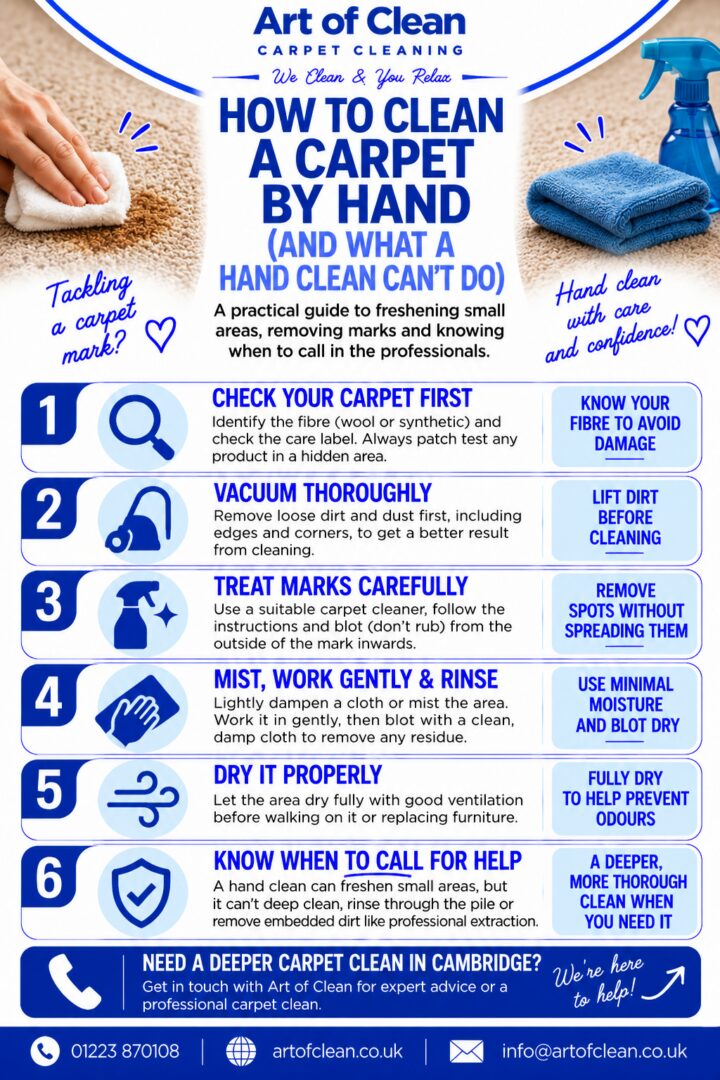
Hand Carpet Cleaning Guide Infographic

Check your carpet first: fibre type and care label.

Check the manufacturer's care guide, fitter's paperwork or a labelled offcut. Find out whether you have wool, a wool blend or synthetic fibres.

Appearance alone is not a reliable guide.

Wool needs suitable products and gentle handling.

Synthetic carpet still needs care: its backing, dyes and construction affect what you can safely use.

If you cannot identify it or confirm that damp cleaning is suitable, pause and ask for advice.

Patch test every product in a hidden area, following its instructions.

Let the test dry and check for colour or texture changes before continuing.

A successful patch test does not make soaking safe.

Saffron Walden Carpet Cleaning Art of Clean Cambridge Essex
Saffron Walden Carpet Cleaning Art of Clean Cambridge Essex Hertfordshire

What you'll need

Gather these before starting:

  • A vacuum with a crevice tool and a head suitable for your carpet.
  • Clean white cloths or colourfast white microfibre cloths.
  • A soft brush, only if the carpet guidance permits one.
  • A clean spray bottle and a bucket of clean lukewarm water.
  • A carpet cleaning product labelled for your fibre and hand application.

Choose a mild, suitable cleaner and follow its dilution instructions.

For wool, look for an appropriate WoolSafe-approved product.

Washing-up liquid is easy to reach for, but WoolSafe explains that its residue can attract dirt.

Start with a small area.

A whole room is a considerable amount of blotting, and your knees may have opinions.

Step by step: how to clean a carpet by hand

Step 1: Vacuum thoroughly

Vacuum slowly, in two directions where suitable for the pile, and use the crevice tool around the edges.

Removing loose dry soil first reduces what you need to tackle with moisture.

Do not skip this part because the carpet is about to be cleaned.

Step 2: Deal with spots first

Lift loose solids carefully, then blot liquid with a clean white cloth, working from the outside towards the centre.

Follow the appropriate product instructions and avoid rubbing.

Different spills need different decisions.

Read our guides to red wine on carpet and coffee stains on carpet before adding more products.

If a mark spreads or colour transfers, stop.

Step 3: Mist, don't pour.

Following the cleaner's label, lightly dampen a cloth or mist a small section.

Keep moisture controlled and never empty the bucket onto the carpet.

If the product requires extraction or a different application method, it is unsuitable for this cloth-based approach.

Step 4: Work it in gently

Use gentle movements with your cloth, or a very soft brush if permitted.

Avoid catching loops or working repeatedly at one stubborn mark.

Extra pressure can change the pile rather than remove the stain.

Read why you shouldn't scrub with the green side of a sponge.

That kitchen scourer has no business auditioning as a carpet brush.


Huntingdon PE28 9LS Carpet cleaning service art of clean cambridge Hertfordshire Cambridgeshr=ire Suffolk

Step 5: Rinse by blotting, then blot dry

Where the product instructions require rinsing, use a fresh cloth lightly dampened with clean water.

Blot to lift residue, changing the cloth and water as they become dirty.

Press with dry cloths to absorb moisture until little transfers.

If removing foam would require repeated wetting, stop and seek advice instead of chasing it deeper into the carpet.

Step 6: Help it dry

Ventilate the room and use normal room heating if needed.

Air movement can help, but avoid pointing a heater or hairdryer directly at the carpet.

Keep people and pets off the area until fully dry, and do not replace furniture on damp fibres.

Step 7: Vacuum once fully dry

Once completely dry, vacuum using the appropriate setting to tidy the pile.

Assess the result in good light before deciding whether you need anything else.

A remaining mark is not an instruction to start scrubbing again.


Carpet shampoo by hand: does it work?

Some shampoos are designed for hand application; others need a machine or a specific removal method.

Check the label rather than assuming any bottle marked “carpet shampoo” will suit.

The difficulty with carpet shampoo by hand is removing what you put in.

Foam may look productive, but without extraction it can be hard to rinse away.

Follow the stated dilution and removal instructions.

More shampoo does not mean more cleaning power.

If the carpet feels sticky afterwards or a patch quickly darkens again, leftover product may be involved.


Baking soda and vinegar: what they actually do

Baking soda, also known as bicarbonate of soda, is often suggested as a dry deodorising sprinkle that is later vacuumed away.

That is different from removing the source of a smell or rinsing soil from the pile.

Check both your carpet and vacuum manufacturer's guidance before using powders.

We would not make baking soda a routine extra step, particularly where compatibility is unknown.

Vinegar is acidic, and mixing it with alkaline baking soda makes them react and partly neutralise one another.

The fizz is not evidence of a deeper clean.

Neither belongs in a universal recipe for every carpet.

NEVER EVER mix bleach with ammonia or vinegar-based cleaners.

Read our guide to whether you can bleach carpet without ruining it before considering bleach at all.

The three risks of hand cleaning: over-wetting, residue and scrubbing

Over-wetting: moisture can reach the backing and underlay, where a cloth cannot recover it effectively.

Slow drying can lead to unpleasant smells and conditions that encourage mould.

Our guide explains why a carpet can smell bad after cleaning. Persistent dampness needs attention, not another scented spray.

Residue: soap left behind can attract soil, making a cleaned patch look dirty again.

Our team also encounters previous treatments that foam during rinsing or contribute to rings around marks. Tell a technician what you have used; it helps them assess the next step.

Scrubbing: vigorous rubbing can fluff or distort fibres, particularly wool and cut pile.

Once the texture changes, further cleaning may not restore it.

Stop if the pile starts looking different.

What a hand clean can't do compared with professional hot water extraction

Hot water extraction rinses through the pile and uses suction to recover loosened soil, cleaning solution and water.

It provides controlled rinsing and recovery that cloths cannot match.

A hand clean can help with small areas and light soiling. It cannot flush out and recover embedded dirt throughout a room.

Adding enough water to reach deeper does not solve that problem when you cannot remove it.

At Art of Clean, the decision also involves checking fibre, previous treatments and whether a dark traffic lane contains removable soil, permanent wear or both.

Equipment alone cannot reverse worn fibres.

For whole-room soiling, recurring odours or uncertain wool carpets, professional assessment may save repeated attempts.

Wool rugs need their own assessment rather than this fitted-carpet method.

Compare DIY vs professional carpet cleaning and read how often you should clean your carpet for ongoing care.


When to call Art of Clean in Cambridge

A careful hand clean can be worthwhile for a small, suitable area.

When the whole carpet needs attention, marks keep returning, or you are unsure what is safe, ask for an assessment.

Book a quote for professional carpet cleaning in Cambridge.

We help homeowners across Cambridge and Cambridgeshire understand what cleaning may improve and where wear or staining could remain.

Frequently Asked Questions

Answers to common questions about our How to Clean a Carpet by Hand (and What a Hand Clean Can't Do) service.
If the care guidance permits it, vacuum thoroughly, treat small marks with a suitable product, remove residue as instructed and blot dry. Use minimal moisture and allow it to dry fully. This freshens small areas rather than providing whole-room extraction.
No single homemade mixture suits every fibre, dye, and backing. Check the manufacturer’s guidance and choose a compatible carpet product. Familiar kitchen ingredients are not automatically suitable for carpet.
It can leave residue that will just attract dirt and is difficult to remove by hand. A suitable carpet product is generally the better choice. If you have already used washing-up liquid, avoid adding more or soaking the area to chase bubbles.
Yes, if the shampoo specifically permits hand use on your carpet and you can follow its removal instructions. Don’t adapt a machine-only product for a bucket-and-cloth method.
It depends on fibre, construction, moisture, temperature, humidity and ventilation. There is no reliable fixed time. If it stays damp or develops an unpleasant smell, seek advice rather than assuming more heating will solve it.
Control moisture, remove residue and allow the carpet to dry fully with suitable ventilation. Persistent odour may involve contamination beyond the surface. Repeated wetting or fragrance can leave the underlying problem unresolved.