Avoid rubbing, soaking or grabbing whichever cleaner is nearest. Use cold water only where your carpet’s care instructions allow it.
For Cambridge and Cambridgeshire households, here are three routes: fresh sick, dried vomit and lingering smells.

Party season, winter bugs and a dog who has eaten something questionable. November keeps a household busy.
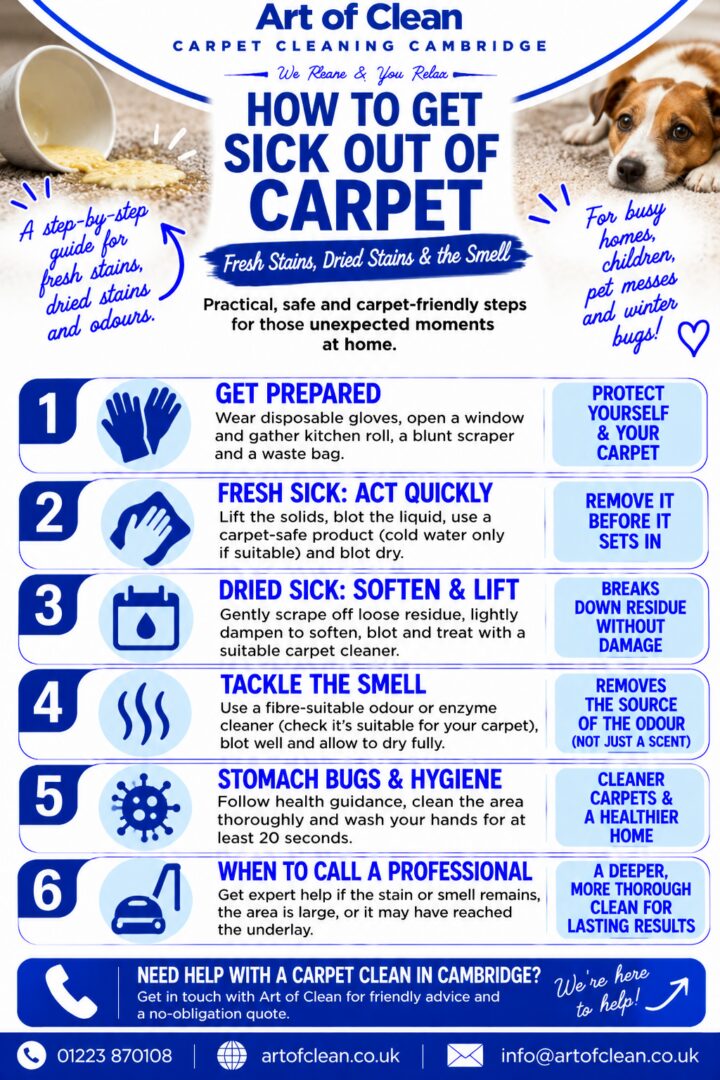
If you need to know how to get sick out of carpet, start by putting on gloves, lifting the solids and blotting the liquid.
Avoid rubbing, soaking or grabbing whichever cleaner is nearest. Use cold water only where your carpet’s care instructions allow it.
For Cambridge and Cambridgeshire households, here are three routes: fresh sick, dried vomit and lingering smells.
Put on disposable gloves, open a window for ventilation and keep children and pets away.
Gather kitchen roll, white cloths, a blunt scraper and a waste bag.
Check the carpet's care instructions.
Wool, silk, viscose and plant fibres can need different handling. If the fibre is unknown, ask before adding water or products.
Blot, do not rub. Scrubbing can spread the stain and distort carpet fibres.
Avoid hot water as your first stain treatment because heat can make protein residues harder to remove.
Do not use bleach as a shortcut. It can remove carpet colour, and must never be mixed with white vinegar, ammonia or other cleaners.
Our guide explains why bleach and carpet do not mix.

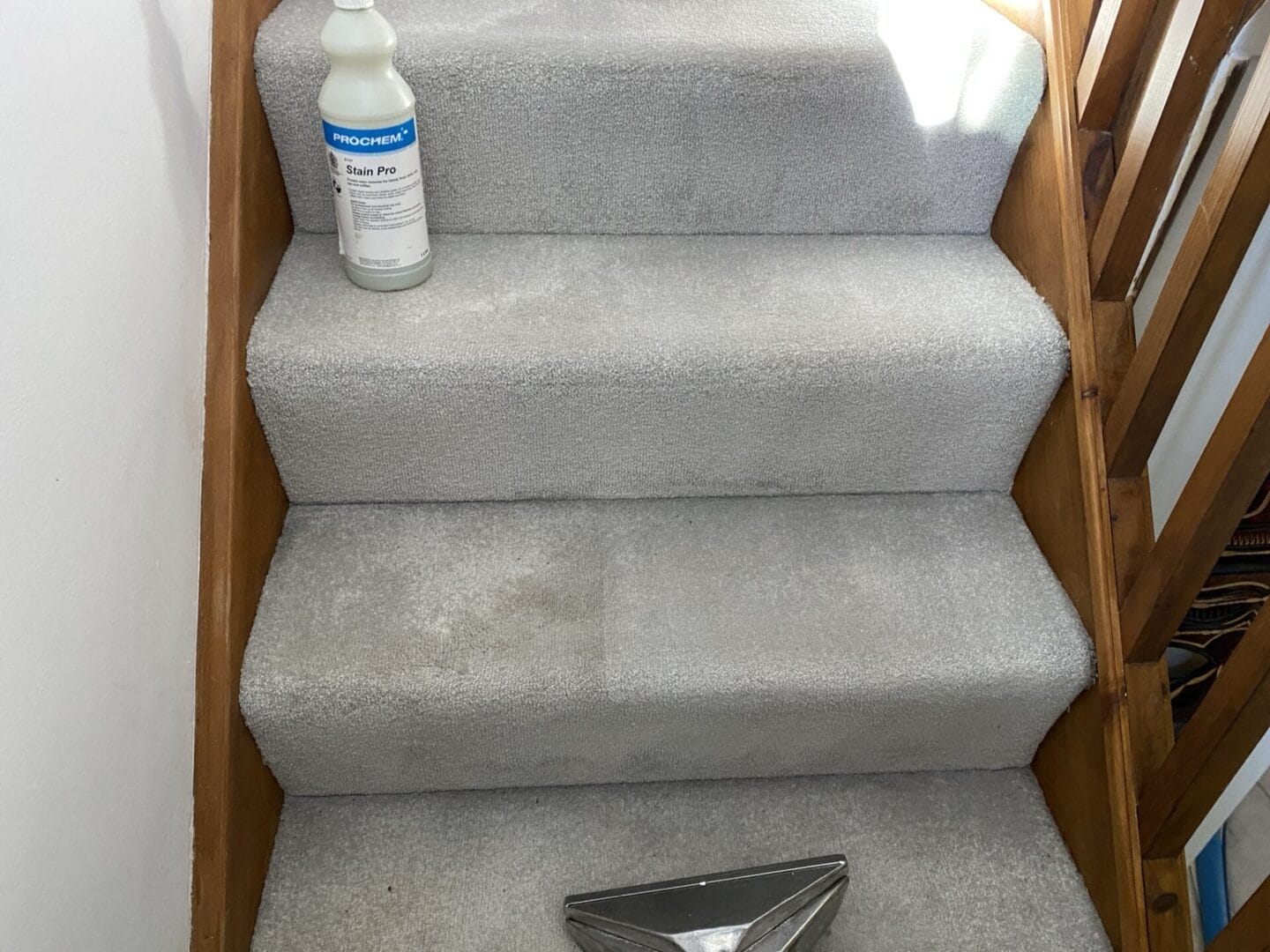
Washing up liquid may be handy, but it is difficult to rinse from carpet and can leave residue that attracts dirt. WoolSafe's care guidance advises against it.
The cold-water starting point also appears in our guide to how to remove blood from carpet. For more on careful blotting, see our coffee stain guide.
Found it the morning after? Aggressive scrubbing will not help.
Gently lift any loose crust with a blunt scraper.
Avoid grinding, brushing or using a household vacuum on vomit.
Collect the material with disposable towels instead.
Where the carpet permits water cleaning, lightly dampen the remaining deposit with a cold-water cloth.
Give it time to soften, then lift and blot. Use a suitable carpet product according to its label if needed, removing residue as directed.
A second gentle pass might help. Repeated soaking can create some drying problems.
If a yellow mark remains, it might be residue or permanent discolouration.
Colour alone cannot tell you whether the backing is affected. Stop if progress stalls and ask for an assessment.
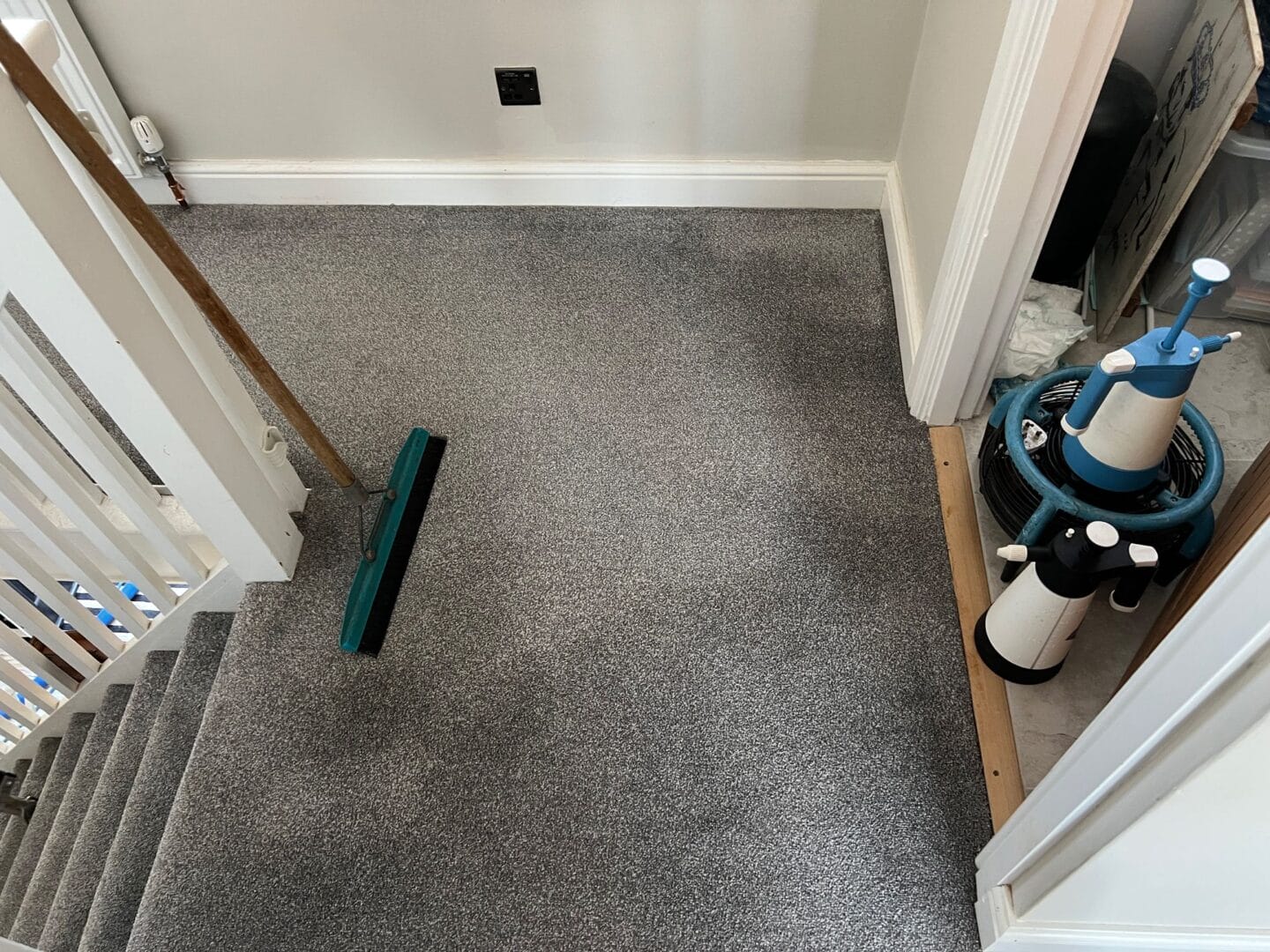
The mark has gone. The smell has apparently signed a tenancy agreement.
A lingering vomit smell can mean material remains in the pile, backing or underlay. Adding fragrance leaves you with a perfumed sick smell, which is hardly the prize anyone wanted.
Bicarbonate of soda, also called baking soda, is often suggested for overnight odour treatment.
It will not remove contamination below the surface or disinfect the carpet.
Rather than recommending loose kitchen powder on a damp patch, we favour a product intended for that carpet, used as directed.
An enzyme cleaner may help with suitable organic residues.
However, some contain protein-digesting enzymes called proteases, and wool is itself a protein fibre.
Do not assume a pet product suits wool.
Check for explicit wool suitability, preferably WoolSafe approval, and follow the label.
Blot away excess moisture and allow thorough drying.
You may need to let the area air dry overnight, but that is not a guaranteed drying time.
If the smell returns, investigate rather than repeatedly wetting it. Read more about why a carpet can smell after cleaning.
Removing a stain does not establish that the carpet has been disinfected. Germs and bacteria are not the whole picture: norovirus, commonly called the winter vomiting bug, is a virus.
The Health Protection Surveillance Centre's vomiting clean-up guidance recommends gloves, prompt removal and thorough cleaning.
For your carpets and your soft furnishings, it advises hot water with detergent or carpet shampoo, with steam cleaning where the material tolerates it.
Wash your hands with soap and water for a minimum of 20 seconds afterwards.
There are two priorities here: protecting the carpet and managing infection risk.
Cold blotting is an initial stain-removal step, not a substitute for appropriate hygiene treatment.
Before using a steam cleaner or disinfectant, establish that it suits the carpet and the intended hygiene purpose.
A professional hot water extraction clean is not automatically a validated norovirus disinfection process.
If a stomach bug is involved, tell the cleaner before arranging a visit so they can advise on a suitable response.
Hairballs and partly digested food call for the same careful start: gloves, lift, blot and check suitability before treatment.
An enzyme odour product may be appropriate for some carpets, but check the fibre and label first. Keep pets away during treatment and until the product's re-entry instructions are met and the area is dry.
Persistent odour needs its source addressed. Urine is a different contamination problem, so tell the cleaner if both may be involved. For broader household odours, see how to get the dog smell out of carpet.
If your pet is repeatedly being sick, contact your vet. Cleaning the carpet cannot explain why it keeps happening.
Ask for help if the stain or sick smell remains after drying, the affected area is large, or contamination may have reached underneath. Wool, silk, delicate natural fibres, rugs and upholstery also warrant advice before further treatment.
At Art of Clean, what you have already tried matters. Previous products could leave a residue that will foam or produce a halo during later cleaning. Tell us the product names and whether hot water was used. There is no judgement; it helps us assess the options.
A professional carpet cleaner can assess the fibre, select suitable chemistry and recover loosened soil and moisture through extraction where appropriate. Underlay contamination may need separate attention. Neither stain nor odour removal can be guaranteed.
Explore professional carpet cleaning in Cambridge if you need help deciding what comes next.
Next step: book a carpet clean with Art of Clean, Cambridge
Lift carefully, blot gently and avoid soaking. If the mark or smell persists, pause before adding another product.
Book a quote for professional carpet cleaning in Cambridge with Art of Clean, serving Cambridge and surrounding Cambridgeshire areas. If sick has reached a sofa or chair, ask about upholstery cleaning too.