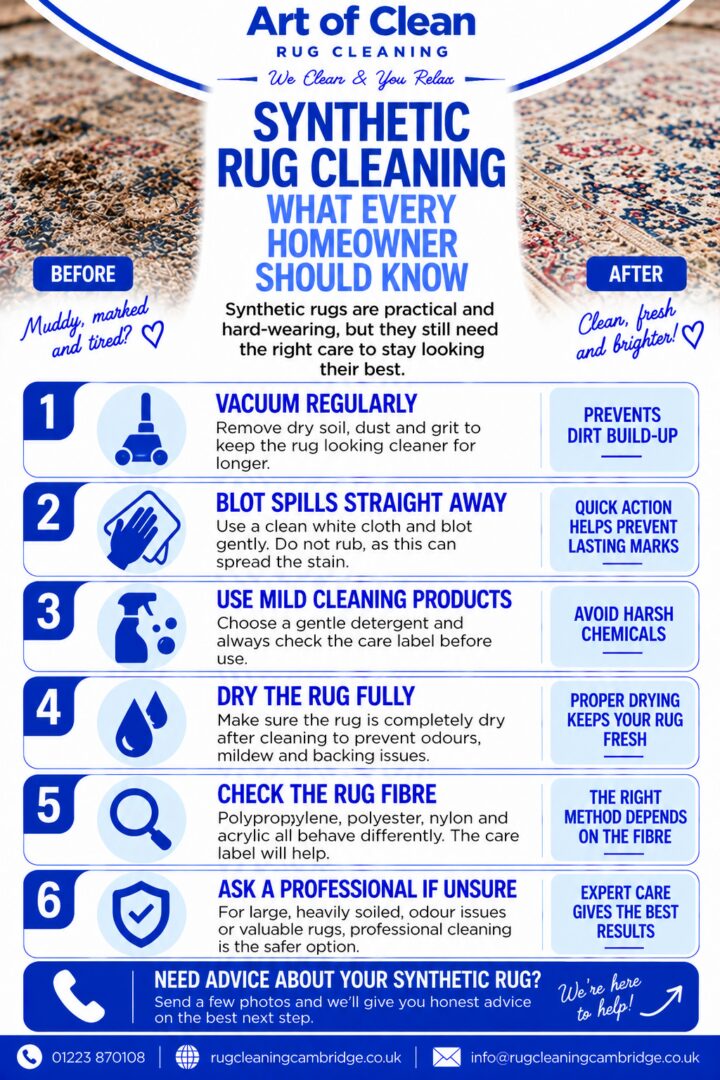
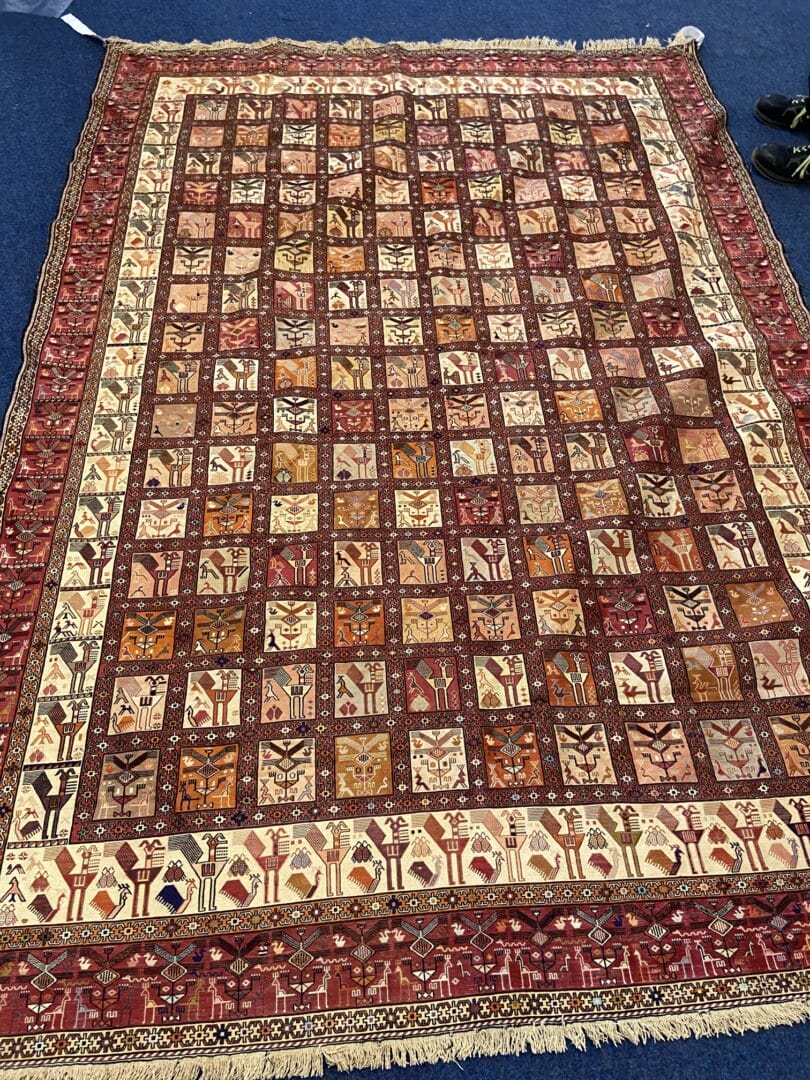
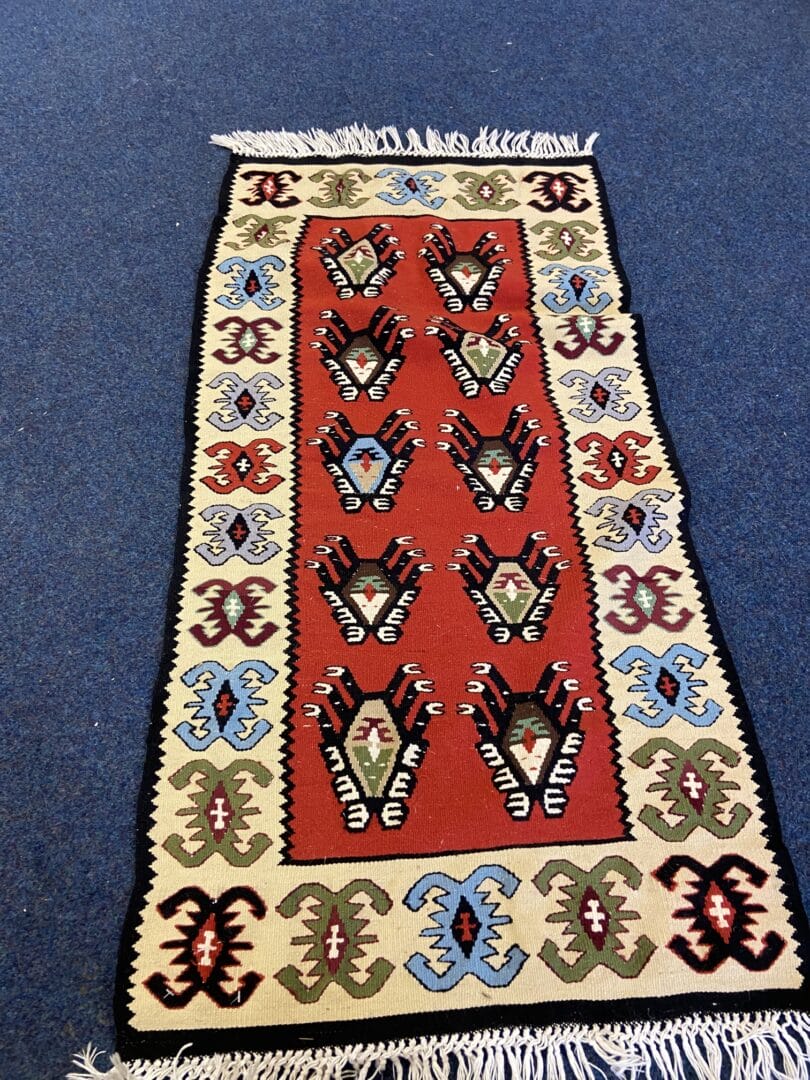
Step-by-step guide to cleaning a synthetic rug
Step 1: Remove loose dirt
Take smaller rugs outside and shake them where practical. This helps remove surface grit and debris before you add any moisture.
For larger rugs, lift and check underneath if you can do so safely. Rugs often hold soil below the surface, especially in busy walkways or under dining tables.
Step 2: Vacuum thoroughly
Vacuum the rug slowly and carefully. Use a setting that suits the pile height. If practical, vacuum both sides of the rug.
Do not rush this stage. Dry soil removal is one of the most useful parts of rug care. If grit remains in the rug, it can act like a mild abrasive each time the rug is walked on.
Step 3: Spot clean fresh spills
Blot spills immediately with a clean white cloth. Work gently and lift the liquid rather than pushing it deeper into the fibres.
Use a mild detergent diluted in water only if the care label allows it and after testing. Do not scrub. Rubbing can spread the stain, distort the pile and make the treated area more visible.
Step 4: Deep clean the rug where suitable
Depending on the care label, some synthetic rugs may be suitable for careful hand cleaning, a carpet shampoo machine, steam cleaning or outdoor rinsing.
This does not mean every synthetic rug should be cleaned the same way. A thin indoor-outdoor polypropylene rug may tolerate more moisture than a thick synthetic shaggy rug with a backing that dries slowly.
If using a machine, avoid overwetting and use the correct setting. If cleaning by hand, keep the cleaning controlled and even.
Step 5: Rinse away residue
Leftover detergent can attract dirt. It may make the rug feel sticky or cause cleaned areas to resoil more quickly.
Rinse carefully where the method allows it, then remove as much moisture as possible.
Step 6: Dry thoroughly
Drying is not an afterthought. A rug that stays damp underneath can develop odour, mildew or backing problems.
Improve ventilation, use fans where suitable and keep the rug flat while it dries. Do not put it back onto a wooden floor, carpet or hard floor until it is fully dry.
How to remove common stains from synthetic rugs
Different stains need different handling, but the first rule is almost always the same: blot, do not rub. The Carpet and Rug Institute spot cleaning guidance also recommends blotting with a clean white cloth rather than rubbing, which is a sensible starting point for many fresh spills.
| Stain | Immediate action | Avoid |
| Coffee or tea | Blot with a clean white cloth | Scrubbing |
| Red wine | Blot immediately and keep moisture controlled | Excessive soaking |
| Mud | Let it dry, then vacuum before further cleaning | Smearing wet mud |
| Pet accidents | Blot and use an enzyme cleaner where suitable | Bleach |
| Grease and oil | Use an appropriate degreasing cleaner after testing | Strong solvents |
| Ink | Follow manufacturer guidance and test first | Abrasive scrubbing |
Pet accidents need particular care. The visible mark may not be the whole problem. Liquid can travel into the backing, and odour may remain even if the surface looks better.
Grease can also be awkward on some synthetic fibres, especially polypropylene. A general cleaner may not be enough, while a harsh product may create a new problem.
If a stain does not respond to gentle treatment, stop. Repeated product use can make professional stain treatment harder to predict.